Science and Knowledge from Miletus to Today: Tearing the Illusions, Building the Future
From the Digital Cave to the Dawn of "Homo Novus": The Dialectic of Matter and Epistemological Praxis
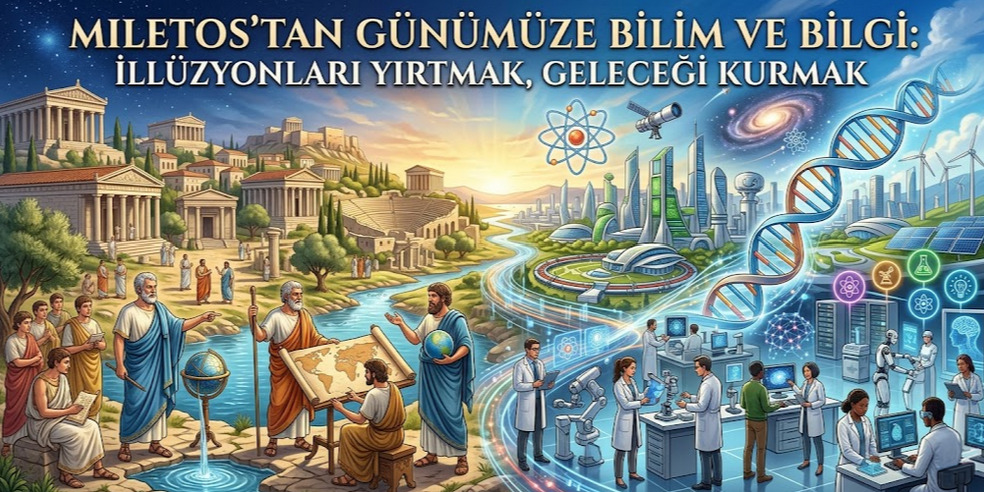
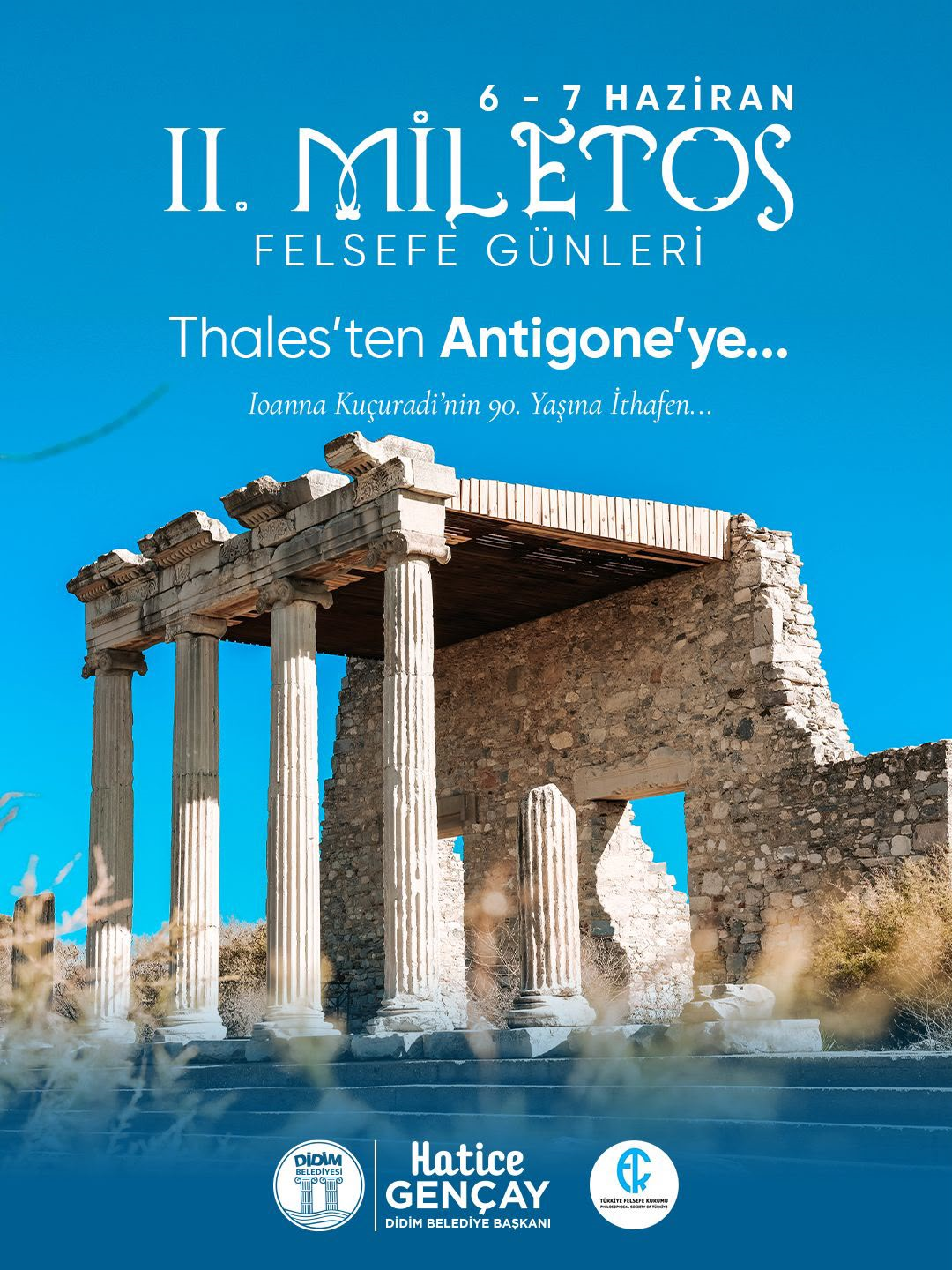
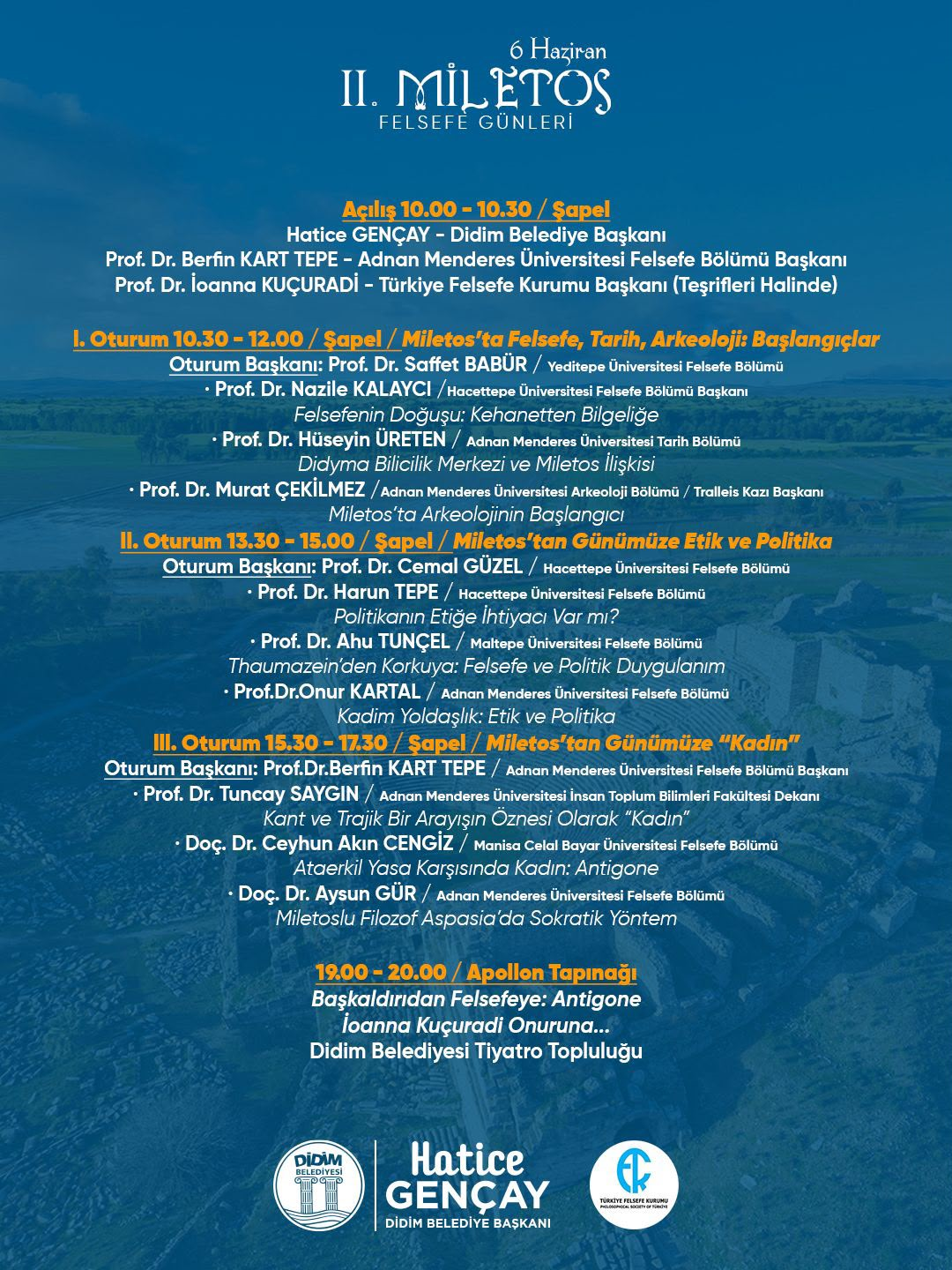
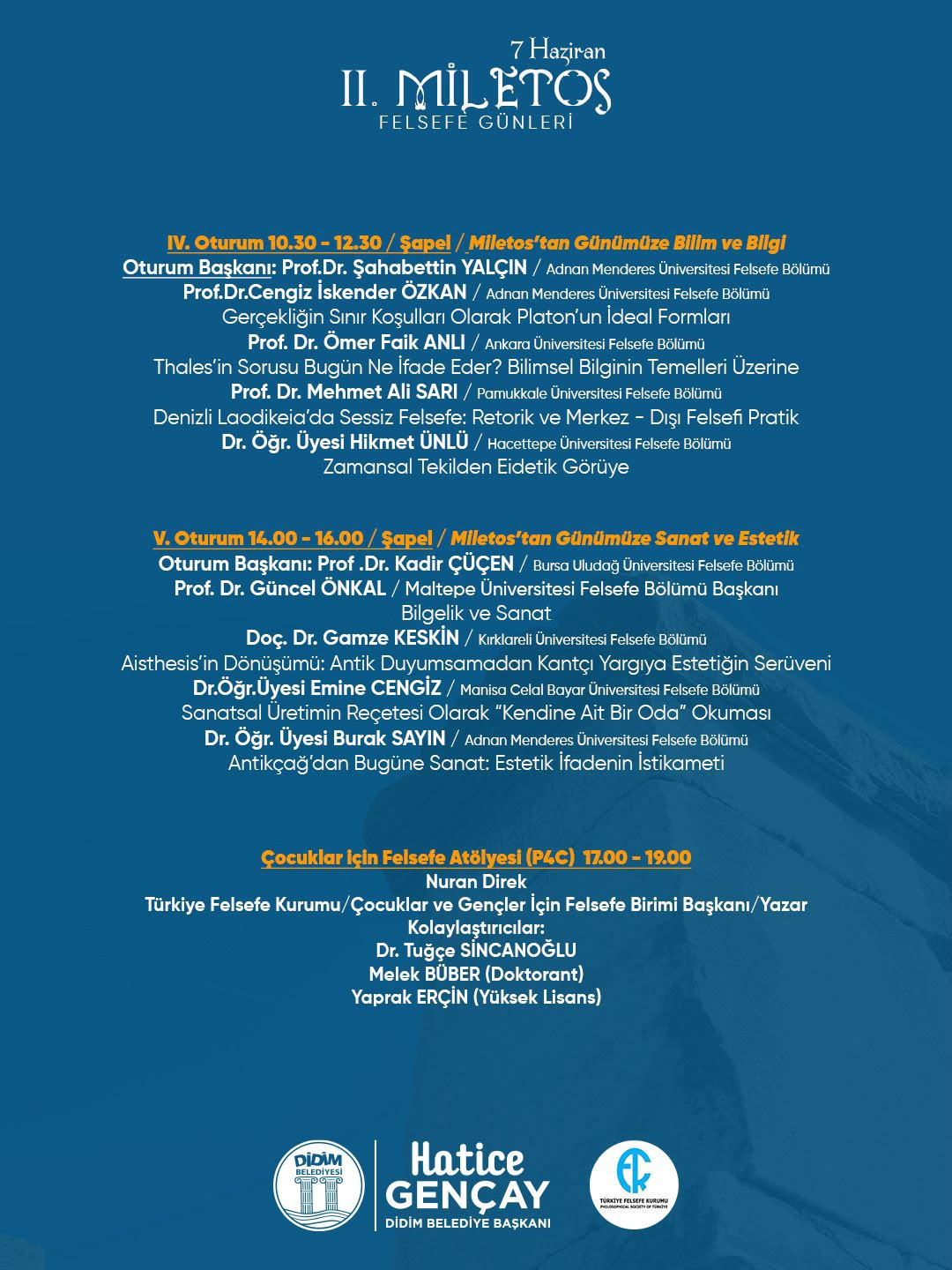
The 2nd Miletus Philosophy Days, hosted by the Municipality of Didim, offers an immense ground for turning back to the very dawn of philosophy and battering today's hegemonic illusions. Especially when the event is organized in honor of our esteemed teacher Prof. Dr. Ioanna Kuçuradi under the theme "From Thales to Antigone," it is an inescapable duty to fuse, in an epistemological crucible, the search to understand nature with the revolt against injustice.
I have turned the title "Science and Knowledge from Miletus to Today" into an article through a dialectical lens reaching from Thales's materialist break to Kant's agnosticism, from Lenin's slap against empirio-criticism to today's fetishism of artificial intelligence—in precisely that hard and lucid style of the Soviet philosophical academy we so yearn for.
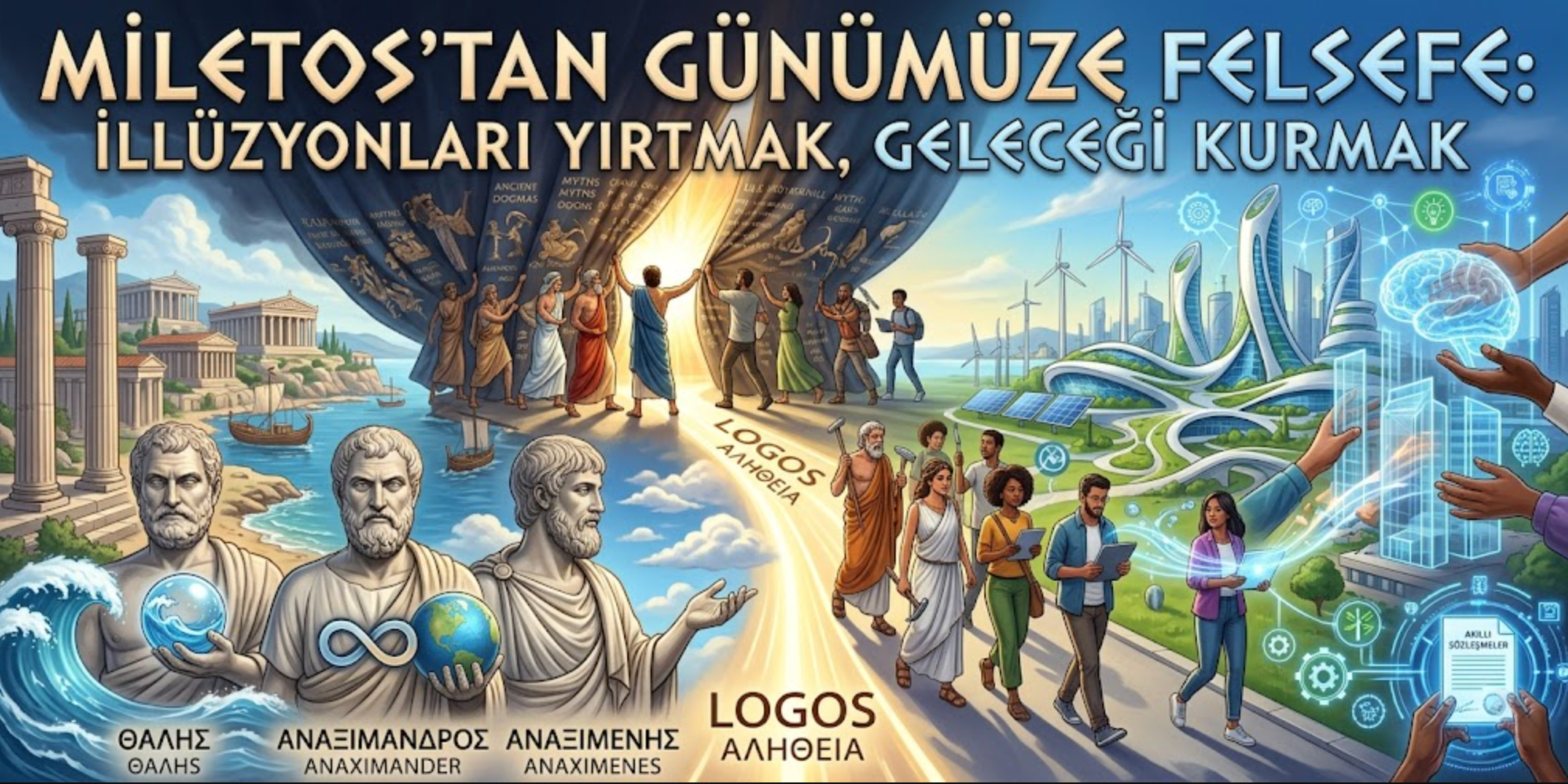
This study aims to reproduce, through a dialectical and historical-materialist lens, the conceptual ground of the "Science and Knowledge from Miletus to Today" session held within the 2nd Miletus Philosophy Days. The first theoretical leap of Thales, Anaximander, and Anaximenes in ancient Ionia—tearing through the mythological-theological illusions and taking matter as their foundation—is the dawn of humanity's process of scientific labor. However, with the evolution of class societies, knowledge has been turned into an instrument through which the ruling classes produce hegemonic illusions. Across the historical cross-section reaching from Kantian agnosticism to Lenin's critique of empirio-criticism, and from there to today's digital capitalism and its "informational idealism," philosophy faces the task of tearing away ideological veils. Knowledge is the revolutionary lever not merely for contemplating the world, but for transforming it through praxis and building the future.
The Matter of Miletus and the Knowledge Divergence of Class Society
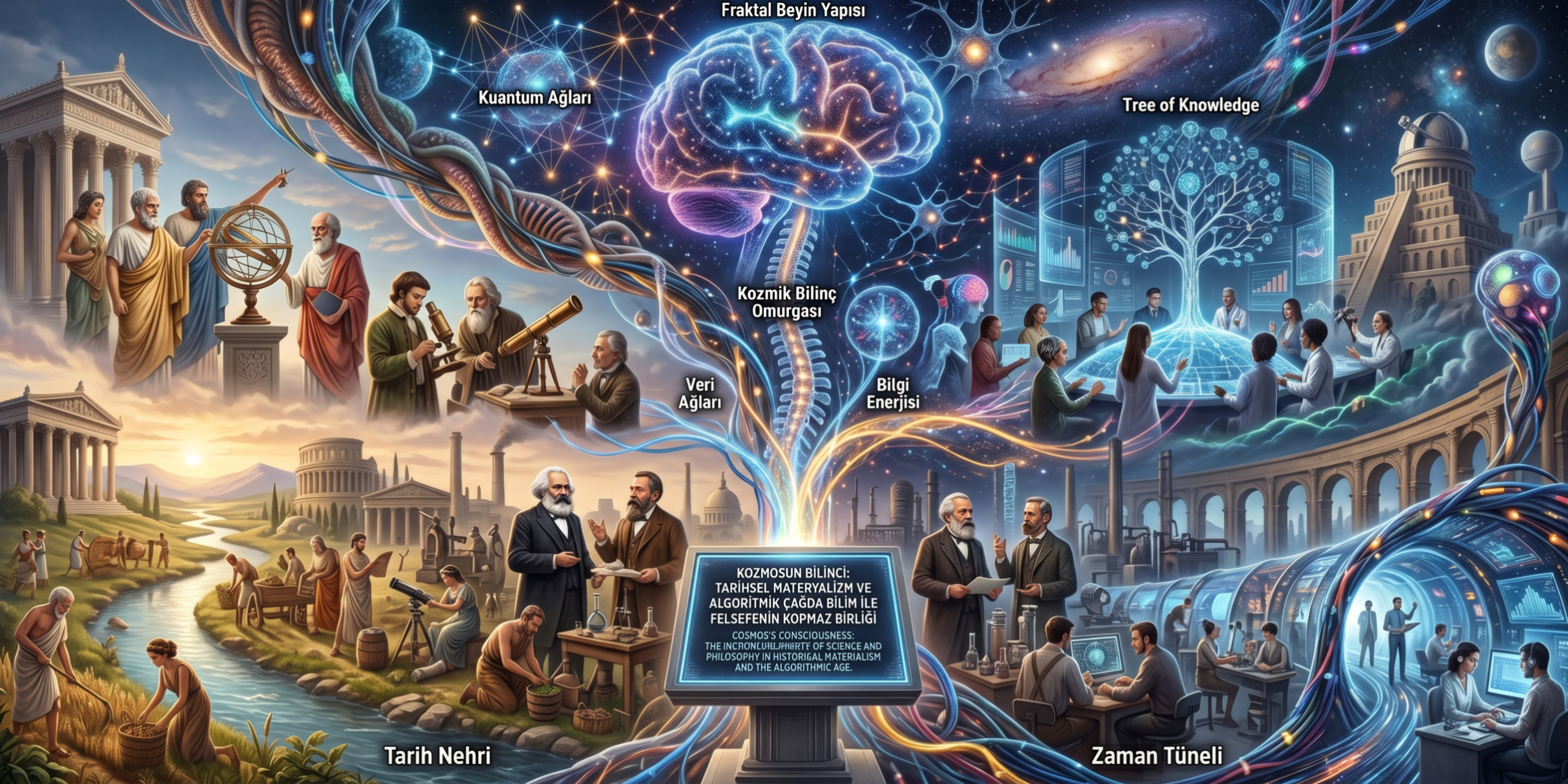
The sprouting of philosophy and proto-scientific thought on the soil of Miletus was not some accidental intellectual gift of human history, but the inevitable result of the historical maturity reached by the material relations of production, the trade routes, and the circulation of commodities in the Mediterranean basin. When Thales refused to take shelter in the shadow of the gods to explain the objective world and pointed to "water" as the arkhe, the first great materialist rupture in human thought took place. This is the attempt to explain nature through nature's own internal laws, the material through the material itself. The Milesian school, purging nature of mystical illusions, put forward the first dialectical-materialist nucleus—however crude and primitive.
However, this early-period nature materialism underwent a historical fracture with the deepening of the slave-owning social structure and the radical division between mental labor and manual labor. Parallel to the development of the productive forces in ancient Greece, philosophy and science became isolated from the material production processes (that is, from manual labor) and turned into an aristocratic privilege of the ruling classes who governed themselves. This process, which reached its summit with Platonic idealism, devalued the material world and reduced objective reality to a pale shadow of the "world of ideas." On the epistemological plane, this transformation is the first systematic consolidation of the ideological illusions established to govern the masses—knowledge being severed from the practices of production and turned into an object of abstract contemplation.
The Bourgeois Veil of Idealism: Kantian Agnosticism and the Fetishism of the Subject
The age of the Enlightenment and the bourgeois revolutions, while rescuing science from feudal-scholastic shackles and placing it in the service of production, sought to open the door to new and more sophisticated illusions in epistemology. As the capitalist mode of production developed, the bourgeoisie was forced to grasp the objective world and the laws of nature for its own profit mechanism, yet at the same time it needed a philosophical curtain that would conceal the historical and transient character of its own order of exploitation. The philosophical summit of this contradiction is Immanuel Kant. While trying to rescue science on the foundation of Newtonian mechanics, Kant drew the epistemological boundaries in such a way that he declared objective reality (the thing-in-itself / noumenon) unknowable to human consciousness.
"In order to make room for faith without excluding science, Kant erected impassable walls around objective reality. This agnosticism, which imprisons knowledge solely within the world of phenomena, is the first great philosophical barricade paralyzing bourgeois thought's will to radically change the world."
This line—beginning with Kant and, through Hegel's objective idealism, turning the dialectic upside down—reduces the objective world to the constitutive act of the subject or to the self-movement of the concept. Marxist philosophy, setting the Hegelian dialectic back on its feet, placed epistemology once more on a historical ground. Marx and Engels showed that the source of knowledge is neither an abstract subject nor a mystical spirit; it is the practical, transformative, and social labor process through which the human being enters into a relationship with nature. Scientific knowledge is a social product directly correlated with the level of development of the means of production, and there are ongoing attempts to turn it into an instrument of domination in the hands of the ruling classes.
The Leninist Intervention: The Theory of Reflection and the Liquidation of Empirio-Criticism
At the beginning of the 20th century, the evolution of capitalism into its imperialist stage brought with it—simultaneously with the great discoveries in physics (the splitting of the atom, the discovery of the electron)—a wave of philosophical reaction. Empirio-criticism, pioneered by thinkers such as Ernst Mach and Richard Avenarius, denied the existence of objective reality and defined the world as a "combination of sensations." This approach found a foothold even within Marxist ranks (through figures such as Bogdanov and Lunacharsky), giving rise to the threat of paralyzing revolutionary theory. Materialism and Empirio-Criticism, written by Vladimir Ilyich Lenin in 1909, has the character of an epistemological manifesto that shatters this philosophical illusion to pieces.
Lenin exposed how the empirio-critics, taking advantage of the crisis in physics, reproduced idealism under the mask of "modern science." Emphasizing that matter had not disappeared but that only its hitherto known boundaries had expanded, Lenin set forth the philosophical definition of matter with epistemological clarity: the sole philosophical property of matter is that it exists independently of human consciousness and is reflected by our consciousness. The Leninist "theory of reflection" holds that human knowledge is an ever-deepening, dialectical copy, image, or reflection of objective reality in our minds. This theory, while securing the objectivity of knowledge, tears away and discards all the illusions of relativism and agnosticism that dissolve the revolutionary will.
Today's Digital Veil: The Information Age and Technological Idealism
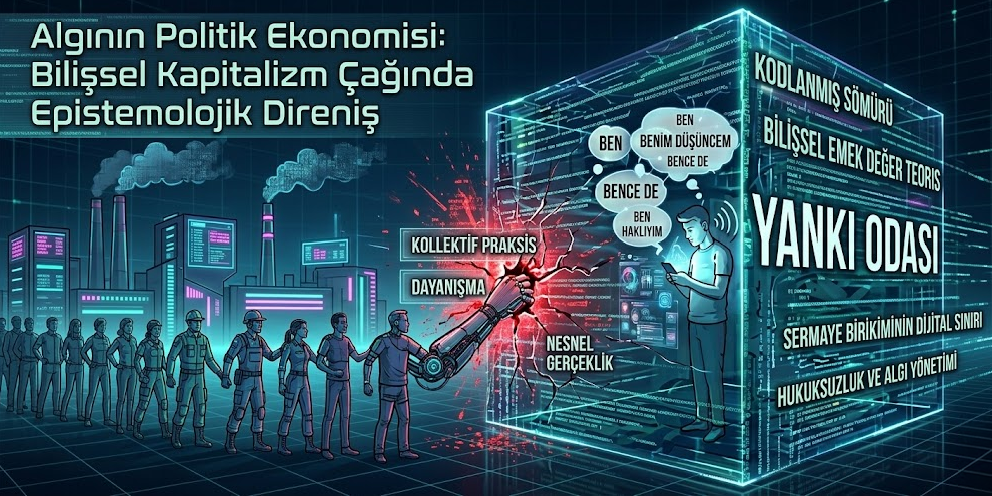
The road traveled since Miletus has carried us today into a field of late-capitalist illusion characterized by concepts such as the "information age," the "artificial intelligence revolution," and the "data society." Modern bourgeois philosophy and its postmodern derivatives claim that knowledge and science have completely broken free of material production, that we now live in a "world without matter." Data itself is being fetishized, and algorithms are presented as new divine wills that cover over social classes and exploitation. This philosophical approach, which we might call digital idealism, reduces objective reality to codes and information flows, condemning the masses to a deep alienation.
For a Marxist epistemologist, informational processes are an expression not of dematerialization, but on the contrary of the most refined material organization of fixed capital and intellectual labor. Artificial intelligence models are nothing other than a collective means of production resting on the exploitation of the manual and mental labor of billions of people, of the accumulation of historical knowledge, and of concrete natural resources (the immense energy consumed by data centers, rare earth elements). The labor of IT workers (programmers, data labelers, system analysts) is objectified in blocks of code and serves the expansion of capital. Therefore, tearing away today's illusions of "post-truth" or "digital abstraction" is possible only by making visible the factories behind the code, the mining pits behind the servers, and the surplus-value exploitation behind the algorithm.
Conclusion: Praxis and the Epistemological Will to Build the Future
The organizing of the Municipality of Didim's 2nd Miletus Philosophy Days under the theme "From Thales to Antigone," in honor of the 90th birthday of Prof. Dr. Ioanna Kuçuradi, salutes the character of philosophy as not only understanding nature (Thales) but at the same time revolting—in the name of human dignity and justice—against the laws of the powerful (Antigone). The philosophical heritage we discuss under the title "Science and Knowledge from Miletus to Today" necessarily brings us to that historical threshold of Karl Marx's 11th Thesis on Feuerbach:
"The philosophers have only interpreted the world in various ways; the point, however, is to change it."
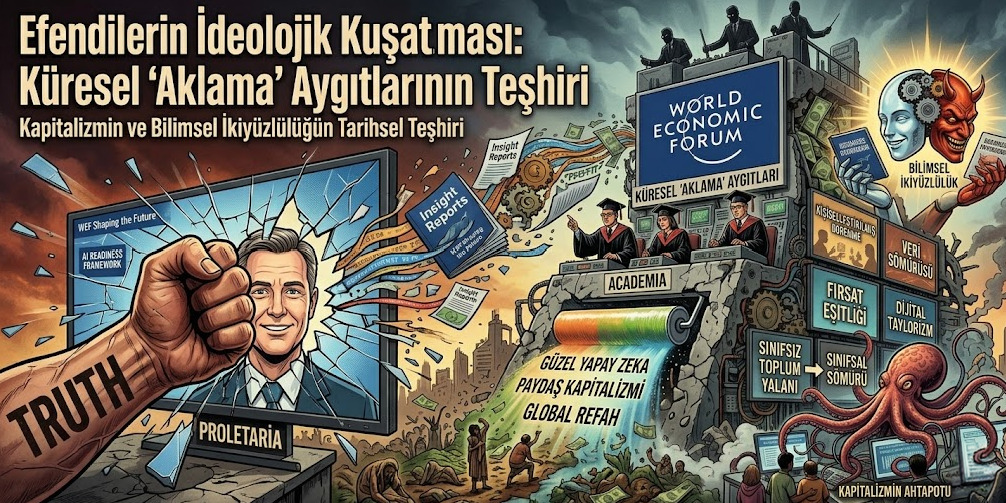
Yet this will to change is not an abstract moral commandment or a purely romantic revolt; it is a matter of epistemological praxis bound tightly to the revolutionary transformation of the material relations of production. Science and knowledge cannot remain, in the hands of the bourgeoisie, "techno-illusion" mechanisms that manipulate the masses, feed the war industry, and digitize alienation through algorithmic domination. The liberation of the informational productive forces (artificial intelligence, big data, full automation) from the shackles of private property over the means of production is not merely an economic restoration; it is an ontological leap through which human consciousness will reproduce itself. When that "General Intellect" Marx pointed to in the Grundrisse is freed from capital's profit motive and transferred to social ownership, humanity will cease to be the slave of the objective forces it itself created and become their conscious subject.
It is precisely at this point that the epistemological will to build the future means constructing the intellectual structure of the human of the future (homo novus). The cognitive architecture of the new human will rise where that crushing, millennia-old fragmentation between mental and manual labor is overcome. The division of labor that imprisons the human being in a "one-dimensional" cell of specialization and crumbles their knowledge will be shattered; the many-sided human—of whom the Soviet pedagogues and thinkers, Vygotsky and Makarenko, dreamed, the human who grasps the world not as a fragmented chaos but as a holistic and dialectical web—will step onto the stage of history. The communist human of the future will not see knowledge as a commodity produced for the market, nor nature as an enemy to be conquered and exploited. On the contrary, the metabolic relationship the human being forms with nature will be repaired; the human, as nature having come to consciousness of itself, will use scientific knowledge to aestheticize life itself.
This new structure of production—in which science and knowledge become a direct productive force and are rationally planned on the basis of social need—will doubtless change our intellectual/epistemological system at its very roots. The murky consciousness created by alienated labor will dissolve, and the doors of perception will open all the way to the dialectic. Humanity will grasp objective reality not as static "crumbs of information," but as a vast river of matter flowing, changing, contradicting, and transforming into one another without cease. Let us recall that revolutionary note Lenin jotted in the margin while reading Hegel in exile, in his Philosophical Notebooks:
"Human consciousness not only reflects the objective world, but creates it."
Yes, our consciousness is born of material production; but an organized, science-equipped revolutionary consciousness has the power, through praxis, to tear through its own material base and create a brand-new cosmos.
As Maxim Gorky cried out in The Song of the Stormy Petrel, philosophy too is the herald of the approaching social storm, the constitutive mind of the new horizon that will be born amid the crises. Every approach that severs knowledge from practice, science from the historical activity of the working class and all the oppressed, must be condemned to the dusty shelves of bourgeois academia. That first materialist cry rising on the shores of Miletus must today merge with the revolutionary fire of dialectical materialism—from the IT laboratories to the mining pits, from academia to the streets.
Let us seal our words with this historical judgment that transcends the philosophical wreckage of the old world:
Truth is not a static substance to be sought and found in dark rooms; it is a future to be built with collective labor, with calluses and with code. For tearing the ideological illusions is not changing the glasses worn to contemplate the world; it is forging that world anew—classless, free of exploitation, and free—with the hammer of philosophy.
You might be interested in ...