From the Mind in the Machine to the Podium of Freedom: A Call to the 20th Karaburun Science Congress
The Karaburun Science Congress is a living oasis of free and disobedient science in an age when neoliberalism commercializes universities and tames thought with corporate funds.
Dear Friends, Comrades, and Workers of Science,
I address you as someone who, on one hand, is an IT worker writing the code for artificial neural networks, optimization functions, and vast data architectures; and on the other hand, is a Marxist devoted to philosophy and science, striving to decipher the social upheaval and the new waves of dispossession driven by these productive forces.
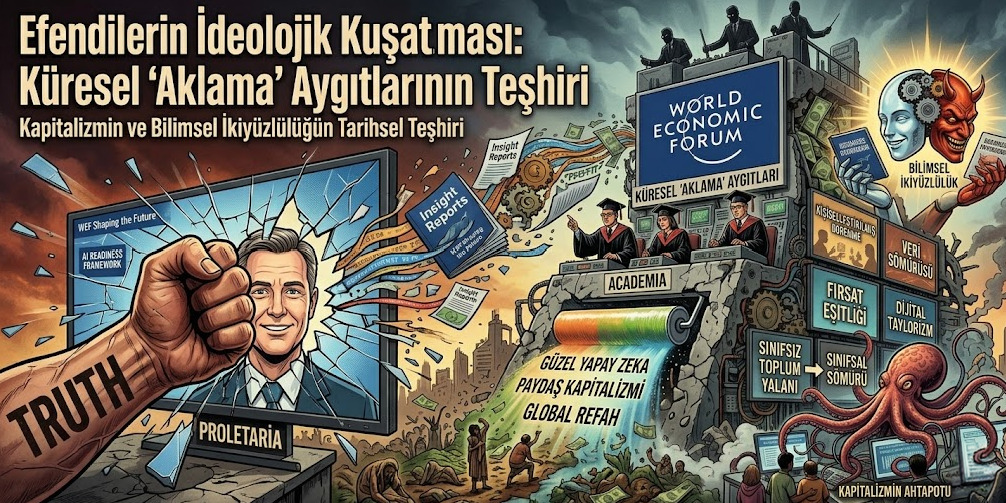
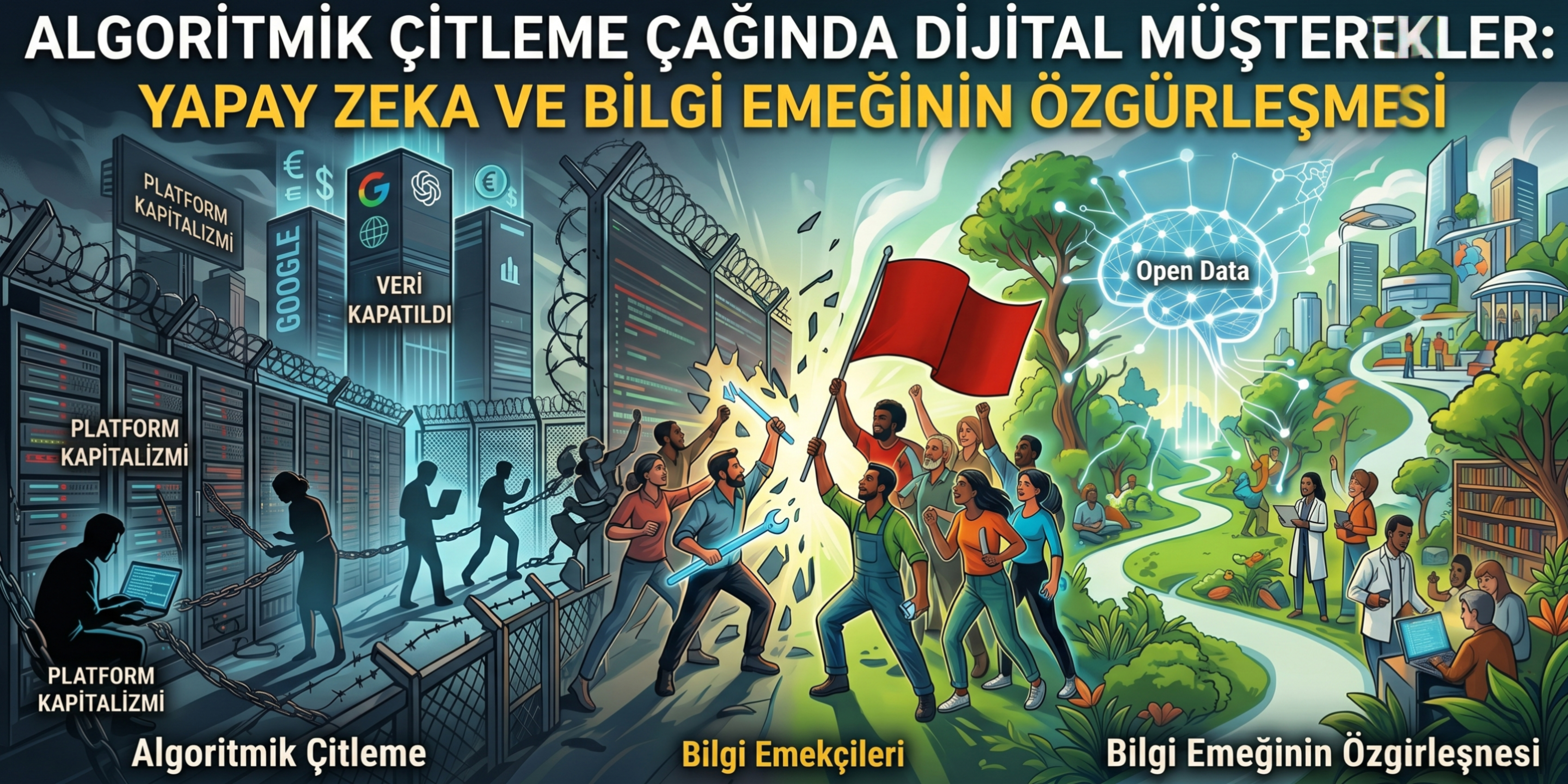
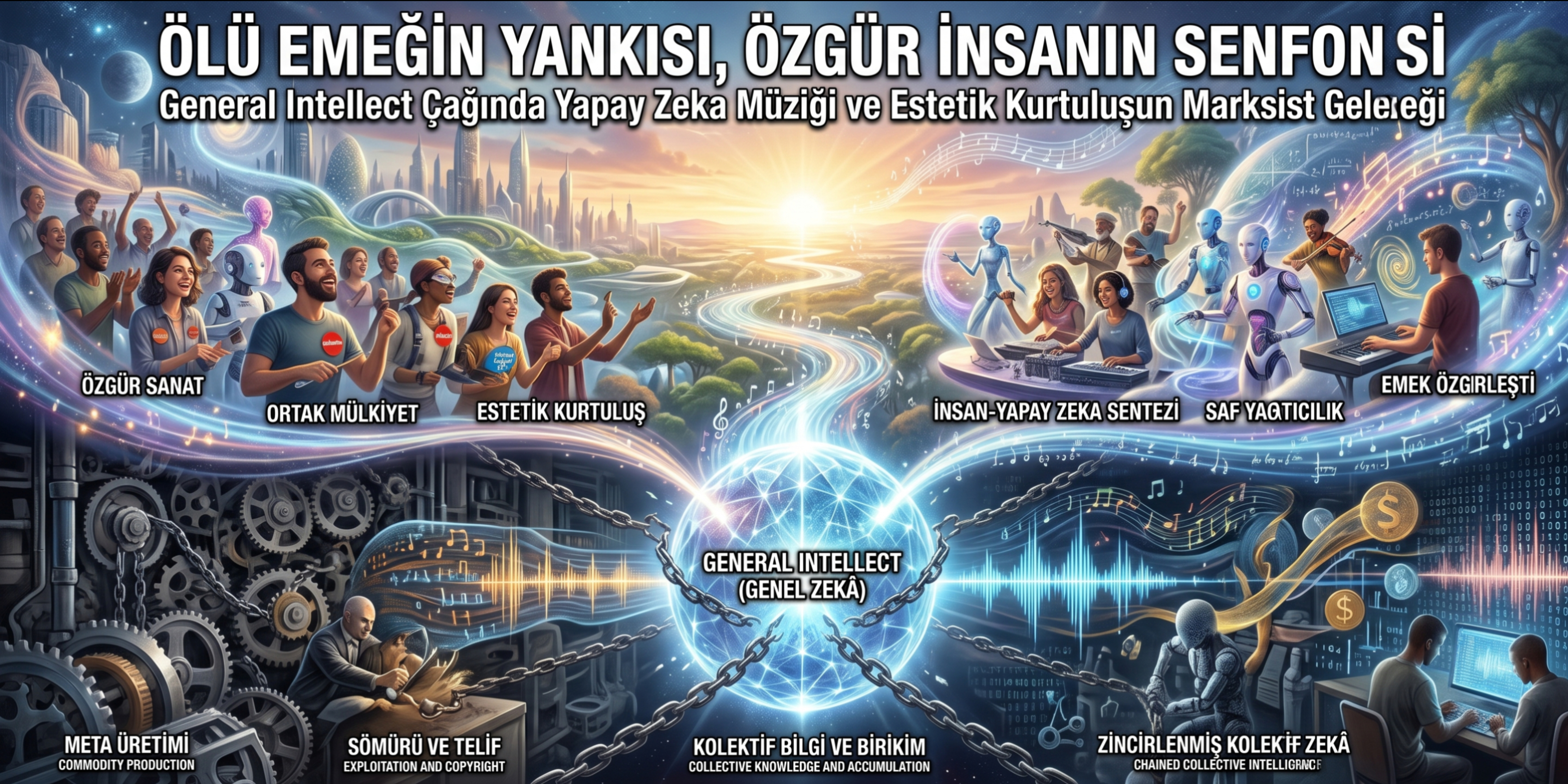
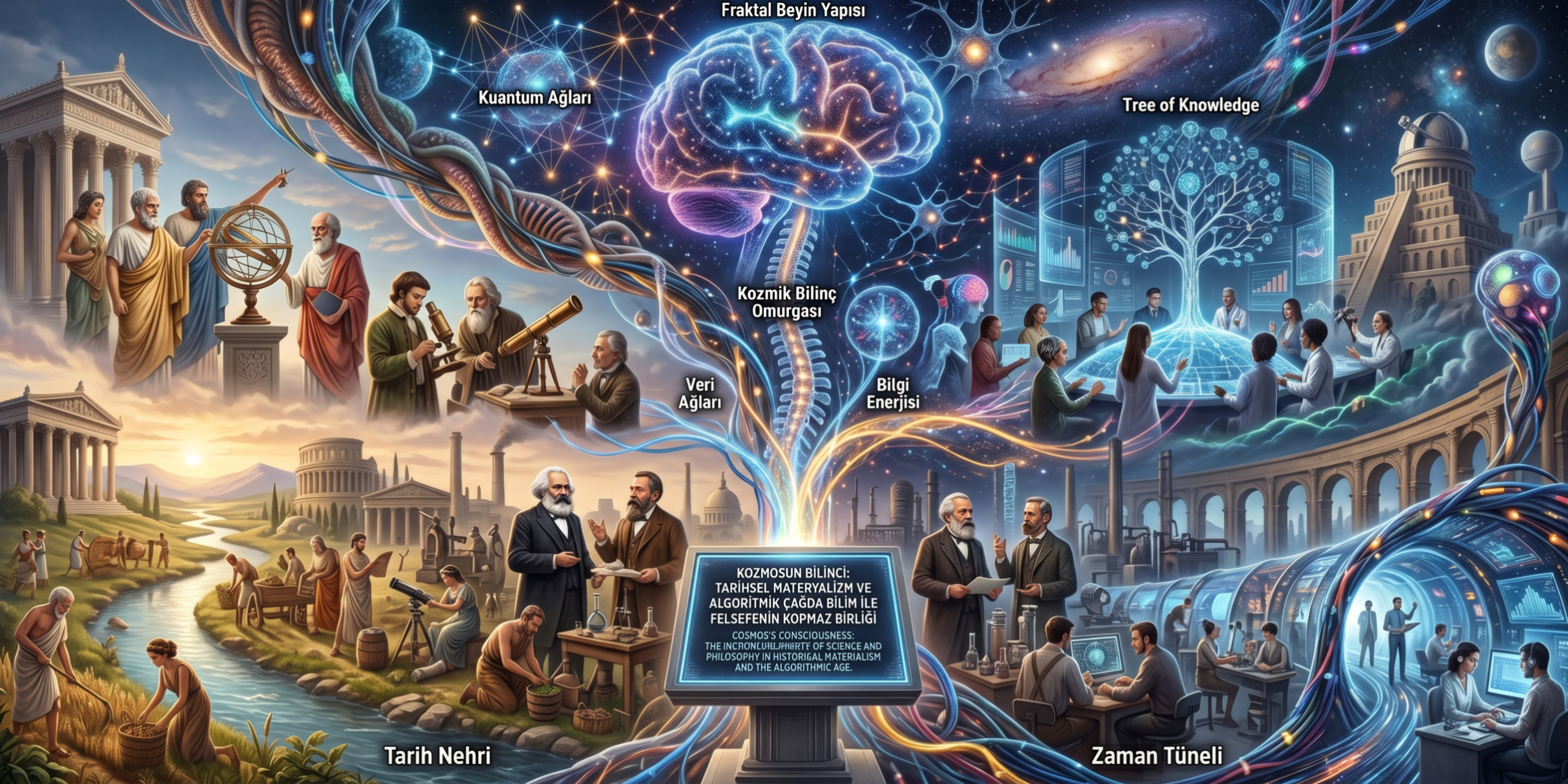
We stand at a historical crossroads. Today the great technology monopolies are imprisoning within their deep-learning models the collective knowledge distilled from humanity's shared mental practice and historical accumulation—that is, what Karl Marx called the "General Intellect." Our social knowledge commons are being "enclosed" by intellectual property, patent rights, and algorithmic walls. While "mental Taylorism" deskills all intellectual production—from IT workers to artists—by arranging it along a new digital assembly line, digital panopticons dissolve the boundaries of the workplace and make every moment of life an object of exploitation. As the myth of the secure middle class collapses with the precaritization of white-collar workers, what lies before us is either the dystopia of a cyber-fascist techno-feudalism, or the free world of a commoning humanity (Homo Commonans) that abolishes forced drudgery by socializing technology.
It is precisely for this reason that we turn toward that historical address where we will take refuge, draw breath, and build theoretical barricades in order to rescue academia from being an apparatus of market mechanisms and the powerful, and to make it a fortress of public and critical knowledge: the Karaburun Science Congress.
https://www.kongrekaraburun.org
What Does the Karaburun Science Congress Aim For?
The Karaburun Science Congress is a living oasis of free and disobedient science in an age when neoliberalism commercializes universities and tames thought with corporate funds. This congress—which rejects sponsorship relations, refuses to submit to the yoke of industrial funding, and exists entirely on the basis of social responsibility and collective volunteerism—aims to organize critical thought against the commercialization of knowledge. Following the trail of Bertolt Brecht's question, "Who built the seven gates of Thebes?", it deciphers the historiography of the powerful; it places at its center the labor of the concrete, unnamed human beings who objectified the world, the cities, the roads, and the world of thought.
The Karaburun Memory, From the Past to Today
Against the entire siege of capital and power, this free podium—gathering every year in the first week of September in the Karaburun district of İzmir—has, to this day, dissected the crises of capitalism and the resistance lines of the oppressed with a dialectical continuity. When we examine the official archives, the cornerstones of this memory are clearly visible:
- It took its first steps under the titles "Science and Power" (2006) and "The Process of Scientific Production" (2007), questioning the political nature of science.
- With the title "Nature – Society – Technology in the Grip of Capitalism" (2012), it laid the early theoretical ground for the technological domination we now discuss on the plane of artificial intelligence.
- With the themes "Class Struggle" (2019), "The Epidemics of Capitalism and the Unending Struggle" (2021), and "The Choice of the Oppressed at the Dawn of Tomorrows" (2022), it challenged the neoliberal regime that bills the costs of crises to the workers.
- Most recently, with the themes "Fascism" (2024) and "War" (2025), it dissected the political economy of global and local authoritarian regimes.
A Call for Participation in the 20th Congress (September 3 – 5, 2026)
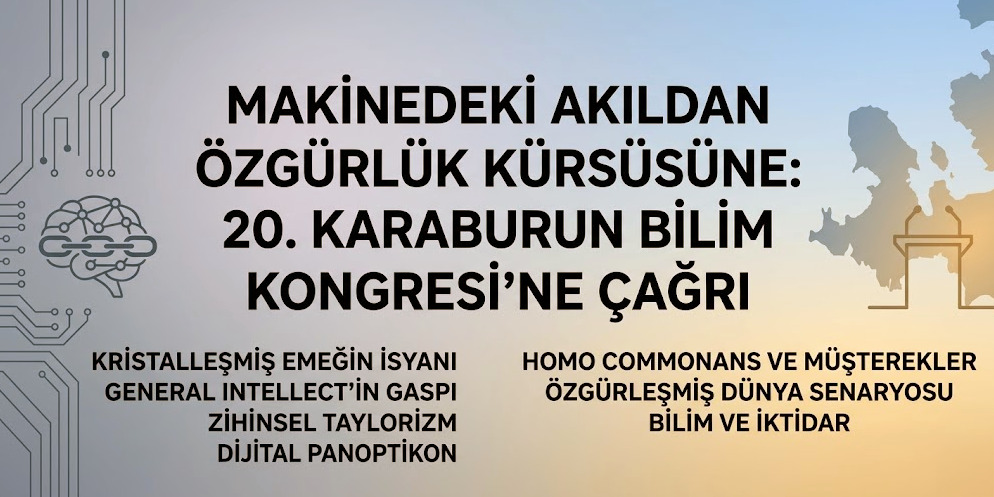
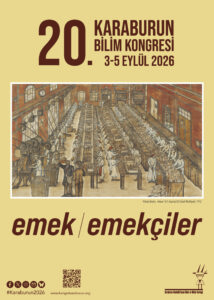
This year, for the twentieth time, we gather on that ancient, windswept Aegean shore, on the lands where Börklüce Mustafa's commoning tradition flourished, to greet directly the founding subject of history: "Labor / Workers."
I invite you, too, to rise from your computers, from the office towers, the factories, the laboratories, the streets, and the lecture halls, and to come. Come; let us set aside the illusions of titles and discuss together the programmer's alienation from code, the algorithmic supervision of the courier, the marketization of academia, and the common front of the precaritized millions. Let us scatter the powerful's fairy tales of "technological neutrality" with the wind of Karaburun.
It is we who actually produce the world; therefore, it is again we who will make artificial intelligence—and the future—the assistant not of exploitation, but of the emancipation of humanity!
We await all free and disobedient scientists, engineers, and friends in pursuit of collective, public, and critical knowledge in Karaburun on September 3 – 5, 2026, to amplify our common power and our voice.
With hope, with resistance, and with dialectics...
To access the relevant documents and application details, you may review the "Karaburun Congress" file and the official web page of the congress.
https://www.kongrekaraburun.org
**Details of the application I submitted for a paper: **
20th Karaburun Science Congress Paper Application
- Congress Period / Date: September 3 – 5, 2026
- Congress Theme: Labor / Workers
- Relevant Scope Subtitle: Digitalization, Artificial Intelligence, and Labor
- Presentation Format: Oral Presentation
- Paper Author: Oğuz Demirkapı @demirkapi
- Title / Institution: Digital Activist
Paper Title
The Revolt of Crystallized Labor: The Usurpation of the General Intellect in Artificial Intelligence Models, Mental Taylorism, and the Digital Panopticon
Paper Abstract
1. Introduction and Theoretical Framework: The Political Economy of Artificial Intelligence and the General Intellect
Artificial intelligence (AI) is presented by mainstream technocratic and neoliberal discourses as a neutral, labor-free "technological miracle," isolated from social relations. Yet this technology—which takes concrete form in the rational domain of computer engineering as Big Data architectures, artificial neural networks, and statistical optimization models—is in reality the product of mental production distilled from the historical and collective practice of the working class. Artificial intelligence is nothing other than the crystallized, objectified form, within machines, of the General Intellect (social collective intelligence) that Karl Marx conceptualized in the Grundrisse.
This accumulation, which is humanity's shared knowledge heritage, is today being usurped by vast technology monopolies through "digital enclosure" mechanisms. Intellectual property rights, patent regimes, and trade secrets function as walls of property erected around these social knowledge commons (information commons). The plundering of the knowledge commons in this way raises labor's alienation from the collective mind it itself created to its highest level.
2. The Transformation of Labor Processes: Mental Taylorism and Algorithmic Supervision
Capital deploys this collective intelligence it has seized in order to further fragment and control labor processes. The deskilling and standardization operations that industrial capitalism once imposed on manual labor are today applied to mental labor by means of coding tools, Large Language Models (LLMs), and generative algorithms. This new assembly line, which we might call "mental Taylorism," breaks intellectual production—which bears the character of a holistic craft—into routine and micro-tasks. IT and design workers are rapidly deskilled and devalued, reduced to mere operators who check the outputs produced by the algorithm.
This technical transformation is accompanied by the "Digital Panopticon," the workplace reflection of the surveillance capitalism Shoshana Zuboff has pointed to. Algorithmic control mechanisms—supported by project management tools (Jira, Trello metrics), keystroke logging, and cameras—construct a new regime of labor at constant command. Flexible and remote work models, in turn, dissolve spatial boundaries and render the concept of working hours continuous; they make every moment of life, through data production, an object of surplus-value exploitation. In this process, academia too plays an active role as an apparatus in legitimizing these algorithmic systems that supervise labor processes and in rationalizing the control devices, through funding flows and market-oriented industrial collaborations.
3. The Class Cleavage: The Collapse of the Middle-Class Myth and Precaritization
This wave of AI-driven automation does not, as the capitalist media claims, merely substitute for blue-collar jobs; it directly targets white-collar intellectual labor. The mass layoffs in the technology sector and the creative industries proclaim the collapse of the "secure middle class" myth created by capitalism. White-collar professionals, stripped of the illusions of titles, are incorporated into the precarious army of digital workers—that is, the precariat. The harsh exploitation of subcontracted data labelers in the global South and the precarity of the software architect in the global North offer a ground for class commonality. This objective commonality, grounded in the deprivation of the means of production, makes it imperative to reorganize blue-, white-, and digital-collar labor struggles along a unified line.
4. Imagining the Future: Bipolar Asymmetry and Homo Commonans
The study imagines the developmental tendency of AI-based productive forces, at the stage of organizing the work culture of the future, through two asymmetric scenarios:
- The Dystopian Techno-Feudalism Scenario: In this dark future, where technological property remains entirely in the hands of the techno-financial oligarchy, centralized AI systems completely take over sectors such as education, law, and health in order to cut costs. Faced with centralized software that replaces wise teachers in schools, human beings are turned into "screen babysitters" (digital gig-workers) who work below the minimum wage and merely wipe down devices and maintain physical order. Artificial intelligence is used as a digital whip that predicts unionizing efforts in advance from social media and communication movements and blacklists them. An isolated cyber-fascist regime is established, one in which the broad masses are excluded from employment and a terrifying class of "the superfluous" is produced.
- The Emancipated Ideal World Scenario (Homo Commonans): This is the alternative in which the property and control of technology are taken from the hands of capital and transferred to the knowledge commons. The immense analytical precision and efficiency provided by artificial intelligence are positioned as a "collective assistant"—not to swell the profit column, but to radically reduce weekly working hours, abolish the command of forced drudgery, and open the human mind to creative, free activity. In this world, the human being takes on the identity not of a technician who places their knowledge in the service of capital, but of the "Commoning Human" (Homo Commonans) who shares it for social benefit and produces themselves. Production is planned according to social needs by means of decentralized councils and platform cooperatives.
5. The Occupational Groups of the Future and Conclusion
This transformation will inevitably liquidate traditional job definitions while giving rise to new fields of expertise. In the work culture of the future, the following will come to the fore:
- "Algorithmic Truth and Disinformation Auditors," who supervise the ethical, social, and dialectical-materialist inputs of AI systems,
- "Common Data Architects," who protect the public ownership and fair distribution of data,
- "Collective Narrative Designers," who produce the human, aesthetic, and historical sensibility that AI cannot possess,
- "Decentralized Council Guides," who coordinate platform cooperatives with grassroots organizations.
The paper's final emphasis is this: that all the subjects of labor, without falling for the illusions of titles, organize on the common front of "Data Unionism" and a new generation of professional chambers, and that the hidden, collective force that produces artificial intelligence—namely, the working class—remember its power to seize its own creation and emancipate the world.
Keywords: Artificial Intelligence, General Intellect, Knowledge Enclosure, Mental Taylorism, Precaritization, Homo Commonans, Data Unionism.