The Factory Behind the Headset: Algorithmic Domination in Call Centers and Global Resistance
Content
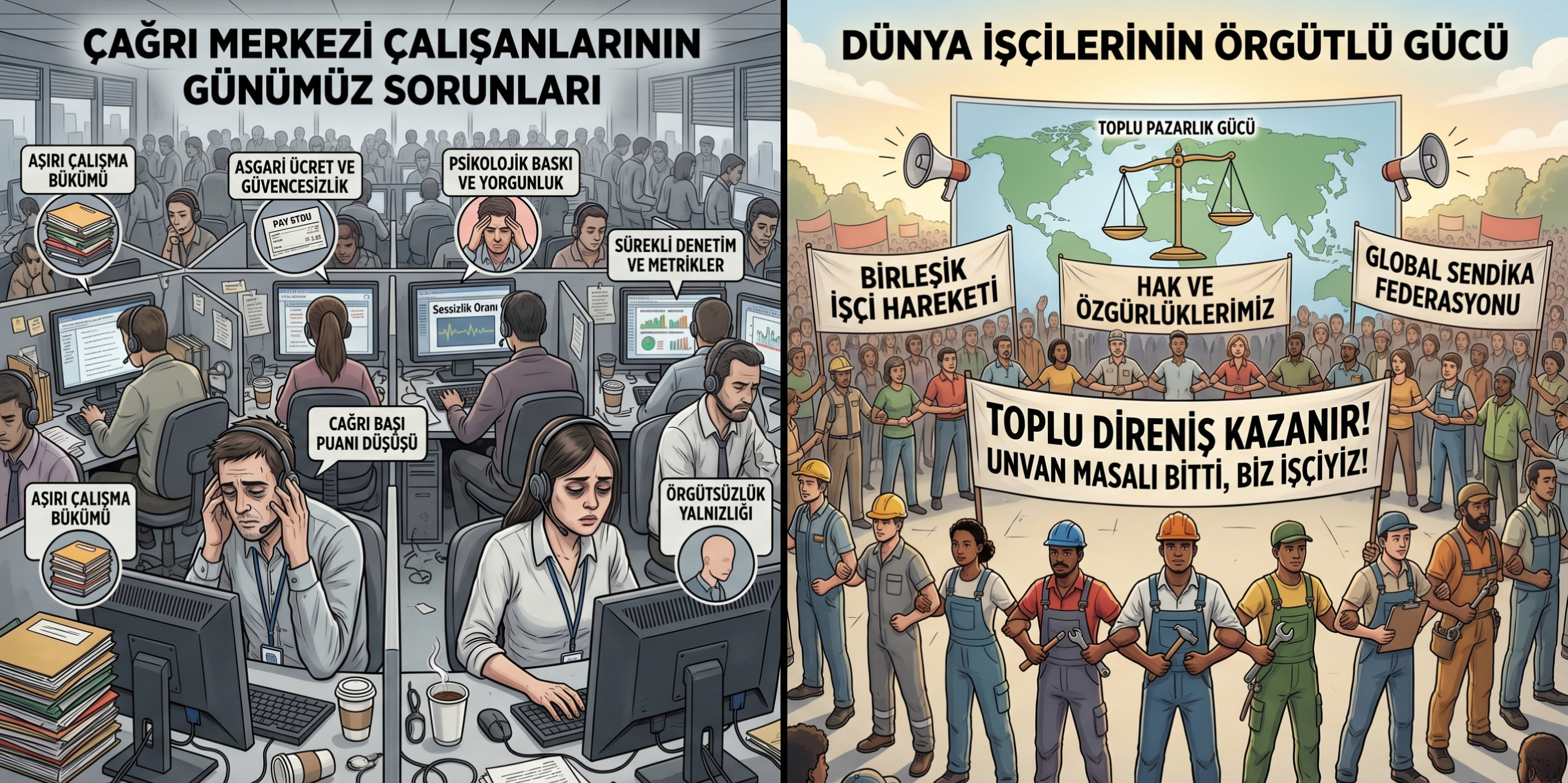
Modern capitalism has moved the gears of exploitation from the smoke-belching chimneys of factories to the air-conditioned rooms of office towers and to the "home-office" desks set up in people's bedrooms. The most thoroughly disciplined, most intensely surveilled, and most second-by-second measured front of this new regime of exploitation is the call center.
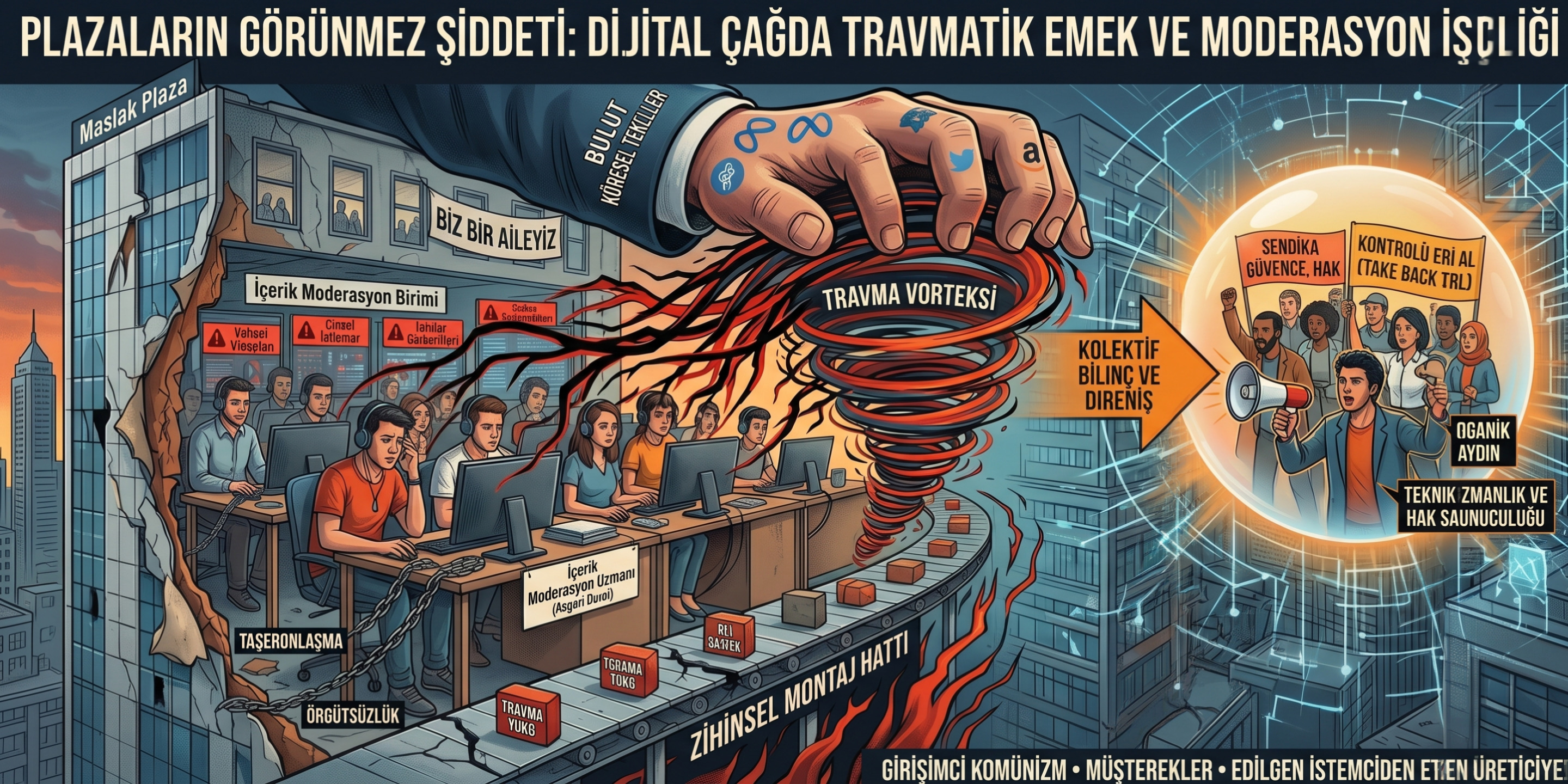
Call centers are the blue-collar assembly-line system (Taylorism) flawlessly adapted to mental and emotional labor. Behind the headset, a colossal digital factory hums along, every day draining the voices, the patience, and the mental health of millions of people.
The Dimensions of Algorithmic Domination: The "Invisible Whip"
Call center workers (the cybertariat) are surveilled not merely by a manager or supervisor, but directly by software and artificial intelligence algorithms. This strips supervision of all human flexibility and transforms it into an instrument of absolute pressure.
- AHT (Average Handling Time): A merciless metric that dictates how many seconds it should take a worker to finish a call. The point is not to solve the customer's problem, but to hang up the phone in the number of seconds the system has determined.
- Sentiment Analysis: Artificial intelligence analyzes in real time the rises and falls in the worker's tone of voice, their word choices, and the "smile" ratio in their voice. Even when subjected to the most insulting abuse, the worker is forced to maintain a mechanical courtesy.
- Biometric and Screen Tracking: The seconds of the "break" button taken to go to the bathroom are counted. Mouse movements on the screen, keystroke speed, and in some systems even eye movements via webcam are monitored.
The Current Situation: The algorithm codes the worker as a "piece of hardware" to be optimized without cease. This produces in the worker a deep alienation, burnout syndrome, and chronic anxiety.
Rights Violations and the Grip of Disorganization in the Turkish Ecosystem
Owing to its young and unemployed population, its exchange-rate advantage, and its flexible labor laws, Turkey has turned into a colossal "call center paradise" (a hell for the worker) for both global and domestic capital. Rights violations in the sector have become chronic:
- Industry-Branch Confusion (Divide and Conquer): Call center workers are not legally defined within a single industry branch. While a bank's call center falls under the "Banking and Finance" branch, an independent subcontractor's call center may appear under "Office/Commerce" or "Communications." This legal fragmentation prevents workers from forming a unified force under a single union roof.
- Subcontracting and Precarity: The principal firms (telecom, e-commerce, banking) hand off this work to BPO (outsourcing) companies in order to reduce risk and cost. The turnover rate at these companies is close to 100%; that is, a worker is not permanent but a disposable, consumable material.
- Isolation (Home-Office Loneliness): Remote work, made permanent by the pandemic, has completely severed workers from one another. The worker who can no longer confide in the colleague at the next desk, who cannot share their anger and exhaustion in common, is condemned to absolute loneliness and unionlessness at home.
Global Experiences: BPO Resistance Around the World
Just as call center exploitation is global, so too is the resistance developed against it rich with global experiences. Examples around the world show that disorganization is not destiny:
| Country / Region | Organizing Model / Structure | Core Strategy and Success |
|---|---|---|
| Philippines | BIEN (BPO Industry Employees Network) | To get around the official union thresholds, they chose a grassroots organizing (association-based) model. By organizing "night shift" workers through social media and clandestine networks, they won safe working rights during the pandemic. |
| India | FITE & UNITES | These structures, which brought together software and call center workers, organized legal and mass actions against unjust collective layoffs. They legally established the "worker" status of IT employees. |
| Global Network | UNI Global Union | A federation uniting communications and call center unions worldwide. By signing "Global Framework Agreements" with global monopolies such as Teleperformance, it seeks to secure subcontracted workers' right to unionize at the international level. |
How Can We Come Together? An Organizing Road Map for Turkey
To break the loneliness of call center workers in Turkey and to tear down the barricades, hybrid and creative methods that go beyond classic union dogmas are needed:
1. Grassroots Associations and Solidarity Networks
The first step toward not getting stuck on the legal industry-branch thresholds is to strengthen a Call Center Workers' Association or similar grassroots solidarity networks (committees). Associations, unencumbered by the sluggishness of union bureaucracy, provide legal support to the worker, organize exposure campaigns, and bring scattered workers together.
2. Digital Commons and "Clandestine" Digital Basins
For remote workers who cannot physically come together, digital platforms must be turned into union halls. Regional and company-based worker committees set up on end-to-end encrypted platforms that companies cannot surveil (e.g., Signal, Matrix) are vital for transferring experience and reporting rights violations instantly.
3. "Collective Worker" Consciousness and a Unified Union Line
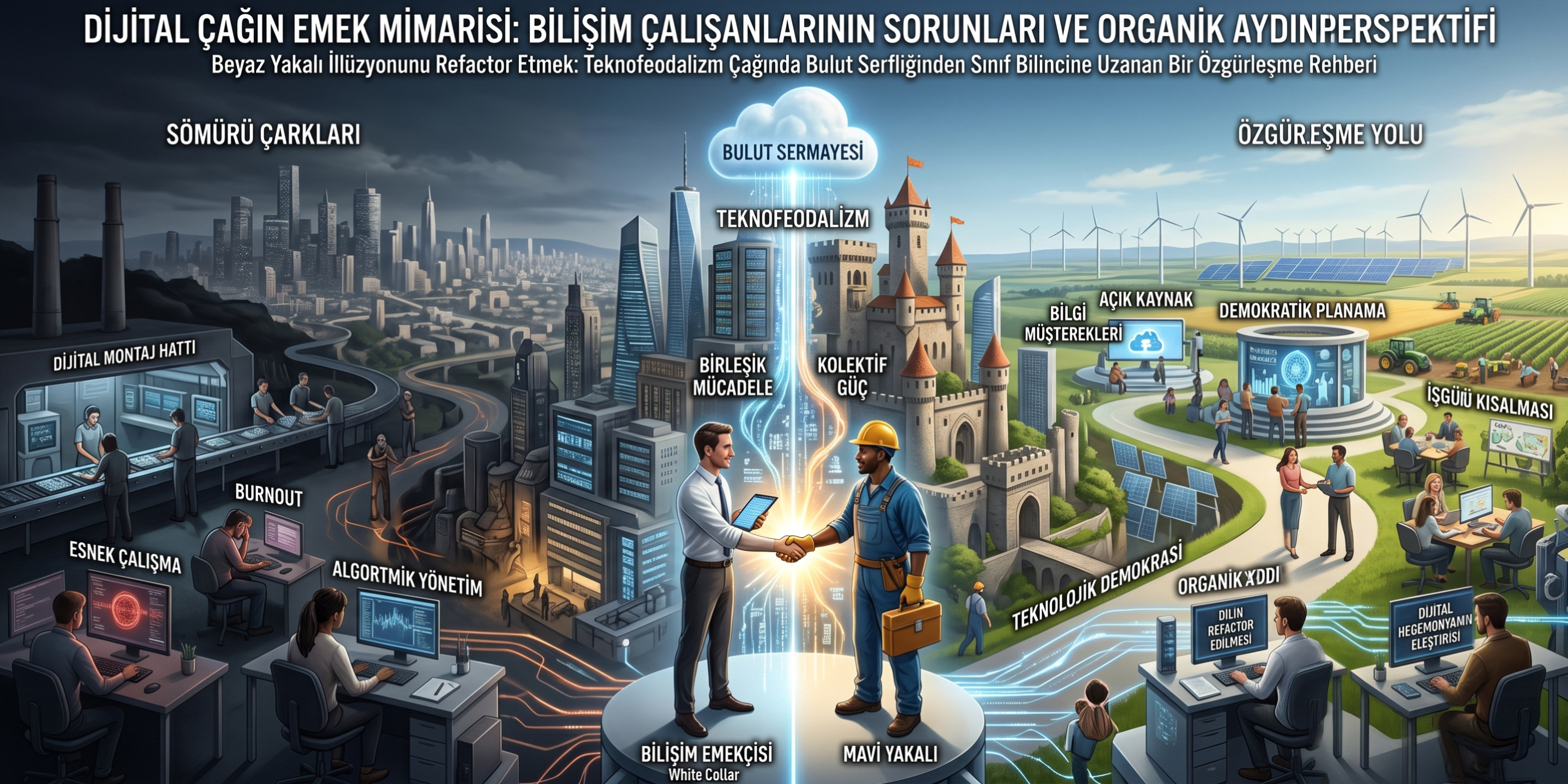
It is imperative that unions in different branches—such as BilişimSen, Büro-İş, Sosyal-İş, Tez-Koop-İş, or Haber-İş—establish a joint "Call Center Workers' Coordination" dedicated to call centers. The worker must be told to abandon the illusion of "You are a white-collar specialist" and that they are in fact subject to the very same mechanism of exploitation as the blue-collar worker.
Conclusion: Taking Off the Headset and Raising Our Voice
The call center worker gives the system not only their voice but their life. Against this order in which algorithms measure human beings by the second, the greatest antidote is the one thing the system cannot rationalize: human solidarity.
This struggle, stretching from the global BPO resistances to the office towers of Maslak, is not against technology itself, but against technology being used as a whip in the hands of capital. The moment call center workers come together and lay their headsets on the desk, the gears of that "uninterrupted communication" the system so proudly boasts of will instantly grind to a halt.
Connect to the solidarity line, take back control!