

From the Grip of Corporatism to Proletarian Oversight: Dual Power in IT
Subordinating Technical Reason to Proletarian Politics and the Revolutionary Function of Professional Chambers in Socialist Construction
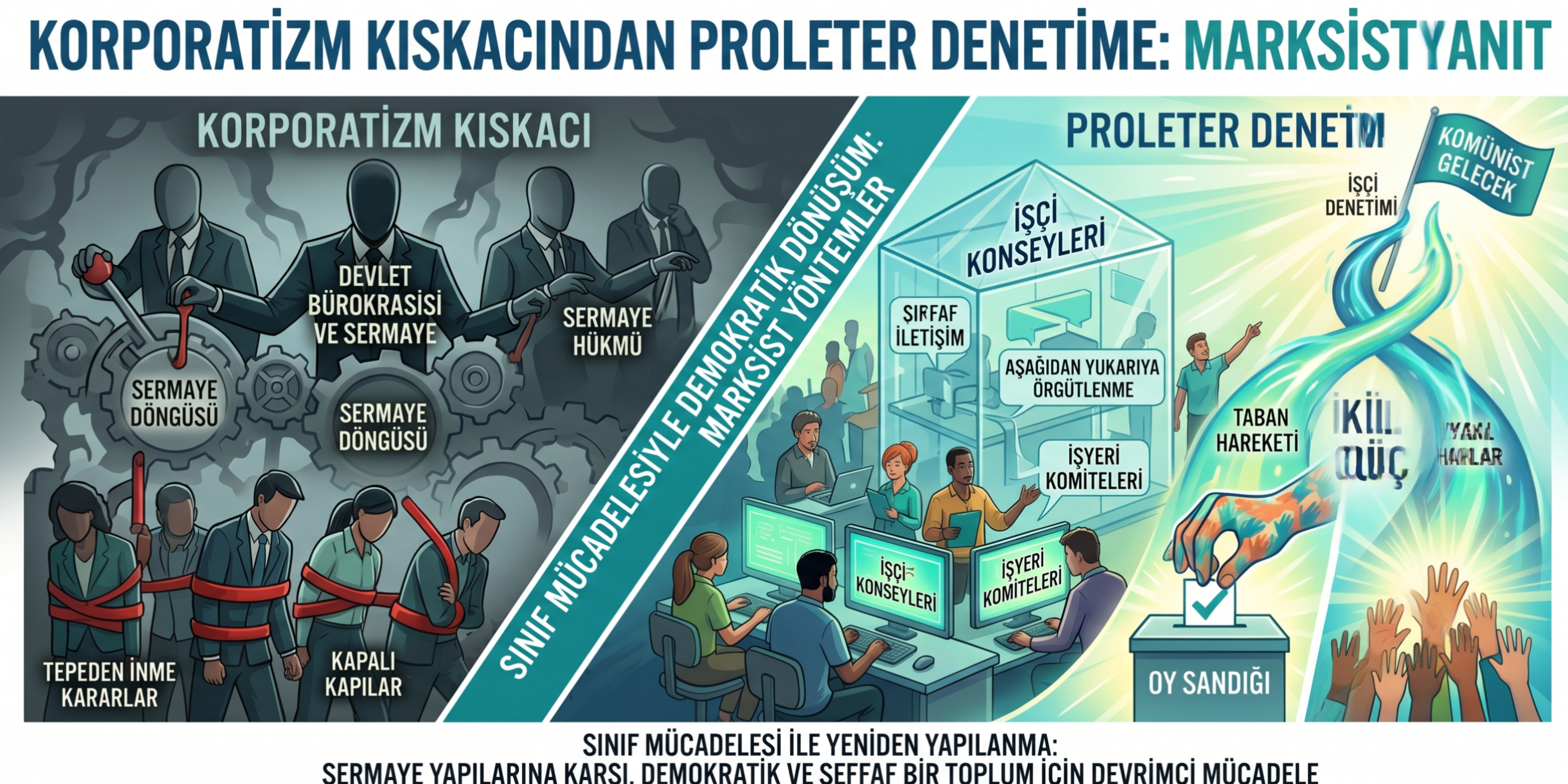
The critiques voiced under the heading "Corporatism" in response to the text in which we previously tried to describe the connections between chambers and unions contain justified theoretical reservations about the risk of professional organizations becoming integrated into the capitalist state apparatus and dampening class contradictions under the name of "professional harmony." However, defending the "Dual Power in IT" model from a Marxist-Leninist perspective does not mean confining these structures to a statist-corporatist vise; on the contrary, it means turning professional expertise into a constitutive element of the dictatorship of the proletariat and the process of socialist construction.
Below, I have tried to address an in-depth analysis that responds to the critique of corporatism and situates the role of professional organizations in modern socialist construction within a Marxist-Leninist theoretical framework:
Professional Organization in Socialist Construction: Corporatism or Proletarian Oversight?
1. The Corporatist Trap and the Marxist Distinction
The critiques define corporatism as an intermediate form that depoliticizes the class struggle through a limited number of hierarchical organizations recognized by the state. This definition constitutes a valid risk for structures like TMMOB within a capitalist regime of accumulation. However, while the Kemalist understanding of "populism" or "solidarism" rejects the labor-capital antagonism by advocating harmony between classes, Marxism-Leninism sees professional organizations as instruments in resolving this antagonism in favor of the proletariat.
In a socialist structure, the professional chamber is not an "institutional channel of interests" determined by the state, but an organ of "social accounting and oversight" in which technical reason is subordinated to proletarian politics in the social planning of production.
2. The Soviet Experience: Networks of Experts and Relations of Production
The Soviet experience, and especially Lenin's doctrine of the "approach to experts," is the most concrete example that distinguishes professional organization from corporatism. The professional unions and technical councils (Profsoyuzy) established after the October Revolution took expertise out of the position of being a "privileged stratum" and placed it in the service of social need.
- Production Councils: In the Soviets, engineers and technical personnel established direct ties with workers through the "Production Councils" in the factories. Here, the professional organization did not impose a technical necessity as a "narrow administrative reason"; on the contrary, it made technical knowledge a part of collective production.
- Gosplan and Network-Type Organization: The Soviet planning apparatus (Gosplan) conceived professional organizations not merely as regulatory structures but as data networks that tracked the development of the productive forces. This is a model that, for the IT sector, is being revived today through discussions of "algorithmic planning" and "data communism."
3. An Internationalist Approach Against the Kemalist Viewpoint
The Kemalist viewpoint emphasized as part of the critiques places professional groups in a class-less position by seeing them as the "technical vanguards" of national development. Yet the Marxist approach, shaped by the intervention of the Comintern, defines professional organizations as an ally and technical arm of the independent class organizations (the unions).
In our modern approach;
- The Union represents the daily rights and political will of labor, while
- The Professional Chamber manages the technical processes, standards, and social impacts (public benefit) of production with class consciousness. This creates a dual power: one represents the will of the class, the other the capacity for technical implementation.
4. The "Dual Power" Model in the IT Sector
Today, as the text also notes, IT workers have rapidly evolved from the position of "professional elites" into the character of wage workers. This material transformation renders the corporatist rhetoric of "professional solidarity" void.
In a socialist model, the cooperation between BMO and BilişimSen should rest on these three pillars:
- Democratic Planning: The technical oversight of algorithms and software processes by chambers for social needs rather than for capital accumulation.
- Technology Transfer and Public Benefit: Chambers taking on a developer role rather than a certifying one in turning software from a commodity into "common property."
- A United Front Against Precarity: The support of union organization against flexible work and project-based exploitation with the chamber's technical standards (minimum wage, working hours, ethical codes).
Conclusion
The critique of corporatism is right when it focuses on the aspects of professional organizations that "blunt critical thinking" and "confine them to the technical sphere." However, this critique cannot be a justification for rejecting the revolutionary potential of professional organizations. The Marxist-Leninist stance aims to detach these structures from the state and transform them into self-management apparatuses of the producing classes.
"Dual Power in IT" is not a corporatist harmony, but the revolutionary synthesis of technical reason and proletarian will on the path of socialist construction.