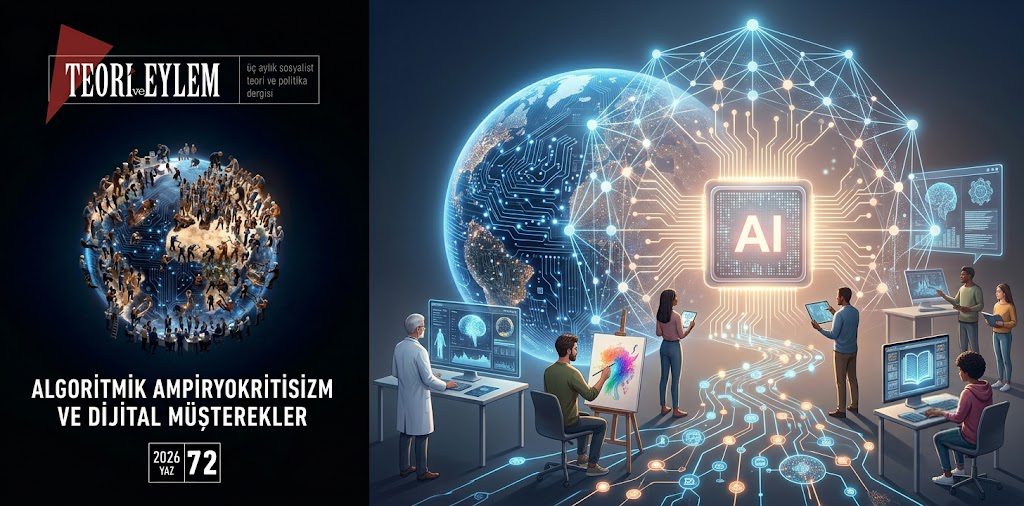
Dual Power in IT: A Guide to Cooperation Between the Union and the Professional Chamber
Two Torches in the Digital Dark: Seek Your Dignity in the Chamber, Your Rights in the Union!
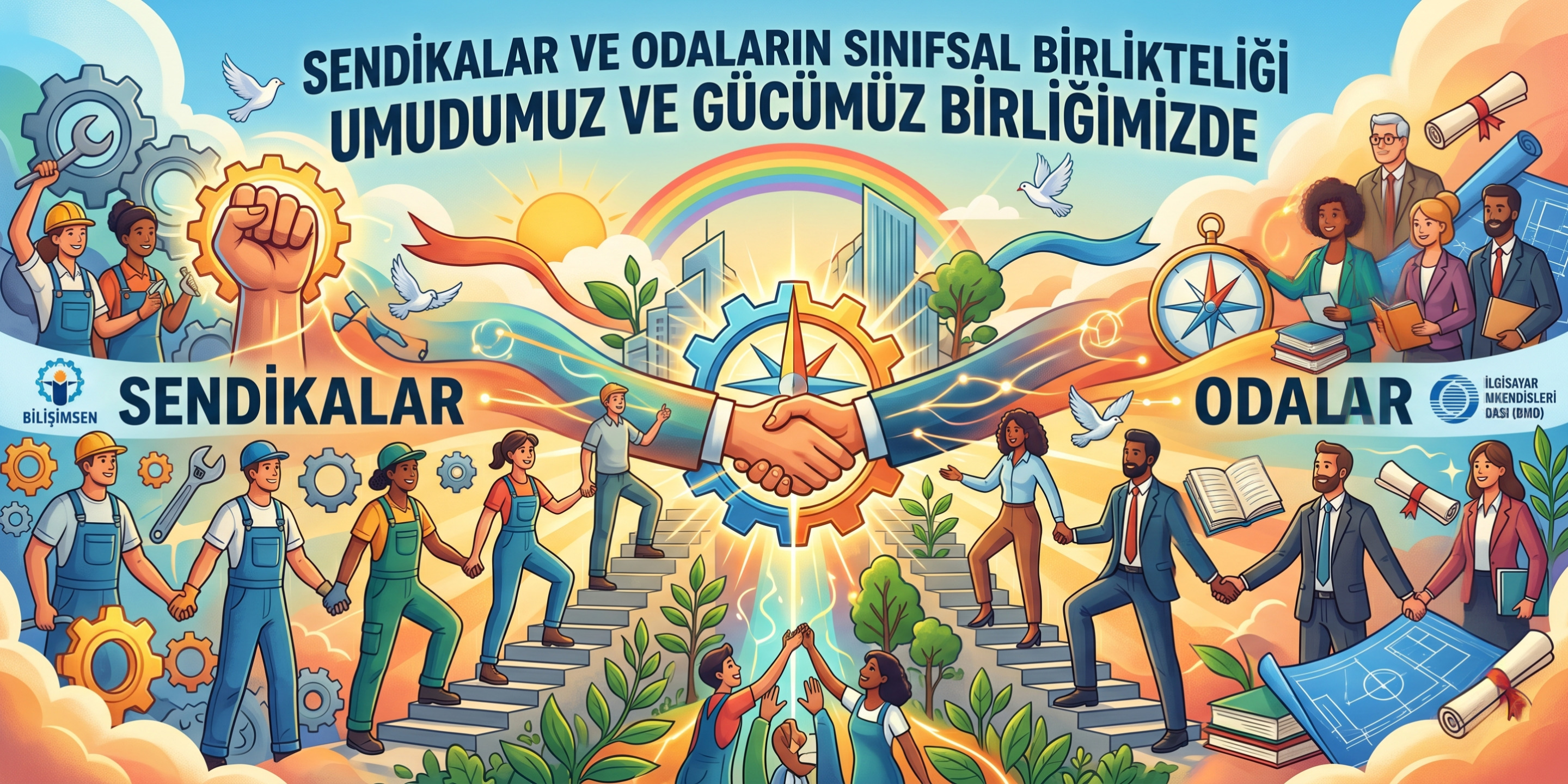
This guide is a comprehensive strategy document that aims to unite the fragmented structure of the IT sector into a class-based whole; it addresses the coordination between the organized power of BilişimSen and the professional bodies producing in the field of information technology, foremost among them the Chamber of Computer Engineers (BMO) as well as the Chamber of Electrical Engineers (EMO).
The Double Armor of the Digital Proletariat: A Coordination Guide for the IT Union and Professional Chambers
In today's world, the IT worker finds themselves inside a vast technological labyrinth. On one hand, there is an illusion fed by "titles," "plazas," and "stocks"; on the other hand, they face exploitation in its most sophisticated form (remote work, crunch time, deskilling). The way out of this labyrinth is a bond of steel forged between the Union, which represents class consciousness, and the Chamber, which represents professional quality.
1. Core Doctrine: Engineering Dignity and Working-Class Consciousness
An engineer working in the IT sector (or a worker with an engineering education) holds two identities at once. These identities are not opposites of one another, but complements.
- Professional Identity (Chamber): Defends the quality of production, scientific standards, and ethical principles. It is responsible to society.
- Class Identity (Union): Defends the engineer's position within relations of production, the worth of their labor, and humane living conditions. It is responsible against the boss class.
Strategic Distinction: The engineer should lean on their Chamber regarding "what they produce" and "how they produce it"; and on their Union regarding "for whom they produce" and "under what conditions they produce."
2. Actors and Positions: Who Should Stand Where?
The IT sector is a multidisciplinary field. For this reason, the range of chambers with which BilişimSen will communicate is broad.
A. Chamber of Computer Engineers (BMO): The Main Strategic Partner
The definition of "engineering" in the sector is not limited to writing code; we are the gears of a vast machine, from physical infrastructure to process management.
Here is a detailed guide to the multidisciplinary engineering layers in the world of IT:
Two Torches in the Digital Dark: Seek Your Dignity in the Chamber, Your Rights in the Union!
2. Deepening the Positions: The Areas of Expertise and Oversight of the Professional Chambers
The IT worker exists not merely at a screen, but within a production ecosystem. Every layer of this ecosystem is under the supervision of a different professional discipline and the Chamber that represents it.
A. Chamber of Computer Engineers (BMO): The Architectural Authority of Software and Data
BMO is the "center of reason and logic" of the digital world. This field, where IT production is most intensive, is at the same time where exploitation is most invisibly disguised.
-
Software Lifecycle Oversight: Not only that a piece of software runs, but that it is "secure, sustainable, and ethical," is subject to engineering oversight. By advocating that critical software—from public institutions to banking systems—obtain "engineering approval," BMO stands against deskilling.
-
Algorithmic Accountability: It erects an ethical barrier against artificial intelligence (AI) producing algorithms that violate workers' rights or feed social prejudices. By shattering the myth of the "neutrality of code," it exposes the class-based and ethical choices behind the code.
-
Cybersecurity and Data Sovereignty: Against data being plundered as "oil" (a commodity), it defends data as a "public right." It treats cybersecurity not merely as a technical wall, but as a matter of independence.
B. Chamber of Electrical Engineers (EMO): The Infrastructure and Hardware Position
The entire physical world on which software runs is EMO's area of expertise. It reminds us that what is called the "cloud" is in fact vast, energy-devouring server farms.
- Hardware and Embedded Systems: The design and production of all kinds of hardware, from processors to IoT devices, is EMO's domain. It enables the engineer to understand "hardware ownership" and to advocate for open hardware standards.
- Network Infrastructure and Telecommunications: It is our technical foundation in the struggle for the internet to be a "human right," not a "commodity." By presenting scientific reports against Net Neutrality violations and access blocks, it erects a technical barricade against digital censorship.
- Data Centers and Energy Efficiency: It scrutinizes the ecological cost of digitalization and energy policies through an engineering lens. It turns the concept of Green IT from being capital's "whitewashing" into a technical imperative.
C. Industrial Engineers and Others: Process and Optimization
How software teams will work, how projects will be managed, and how big data will be made meaningful is the domain of Industrial Engineers (specialist groups under the umbrella of the MMO).
- Oversight of Agile Methodologies: Against methods like Agile/Scrum being turned into a "digital whip" to exploit the worker further, it draws the scientific and humane limits of workload planning.
- Business Analysis and ERP Processes: In ERP and CRM processes—the digital nervous system of companies—it advocates process designs that prevent employees from being turned into a "data object."
- Data Mining and Decision Support Systems: It scientifically proves that big data can be optimized not only for profit maximization, but also for social benefit and the fair distribution of resources.
Common Ground: The Union of Technical Authority and Trade-Union Power
These chambers make the IT worker ask this question: "Where does my engineering title stand in relation to the boss's lust for profit?"
- While the Chamber guarantees the technical quality and social safety of the code the engineer writes or the circuit they build,
- BilişimSen guarantees that the hand writing that code or building that circuit does not grow weary, go hungry, or suffer mobbing.
If bodies like BMO/EMO/MMO say "this project is technically/ethically flawed," BilişimSen turns that technical opinion into a force of resistance by saying "I will not let my members work on this flawed and unethical project." This is the healthy bond: scientific truth meeting organized power!
3. BilişimSen's Areas of Concentration (Union Tasks)
This section covers the struggle areas of BilişimSen that arise not from ivory towers, but directly from the sweat at the keyboard, the endless midnight "sprints," and the anxiety created by Slack notifications. On that hard ground where the IT worker collides with the reality of "I am a worker," shedding the illusion of "I am an entrepreneur," the union steps in as both a protective shield and an offensive force.
For the IT worker, the union is not merely a dues-collecting institution; it is the sole obstacle between the arbitrary will of the boss and the engineer's future. At the union's core is "living labor."
Here are the areas of concentration that BilişimSen must weave cell by cell, office by office:
A. Economic Rights: The Struggle for "Seniority" and a "Base Wage"
In the IT sector, salaries are atomized by being bracketed as a matter of "individual talent." Yet we know that your high salary is not the boss's grace, but the momentary tightness of the market.
- Sectoral Base Wage: BilişimSen sets scales for a "Minimum Living and Dignity Wage," below which no company may fall, according to engineering titles and years of experience, and imposes this through collective bargaining agreements.
- Real Wages Against Inflation: Not just the numerical increase of salaries, but the preservation of purchasing power, is essential. In a sector with foreign-currency-based costs and high living expenses, it defends "automatic indexation" (sliding-scale raise) systems against the erosion of wages.
B. Against the Exploitation of Time: "The Right to Disconnect"
Remote work has turned, for capital, into an opportunity to shed office costs and turn the worker into a "digital slave" reachable 24 hours a day.
- Oversight of Working Hours: BilişimSen stands against the limitless overtime hiding beneath the lie of "flexible work." It does not allow the 40-hour weekly limit to be exceeded, nor weekend "on-call" duty systems to go uncompensated.
- Right to Disconnect: It defends that not answering Slack, Jira, or email notifications after work hours is not a "disciplinary offense" but a human right, and it inscribes this right into employment contracts.
C. The Digital Whip: Algorithmic Management and Performance Pressure
Today the IT worker is under the supervision of an algorithm (Jira, Trello, GitHub metrics), not a human being.
- The Terror of KPIs and Sprints: Against unrealistic deadlines and "performance scoring" that pits workers against one another, it demands scientific workload analyses.
- No to the Surveillance Society: Against degrading "digital surveillance" tools such as the monitoring of computer cameras and keystroke logging, it establishes a position of data privacy and worker dignity.
D. Job Security and Artificial Intelligence Under Technofeudalism
Artificial intelligence (AI) is used by capital as a threat to render the worker unemployed or to lower their wages through deskilling.
- Resistance Against AI-Driven Layoffs: It demands that productivity gains be reflected not in the boss's profit ledger, but in reduced working hours (a 4-day workweek) and rights to education.
- Training Against Loss of Skill: For members at risk of losing their jobs due to technological change, the union does not leave them to the mercy of capital, but provides "class-based technical training" within its own structure.
E. The Barricade Against Psychological Violence and Mobbing
Beneath the "white-collar" politeness of the IT sector lies an intense reality of mobbing and burnout.
- Legal and Psychological Support: For a member who suffers mobbing, the union is not just a lawyer but a network of solidarity. By saying "you are not alone," it turns individual collapse into collective resistance.
- Combating Toxic Culture: It exposes and denounces toxic company cultures that sanctify overtime by saying "we are a family," and that conceal hierarchy behind the mask of "horizontal organization."
F. Collective Power: From Individualism to Trade-Union Unity
Against the sector's greatest obstacle—the individualism of "I'll save myself"—it explains that the fates of the developer, the tester, the systems administrator, and the designer are shared.
- Workplace Representations: Through "union representatives" in plazas and digital networks, it builds an organization reachable at any moment.
- Solidarity Funds: In cases of strikes or unjust dismissal, it creates collective funds that will not condemn its members to hunger.
In short, BilişimSen protects the sweat of the brow within the code as much as it knows the value of the code in the engineer's hands. If the chambers (BMO, EMO, etc.) are engineering's "scientific compass," BilişimSen is the "life insurance" and the "class fist" of the human being who produces that science.
Do not forget, my friend; the boss's luxury office was built with the bricks of your sleepless nights. To pull out one of those bricks, you must organize in your union!
4. Areas of Concentration of the Professional Chambers (BMO, EMO, etc.) (Chamber Tasks)
This section is the position that protects the dignity of engineering as a social "science and art," against engineering being seen by capital as a "tool." Bodies such as BMO, EMO, and MMO write and oversee the constitution of digital production. They guarantee the conformity to the public good and professional dignity of those lines of code, circuit boards, and process plans we call "objectified labor."
The professional chambers defend that engineering is not merely a "means of livelihood," but a public service that determines the fate of society. The chambers take the engineer out of being the boss's "technical secretary" and turn them into society's "scientific conscience."
Here are the areas of concentration that the professional chambers must deepen against the siege of technofeudalism:
A. Professional Standards and Resistance Against Deskilling
Capital wants to fragment engineering knowledge (modularization) and turn the engineer into an easily replaceable "code laborer."
- Engineering Accreditation and Standards: BMO and EMO set the minimum scientific limits of engineering education and practice. Against the destruction of engineering depth by the bootcamp illusion of "rapidly producing developers," they defend the preservation of professional formation.
- Authority of Technical Oversight: Just as the inspection of elevators in public buildings is mandatory, they demand that public data centers, the critical algorithms used by the state, and cybersecurity infrastructures also pass through Chamber oversight (certification).
B. Professional Ethics and the "Conscientious Objection" Mechanism
An engineer's greatest power is the ability to say, "No, what we are doing harms society."
- Building Ethical Codes: It forms the engineer's ethical compass against the use of AI for mass surveillance, against data manipulation, or against technological processes that harm the environment.
- Whistleblowing and the Protection of the Engineer: Behind the engineer who sees and exposes social harm, there must be the Chamber's armor of legal and professional legitimacy. It puts into practice the principle that "the Chamber is the fortress of the engineer who acts ethically."
C. Legal Positions and Technical Expert Witnessing (Not Lobbying, but Advocacy)
While the state apparatus and capital frame IT laws (AI Act, KVKK, the Disinformation Law, etc.) according to their own interests, the chambers take the stage as "society's technical spokesperson."
- Intervention in Legislative Processes: In every kind of legal regulation related to IT, the chambers must exist not merely as bodies offering opinions, but as an authority that determines the technical backbone of the law.
- Expert Witness Institution: In IT disputes brought to the judiciary (patent cases, data theft, the technical pretexts in unjust dismissals), the chambers form the pool of impartial and scientific expert witnesses.
D. Stewardship of the "Knowledge Commons" and Continuous Education
Knowledge cannot be condemned to capital's paid certifications.
- Chamber Academies: Continuous education centers established within BMO and EMO convey technology not as a "market product" but as a "public accumulation." They place the culture of Open Source and Open Hardware at the center of engineering practice.
- Scientific Publishing: Against the "enclosure" of knowledge, they ensure the free flow of scientific accumulation to the public and to engineers through peer-reviewed journals and technical bulletins.
E. Signing Authority and Professional Liability Insurance
It stands against the "anonymization of responsibility" in the digital world.
- Professional Responsibility: It advocates that there must be the signature of an authorized engineer beneath critical systems (hospital automation, traffic control systems, nuclear plant software). This grants the engineer not only responsibility but also a vast realm of "professional autonomy" against the boss.
- Protection of the Title: By ensuring that the title "Engineer" remains under legal protection, it shields the quality and value of labor from the savage fluctuations of the market.
5. A Healthy Communication Protocol: How Should the Union and the Chambers Speak?
Communication must not be a hierarchy, but a coordination among equals.
The Union and the Chambers are two different arms of the same IT worker. If one does not fortify the position the other holds, capital seeps through that gap. Communication must move beyond paper wishes and turn into a "Joint Action Plan."
Here are the details of the healthy communication protocol that the two structures will establish by sending each other a class-based and professional "handshake":
A. The Institutional "API": The IT Coordination Council
Communication cannot be left to chance or personal friendships.
- Periodic Coordination Table: Representatives of BilişimSen and the administrations of BMO, EMO, and related chambers must come together at least once a month for a "Sectoral Situation Assessment."
- Joint Working Groups: On specific topics such as "Artificial Intelligence and Unemployment," "Occupational Health and Safety in IT," and "The Legal Infrastructure of Remote Work," mixed commissions with experts from both structures must be established.
- Protocol: The Chamber provides technical data and academic literature; the Union brings field observations and the concrete forms of exploitation experienced by members.
B. Data Sovereignty and Sharing the "Sectoral Panorama"
Information is the greatest power, but when shared it turns into a common weapon.
- Data Exchange: The chambers must share post-graduation employment data and technical competency maps with the union. The union, in turn, must present anonymized real salary averages in workplaces, mobbing reports, and burnout statistics to the Chamber.
- Annual "State of Labor" Report: Every year, before May 1, Turkey's most comprehensive "IT Workers' Rights and Professional Status Report," uniting the technical prestige of the chambers and the class power of the union, must be published jointly.
C. Protection of the "Minimum Wage" and the "Standard Contract"
Here, communication must become an "Iron Fist" against the bosses.
- Setting the Wage Scale: The "Minimum Engineer Wage" set by TMMOB must cease to be a mere recommendation. While the Chamber declares this figure as a technical and scientific "subsistence threshold," BilişimSen must turn every contract below this figure into a "Cause for Strike" or a "Matter for Legal Struggle."
- Standard Employment Contract: The chambers and the union must prepare an "approved" Standard Employment Contract for IT workers. In this contract, the "right to disconnect," "the portions of intellectual property that should belong to the worker," and "definitions of overtime" must be clear.
D. Crisis Management and the "Emergency Response" Line
In the moment of a major layoff or rights violation, the speed of communication saves lives.
- Joint Crisis Table: When a mass layoff or union-busting operation begins at a technology company, the Chamber and the Union must immediately issue a joint press declaration.
- Strategy: The Chamber, by saying "This purge is an attack on technical accumulation," triggers the public conscience and technical legitimacy; the Union, by saying "This is a class attack," initiates resistance in the workplace and the legal process.
- Expert Witness Support: In labor cases, for the "technical reports" that will prove the worker's righteousness, the Union must receive scientific support from the Chamber's pool of expert witnesses.
E. Joint Education and Building Hegemony
The struggle for enlightenment requires a common education strategy.
- Joint Academy: Courses on "Engineering Ethics and Workers' Rights" must become a joint certification program of both institutions. Upon graduation, the engineer must learn both the technical standards and the right to organize as a whole.
- Digital Commons Campaign: Through joint panels and festivals, it must be explained to the masses that free software and the open-source world are a matter of "workers' rights" and "technological independence."
F. International Representation and Solidarity
Capital is global; therefore our communication must also cross borders.
- Global Networks: While BMO and EMO raise workers' rights in international professional federations (IEEE, etc.), BilişimSen must share technical engineering problems with global trade-union networks (UNI Global, etc.).
The summary of healthy communication is this: While capital focuses on dividing us, we must focus on connecting with one another. The Chamber is the IT worker's "academic and technical armor"; the Union is the "striking hand" inside that armor. If the armor is torn from the hand, and the hand from the armor, capital catches the engineer naked and defenseless.
Our protocol is clear:
- Share scientific data. 2. Defend professional dignity. 3. Bring down the class fist together.
6. A United Front in the Age of Technofeudalism: AI and Automation
Artificial intelligence is the gathering of objectified human labor (data) into a vast pool, then driven once again as an element of competition against the human being. In this process, the chambers must defend "the quality of the algorithm" and the union "the fate of labor," uniting their trenches.
A. The "Skilled Labor" Barricade Against the Threat of Deskilling
Capital wants to use AI tools (GitHub Copilot, ChatGPT, etc.) to "simplify" complex engineering processes and thereby turn the engineer into a cheaper, easily replaceable "operator."
- Chamber Position: BMO and EMO must make it a legal requirement that code/designs produced by AI pass through stages of "engineering approval" and "responsibility." The principle "AI writes, the engineer inspects and approves" is the greatest legal shield against deskilling.
- Union Position: BilişimSen stands against attempts to "lower wages because AI is used" or to "simplify the job description." It does not allow productivity gains to devalue the worker's title and seniority.
B. Algorithmic Transparency and Exposing the "Black Box"
The technofeudal lords hide their algorithms from society and the worker under the guise of "trade secret."
- Joint Demand: Every AI model used in the public sphere or in working life must have an "Algorithmic Audit Report."
- The chambers must inspect the technical accuracy and ethical conformity of these reports (bias control, etc.).
- The union must inspect whether these algorithms are used for performance measurement, layoff decisions, or covert surveillance.
C. Whose Pocket Do Productivity Gains Go Into? The Struggle for a "4-Day Workweek"
If automation allows the same work to be done in much less time, this time savings must be reflected not in the boss's profit, but in the worker's life.
- Union Strategy: BilişimSen must use the AI-assisted productivity gain as its greatest leverage for "Reducing Weekly Working Hours" (a 4-Day Workweek, a 6-Hour Day). The question "If AI is working in our place, why are we still in the office 40 hours?" must become the class's main question.
- Chamber Support: By proving with scientific reports the productivity gains created by automation, the chambers must provide a foundation of "technical and economic legitimacy" for this union demand.
D. "General Intellect" and Data Sovereignty
AI models are trained on the open-source code and data of millions of developers. That is, capital steals our collective intellect (General Intellect) from us and sells it back to us.
- Defense of the Commons: BMO and BilişimSen must defend the concept of the "Data Commons." It must be demanded that models trained with public resources or open-source data be "public property" or be protected with "Copyleft" licenses.
- Royalties and Stakeholding: When the data/code produced by the engineer is used in AI training, joint lobbying must be done so that the worker and society receive a share of this added value (an AI tax or social funds).
E. Not AI Ethics, but AI Class Struggle
Capital's "Ethical AI" discourse is most often a cosmetic (open-washing).
- Right to Conscientious Objection: An engineer must have the right to refuse to work on an AI project that surveils society, is used in war technologies, or violates workers' rights.
- The Chamber must declare this refusal legitimate as a matter of "Professional Ethics";
- The Union must actively protect the engineer whom they attempt to dismiss for this reason.
The "Homo Commonans" Front Against Technofeudalism
Technofeudalism wants to atomize us, leaving us alone and defenseless against the algorithms. But we, with the organized fist of BilişimSen and the scientific reason of our chambers, can conquer these fortresses from within.
Artificial intelligence must be used not to render us unemployed, but to free us from compulsory labor. The only way to do this is to take the ownership and control of technology out of the hands of capital and place it into the hands of the "Commons."
7. Homo Commonans: Meeting in the Knowledge Commons
The organic intellectual of the future will not be a "technician" who places their knowledge in the service of capital; they will be a "Commoning Human" (Homo Commonans) who uses their knowledge for the common good of society.
Capital dispossesses society by turning knowledge into property (patents, copyrights, closed sources). Homo Commonans, on the other hand, is the new-generation "organic" subject who knows that knowledge multiplies as it is shared, while ownership suffocates development.
A. Digital Pastures Against "Enclosure"
Just as in history the peasants' common pastures were fenced off with wire and taken from them, today our collective intellect (our code, our data) is being enclosed by the technology giants.
- The Chambers' Task: BMO and EMO must define "Open Standards" and "Free Software" not merely as a technical preference, but as a professional ethical imperative. Defending the "Knowledge Commons" against the enclosure of knowledge is the oath of modern engineering.
- The Union's Task: BilişimSen stands against the labor working on free software projects being rendered invisible, or against this labor being exploited "for free" by capital. By saying "free software is not free labor," it defends the relations of production in this field too on a class basis.
B. From Ownership to "Stewardship"
Homo Commonans is, rather than someone who "owns" knowledge, a steward who "protects it in order to pass it on to future generations."
- Common Infrastructures: The chambers and the union, in partnership with municipalities and public institutions, must establish "Digital Cooperatives" and "Local Server Farms." The goal must be to remove data and processing from the servers of the giant monopolies and host them on servers under the control of the people and labor (in the commons).
- A New Definition of Value: Success must be measured not by the number in a bank account, but by the free contribution left to the social library (GitHub, GitLab, Wikipedia, etc.).
C. Not Competition, but Reciprocity
Against Homo Economicus's principle that "everyone is a wolf to everyone," Homo Commonans says, "I am free only when we are."
- Peer Production: The union and the chamber must break the vertical hierarchy among engineers and encourage horizontal, solidaristic, and non-hierarchical production models (DAOs, cooperatives, work collectives).
- Knowledge Exchange: A "mentorship and solidarity network" must be woven, where the engineer does not hoard their "technical secret" but raises the total class consciousness by teaching it to their fellow worker.
D. Techno-Politics: The Politicization of the Engineer
Homo Commonans knows that technical knowledge is not neutral. Every line of code is a worldview.
- The Chambers' Role: To turn the engineer from someone who merely "does the math" into a political subject who "calculates the social consequences."
- The Union's Role: To make the IT worker understand that the trade-union struggle is not only economic but a technological revolution. "Control of the means of production" today is the control of servers, algorithms, and data.
E. A Festive Production and Creativity
For Homo Commonans, work is not torment but an act of self-realization.
- Liberation from Compulsory Labor: With the time savings provided by AI and automation, an increase in the time the human being can devote to themselves, to art, to science, and to social relations.
- Creative Commons: Scientific production, freed from the "creative blockage" created by the lust for profit, blossoming freely.
Conclusion: The Historical Task
The IT worker is neither merely a "professional with a diploma" nor merely a "code writer." They are the founding force of the digital age. The engineer who protects their professional dignity by joining their Chamber, and their class dignity by joining their Union, can experience true liberation only when standing on these two legs.
BMO, EMO, MMO, and BilişimSen—though they look through different windows—are inside the same room. That room is the room of a Turkey and a world where labor is liberated.
We live in the most paradoxical period of history. Humanity's total accumulation of knowledge (General Intellect) is more vast than ever, yet access to this knowledge and the fruits of this knowledge are in the hands of a narrower clique (the technology barons) than ever. The force that will untie this knot is neither technical knowledge alone nor trade-union rage alone; what will untie this knot is an organized mind and a constructive will.
1. From Passive Resistance to Active Construction: The Engineer's New Mission
For years we said, "let us protect our rights." This was true but incomplete. Now we exist not merely to "increase our share" at the table set by capital, but to clear that table away and set in its place the table of the commons.
- The Historical Task: To take knowledge out of being capital's "profit machine" and turn it into society's "instrument of freedom."
- The Intellectual's Responsibility: To carry Hikmet Kıvılcımlı's revolutionary patriotic spirit into the defense of the "digital homeland" and the "knowledge commons" today. For an engineer, the historical task is to sanctify not the ownership of the code they write, but its social benefit.
2. The Fall of Technofeudalism: Digital Barricades and Common Fortresses
Capital has imprisoned us in its own "platforms." It has turned our data into property and surrounded our lives with algorithms. But there is one thing they have forgotten: We built those systems, we keep them alive, and we can stop them.
- The Union of Chamber and Union: These two structures are the founding councils of the new world. While BMO, EMO, and the other professional chambers write the "scientific laws" of this new world, BilişimSen organizes the "class power" necessary to put these laws into practice.
- The Infrastructure of the New World: The world we will build is the world not of closed software but of free sources; not of patented medicines but of open science; not of technology giants but of worker cooperatives and the digital commons.
3. The Dawn of Homo Commonans: The End of Alienation
Capital made us rivals of one another. It made us say, "I must write the best code so that I am not fired." Homo Commonans (the Commoning Human), on the other hand, rejects this competition out of hand.
"Humanity will begin its true history only when it breaks the chains of ownership over its own labor and knowledge."
In the new world, work will not be a "struggle for livelihood" but a "festival of creation." We will devote the time provided by artificial intelligence to one another, to art, and to philosophy. Knowledge will no longer be a commodity for sale, but will belong to everyone like the air we breathe.
4. The Great Call: Rise, Organize, and Build!
My fellow IT worker; developer, systems administrator, engineer, designer, data worker... You are the most strategic force of this age. The "Full Independence" that Deniz Gezmiş and his comrades cried out from the gallows echoes today on your keyboard as "Technological Sovereignty."
- Go to BMO: Stand up for your professional dignity, your diploma, and your ethical values. Do not allow knowledge to be handed over to capital.
- Come to BilişimSen: Take your place beside your class. Remember that on your own you are merely a "screw," but when organized you are a "will" that can stop that great machine.
- Build the New World: Write not only for companies, but for the people. Design not only for profit, but for freedom. Build the knowledge commons.
Final Word: We Will Take Back the Future Stolen From Us!
The future lies neither in the dark algorithms of Silicon Valley nor in the server farms of the technofeudal lords. The future is in our hands—we who bring the world into being with our labor, who cut through the darkness with our knowledge, and who end exploitation with our organized power.
The dark may be dense, the enemy may be strong; but behind us is a millennia-long accumulation, beside us are our class siblings, and before us is a free world.
Our code: Freedom. Our database: Solidarity. Our operating system: Socialism.
Rise, Homo Commonans! The world you will build awaits you!
BMO, EMO, MMO: The Scientific Compass! BilişimSen: The Class Fist!
Long Live a Fully Independent and Free Turkey!
This guide has tried to shed light on the fundamental foundations of IT organization, in the light of the realities of the year 2026.