The Public Responsibility of Scientific Knowledge: From Soma to the Future, a Trade-Union and Ethical Legacy
Putting Science at the Service of the People: A Technique Dedicated Not to Exploitation, but to Life
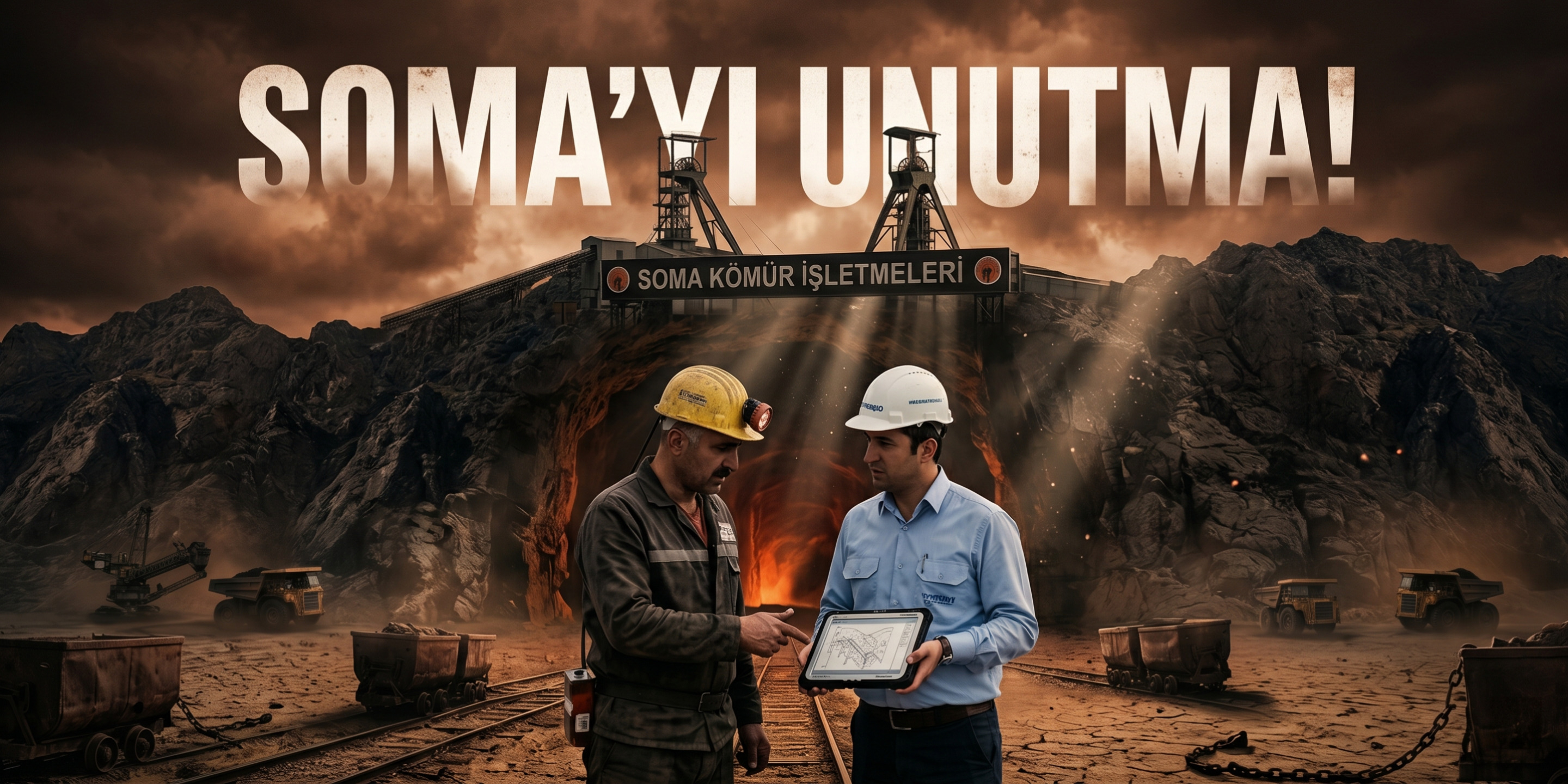
Turkey's history of industrialization and technological development is, unfortunately, filled not only with successes but also with great social wounds such as the Soma disaster. These bitter experiences have shown us that technical knowledge, when not blended with merit and ethical principles, can become not merely a means of production, but also the harbinger of disasters. At this point, the institutional responsibility of organized structures such as chambers and trade unions is as vitally important as the individual stance of the scientist.
1. The Technical Worker and the Scientist: The Defender Not of Capital, but of Life
The Soma massacre laid bare in its starkest form how engineering knowledge is instrumentalized by a profit-oriented management mentality. What was needed there that day was not merely more advanced sensors or deeper excavation techniques; what was needed was the "ethical resistance" that would defend scientific data against the pressure of capital.
- The Scientific Quality of Exposure: The people's scientist is not one who confines the risks he sees within the corporate hierarchy, but one who exposes these risks as a public threat. Technical reports gain the quality of true documents when they are presented not merely to the boss's desk, but to the conscience of society.
- The Fallacy of the Neutrality of Knowledge: Science is not neutral at the stage of application. It is either on the side of safety and life, or of the profit margin. Engineering and technical expertise are not about "managing" the deficiencies in the production process, but the art of giving advance warning of the destruction these deficiencies may cause.
2. The Historical Mission of Professional Organizations and Trade Unions
Democratic professional organizations such as TMMOB and similar bodies, along with trade unions, have not only been structures defending members' rights in the history of Turkey; they have at the same time been the guarantors that the country's technical and scientific accumulation is used "for the public benefit." The Soma process has loaded the following responsibilities onto the shoulders of these institutions:
- Independent Oversight and Technical Objection: Trade unions and chambers must, against the marketized mechanisms of inspection, be the independent fortress of science and technique. To be able to say "no" with scientific criteria to projects that the state or the private sector deems "acceptable" is the greatest debt owed to society.
- Withstanding the Pressure on the Member: When a software developer, an engineer, or a technician who says "This system is not safe" at the workplace faces the threat of being fired, the organization must be the first harbor of refuge. Institutional structures must turn the individual ethical stances of their members into a collective shield of protection.
- Social Memory and Intellectual Follow-Up: After a disaster occurs, it is not enough merely to publish a message of condolence. The essential duty of TMMOB and the trade unions is to intervene "on behalf of the public" at every stage, from the legal process of the case to the analysis of technical errors, and to prevent the covering-up of the truth.
Conclusion: The Way to Build the Future
The cherished memory of the 301 lives we lost in Soma is the name not only of a mourning, but of a great "historical task." Every lamp extinguished in those pitch-black mines poses to us technical people, engineers, and intellectuals this question:
"Whose shield is your knowledge, whose privilege is your pen?"
Today we stand at the threshold of a new age in which data is the mine and algorithms shape life. Yet it must not be forgotten that, however much technology develops, the test of science and technique "with human dignity" against the profit greed of capital has not changed. Those who will build the future are not the technocrats imprisoned in the cold light of laboratories or in the pixels of screens, but those who feel on their shoulders the social cost of every line of code they produce and every system they design.
For a true intellectual and a people's scientist, the duty is not merely to run systems, but to expose the gears of those systems that crush the human, and, if necessary, to thrust into those wheels the unshakable will of science and conscience. Our trade unions and professional organizations, in turn, must be "fortresses of truth" where individual fears are overcome and turned into social courage, where knowledge is channeled not to capital but to the people.
With that heavy legacy we have taken from Soma, we take up this epic responsibility that history has placed upon us. Our trade unionism is the defense not only of figures and payrolls, but of the honor of science and the right to life of the working class. To not merely see the light within the darkness, but to be that light itself; to put the power of knowledge at the service not of exploitation, but of liberation, is our solemn duty.
The future will be built by those who add their knowledge to the bread and the very life of the people; by those who mobilize their organized will, far beyond factional calculations, for the common benefit of humanity.
With science, with resilience, and with hope!