From the Garden to the Barricades: The Epistemology of Comradeship and the Sublimity of Solidarity, from Epicurus to Marx
The Breaking of Mechanical Fatalism: Epicurus's Clinamen Against Democritus's Determinism
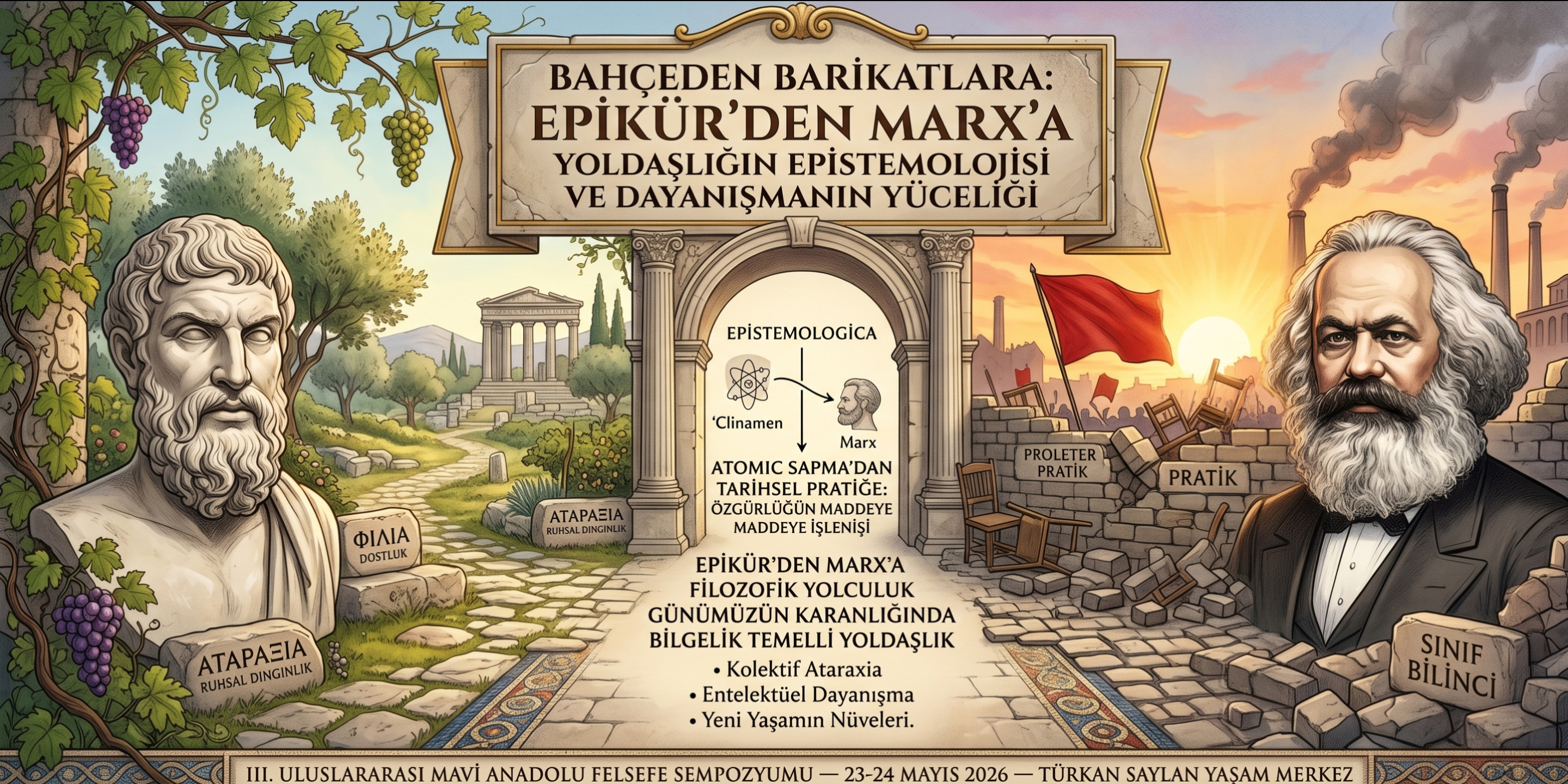
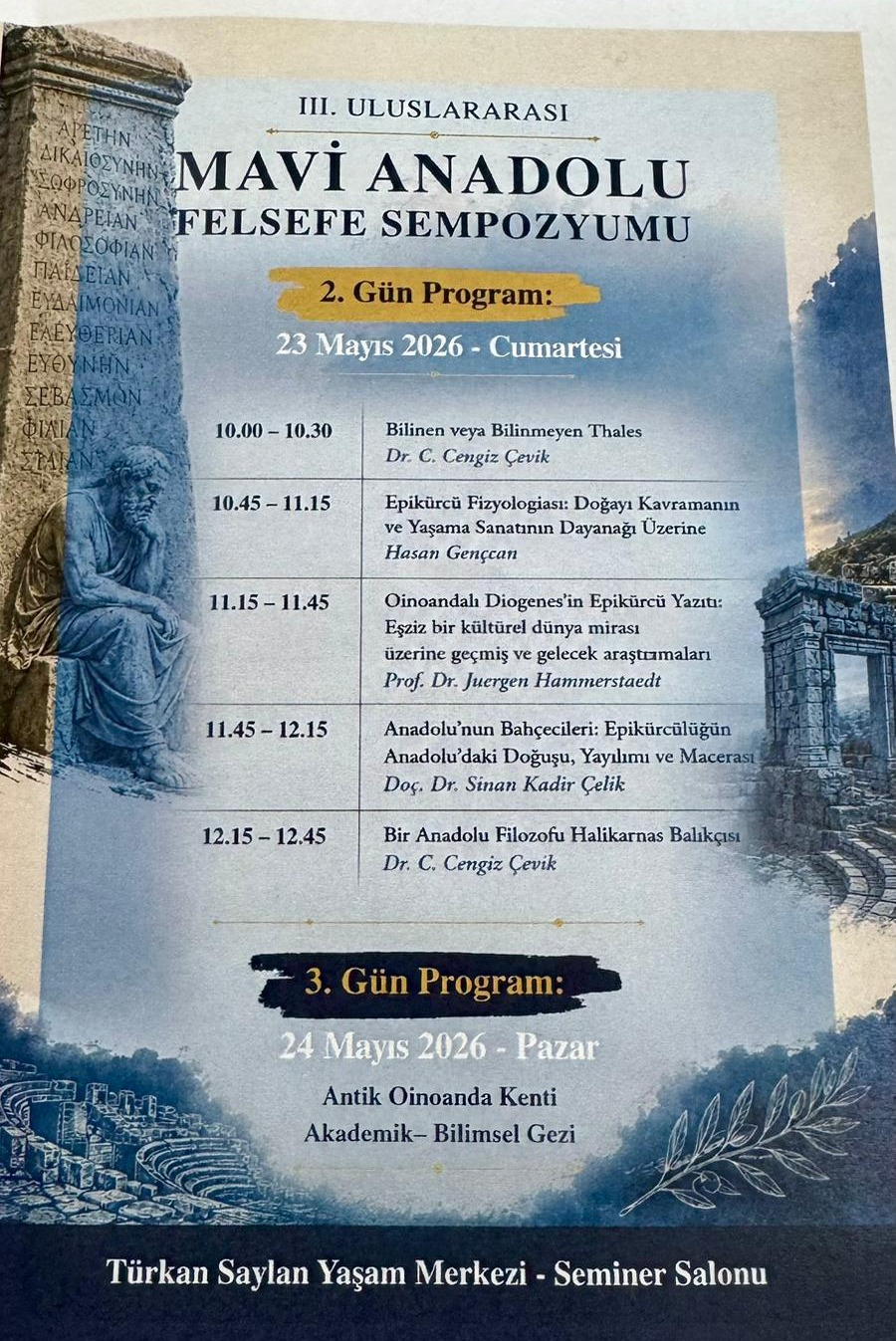
The philosophical sediment, distilled from the intellectual atmosphere of the Blue Anatolia Philosophy Symposium, from that magnificent Epicurean cry that Diogenes of Oinoanda carved into stone, and from the ancient Gardens of Anatolia, stands before us today like a lifeline in this age of late-capitalist alienation in which we are drowning. In these difficult days we have been through, to rethink the concept of comradeship for the modern individual who has lost his bearings on the stormy sea of history is not only a moral duty but also an epistemological necessity.
Let us set out from Epicurus's modest Garden in Athens, pass through the atomic swerves in the young Marx's doctoral dissertation, traverse Lenin's stormy praxis, and build a wisdom-based manifesto of comradeship that will shed light on today's darkness.
Epicurus's Garden and the "Swerve" (Clinamen): The First Atoms of Freedom and Friendship
Epicurean philosophy is by no means the simple shallowness of "eat, drink, and enjoy yourself" (hedonism) that the dominant bourgeois narrative imposes on us. On the contrary, Epicurus is the founder of a materialist epistemology aimed at liberating humanity in a world dominated by pain and spiritual turmoil (the lack of ataraxia).
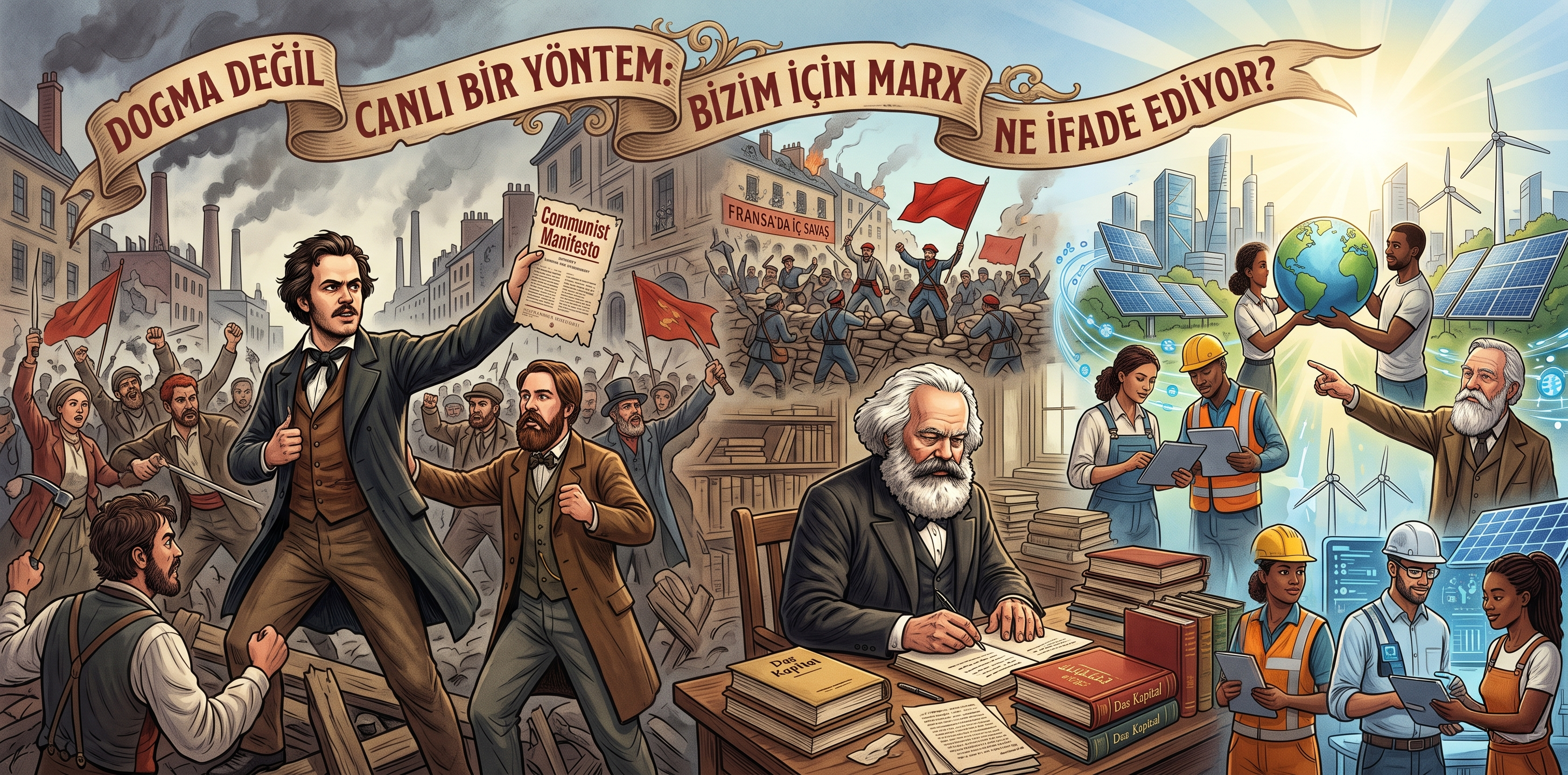
This was exactly what the young Karl Marx, too, examined with admiration as he stepped onto the philosophical stage in his doctoral dissertation titled "The Difference Between the Democritean and Epicurean Philosophy of Nature": the Clinamen (Swerve).
Against Democritus's mechanical and deterministic atomism, Epicurus argued that atoms, while falling in a straight line, exhibit a "swerve" (clinamen) at an unexpected moment. This swerve breaks the absolute fatalism of the universe and opens up space for free will, chance, and most importantly, the human power of self-determination.
"The swerve of atoms from the straight line is the breaking of mechanical necessity; this swerve is the first spark of consciousness and freedom in the universe." — Karl Marx, Doctoral Dissertation
Here, Epicurus's Garden (Kepos) is the social and practical counterpart of this swerve. Swerving away from the slave-owning, elitist, and hierarchical structure of the Athenian polis, this Garden is a radical space where women, slaves, and the excluded are accepted as equal subjects. The friendship (philia) in the Garden is the first collective shelter built by those who overflowed the bounds of the system, standing together against pain.
The Epistemological Leap from Epicurus to Marx: From Friendship to Comradeship
So, how did this wise Epicurean conception of friendship (philia) turn into a revolutionary comradeship in Marxist materialism?
While Marx and Engels saluted Epicurus's materialism, they subjected its tendency merely to "understand" the world and to "withdraw" from it (taking refuge in the Garden) to a dialectical critique. For Epicurus, friendship was a safe shelter for protection from the storms of the outer world. Marxist praxis, however, takes this shelter and turns it into a barricade against the walls of the ruling class.
- Epicurean Friendship: It is the effort to build a collective peace (ataraxia) by fleeing from the evils of the world.
- Marxist Comradeship: It is an organized, practical, and historical action that aims to transform the world in order to abolish the evils of the world (exploitation, alienation).
From an epistemological standpoint, to know objective reality is not possible merely by observing it from afar. As Lenin masterfully set forth in Materialism and Empirio-Criticism, reality is grasped within practice, during the act of changing the world. Therefore, comradeship is not merely an emotional bond; it is the capacity to read the world from the same historical and class perspective, to distinguish right from wrong within a collective practice.
Soviet Literature and Tested Bonds: The Sublimity of the "Tovarish" Spirit
In the Soviet experience and literature, the concept of comradeship flows like a steeled river, purified of mystical friendship. In Maxim Gorky's novel Mother, the bond formed by Pavel and his friends is not a simple friendship. That bond is a historical subjectivity that completes one another's deficiencies and melts the individual ego in its crucible for the sake of a common goal.
In the lines of the Soviet poet Vladimir Mayakovsky, the comrade is the door through which a person, weak on his own, opens up to humanity:
"A single human is nothing... Even if he raises his hand, the one far from him cannot hear his voice..."
In Leninist philosophy, comradeship is the epistemological backbone of a partisan consciousness. Those who are comrades to one another are obliged to raise one another's consciousness. This is not to "tolerate" one another's mistakes in the bourgeois sense, but to transform one another through a dialectical mechanism of criticism and self-criticism. This is precisely why comradeship is the highest and wisest form of relationship that the history of humanity has produced.
Wisdom-Based Comradeship in Today's Darkness
Today, we live in the hyper-individualist, performance-based digital panopticon of late capitalism that makes man a wolf to man. The system atomizes us; but not as the liberating "swerving" atoms Epicurus spoke of, rather as isolated particles that collide and shatter into dust...
In these difficult days we have been through, amid economic crises, ecological devastations, and ideological desertification, being together makes the synthesis of Epicurus's Garden culture and Marx's revolutionary praxis a necessity.
What we need today is Wisdom-Based Comradeship. We can list the cornerstones of this comradeship as follows:
Collective Ataraxia (Spiritual Resilience)
Against the anxiety, depression, and sense of futurelessness created by the system, the presence of a comrade is an epistemological assurance. The consciousness of "I am not alone, our truth is shared" is the greatest antidote against despair.
Intellectual and Practical Solidarity
Just like Diogenes, who carved philosophy into stone at the Blue Anatolia Symposium, we too must write the truth onto today's digital and physical walls. This is a comradeship practice that commonizes knowledge, against the bourgeois academy that propertizes it.
Building the Seeds of a New Life Today
Stepping outside that savage arena of competition into which capitalism forces us, and building our own "Gardens" (our cooperatives, our solidarity networks, our philosophy communities), is only possible by accepting these spaces not as isolated points of escape, but as centers of resistance and alternative life against the system.
Conclusion: Heeding the Call of History
That wise voice rising from the ruins of Oinoanda and that mighty voice rising from the barricades of the 19th century met once again today in the seminar hall of the Türkan Saylan Life Center, in your consciousness.
While, in the footsteps of Epicurus, we seek the basis of comprehending nature and the art of living; under the guidance of Marx, we must make this art a lever of social liberation.
Let us not forget that what makes a human human is overcoming the impulse to retreat into one's own shell in hard times and extending one's hand to the one beside, becoming a fellow traveler with them. Our road is long, our burden heavy; but as long as Epicurus's freedom of the atomic swerve and Marx's historical optimism stand behind us, the wise comradeships we build are the sole torch that will lead us out of this darkness.
Long live that unshakable comradeship exalted by consciousness, knowledge, and practical solidarity!
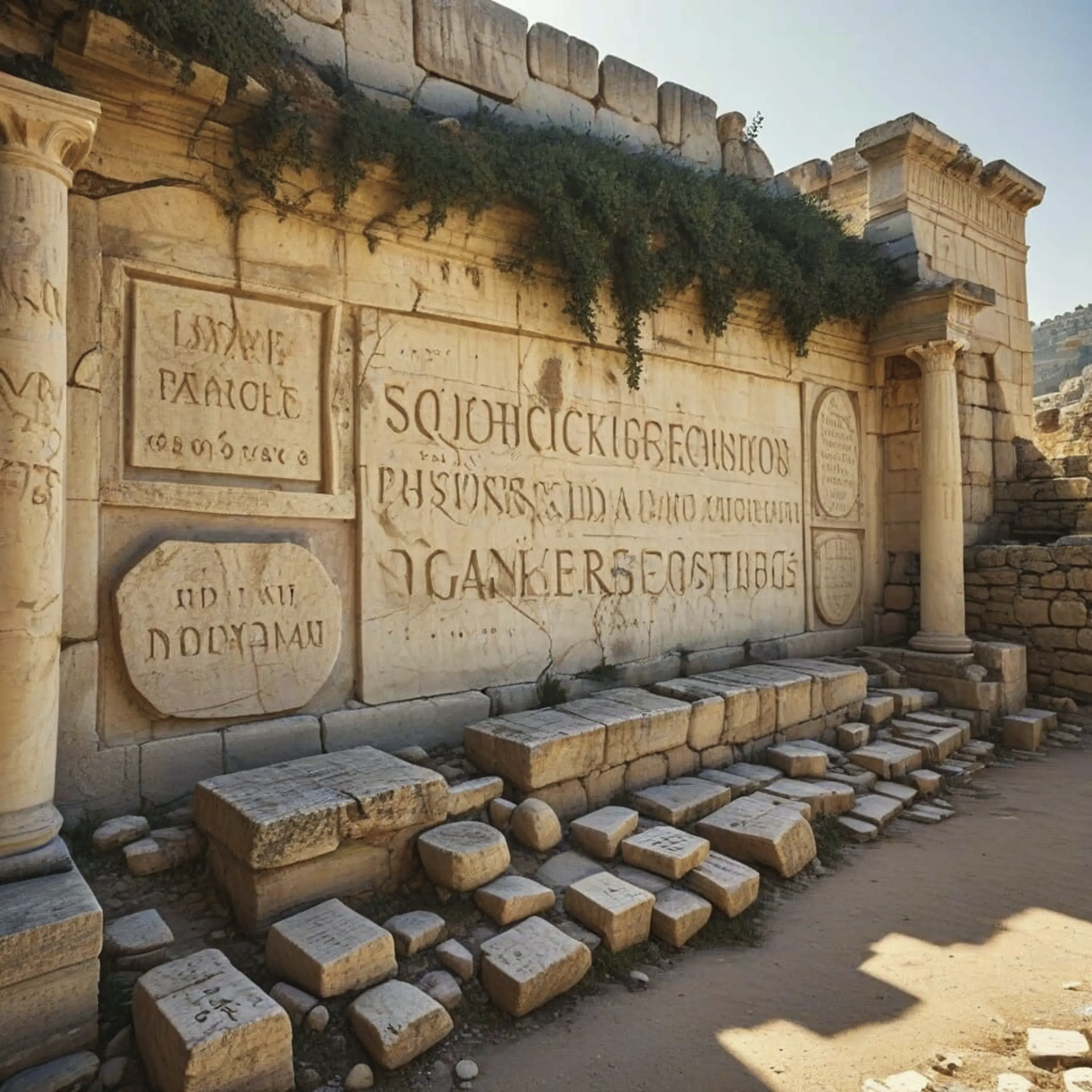
The Public Philosophy Manifesto of Antiquity: The Ancient City of Oinoanda
Oinoanda is an ancient city situated today within the borders of Turkey, on the hilltops of the mountainous Lycia region, near the village of İncealiler in the Seydikemer district of Muğla. Although it first appeared on the stage of history in Hittite texts under the name "Wiana" (meaning wine/vine stock in the Luwian language), it owes its unshakable place in world history of philosophy to a man who lived in the 2nd century AD: Diogenes of Oinoanda.
The World's Largest Stone Book of Philosophy
Diogenes of Oinoanda was an influential and quite wealthy citizen of the city, and at the same time a devoted follower of Epicurus. When he grew old and felt death approaching, instead of having magnificent tombs built in his own name like the aristocrats, he decided to spend his fortune on the mental liberation of humanity.
On the wall of an enormous stoa (a colonnaded gallery) in the city's marketplace (Agora), he had the philosophy of Epicurus carved from top to bottom.
- Dimensions: An enormous stone wall approximately 80 meters long and 4 meters high.
- Volume: This inscription, originally estimated to have consisted of about 25,000 words, is the largest and only known ancient philosophical inscription in the world.
- Purpose: Diogenes saw that people were in a kind of spiritual epidemic (unhappiness) because of superstitions, the fear of gods, the fear of death, and endless desires for luxury. He designed this inscription as a public center of healing, so that everyone passing through the city might read it and "heal their soul."
The Architectural and Epistemological Structure of the Inscription
The inscription was not written blindly; it possesses an immense pedagogical and epistemological hierarchy from top to bottom:
- Uppermost Section: Reflections on old age and advice on the virtuous life.
- Middle Section: Teachings of physics and nature (it is explained that the universe consists of atoms and that the gods do not interfere with the world).
- Lower Section: Moral philosophy, friendship, and the letters Diogenes wrote to his friends.
Current Note: This immense common memory of humanity, as of 2026, the year we are passing through, has been brought back to the global agenda through its candidacy process for the UNESCO World Heritage List and has created great excitement in the world of philosophy.
The Architect of Materialism and Radical Freedom: Epicurus (341 - 270 BC)
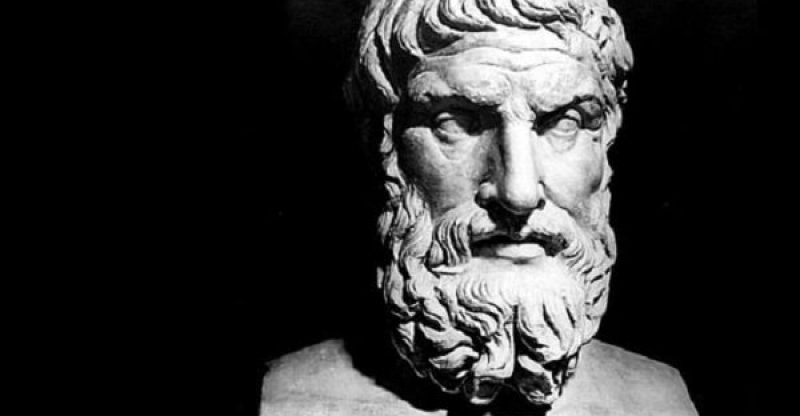
Born on Samos, Epicurus is the most important link in the chain of philosophers who developed a radical alternative in Athens against the elitist, state-centered academies of Plato and Aristotle.
Epicurean Epistemology: The "Canon" (Criterion)
Epicurus divides philosophy into three parts: Canon (Epistemology/Logic), Physics, and Ethics. His epistemology is based on a pure empiricism and materialism. He rejects abstract, metaphysical, and idealist fabrications such as Plato's "world of ideas." According to Epicurus, there are three fundamental criteria of truth:
- Sensations (Aisthesis): The senses are the sole and infallible source of knowledge. Atoms break away from objects and reach our senses. Sensation does not err; error arises from the mind's mistaken interpretation of that sensation.
- Preconceptions/Concepts (Prolepsis): These are the residues left in the mind by earlier sensations (for example, the image that arises in the mind when we hear the word "horse").
- Feelings (Pathe): Pleasure and pain. These are the compass of our actions.
Atomism and the Revolutionary "Swerve" (Clinamen)
Epicurus inherits Democritus's atomism but adds to it an epistemological and ontological revolution. In Democritus, atoms fall from top to bottom with an absolute mechanical necessity (determinism). This makes man a slave to fate.
Epicurus, however, puts forward the theory of the "Clinamen" (Atomic Swerve). As atoms fall, they swerve from their straight lines at an indeterminate time and place. This swerve overturns the absolute mechanical fatalism in nature. As the young Karl Marx emphasized with admiration in his doctoral dissertation: The swerve is the first material proof in nature of freedom, of human will, and therefore of revolutionary praxis.
Tetrapharmakos: The Fourfold Cure Against Fears
The ultimate aim of Epicurean philosophy is practical: to attain spiritual tranquility (ataraxia) and bodily painlessness (aponia). For this, the fears that paralyze humanity must be eliminated. That famous "Fourfold Cure" (Tetrapharmakos), which also echoes on the wall of Oinoanda, is as follows:
| Fear / Error | Epicurean Cure (Solution) |
|---|---|
| Fear of God | Gods exist, but they are material and are in perfect pleasure; they never interfere in human affairs, sufferings, or sins. They give neither reward nor punishment. |
| Fear of Life / Death | "Death is nothing to us. For while we exist, death is not present, and when death comes, we do not exist." Death is a state of complete insensibility. |
| Fear of Pain | If pain is severe, it lasts only a short while; if it is chronic and long-lasting, it eases and becomes bearable. |
| Being a Slave to Desires | Natural and necessary desires (water, bread, friendship) are easy to satisfy; artificial and luxurious desires (fame, splendor, excessive wealth) must be pruned away. |
Oinoanda and the Epicurus Synthesis Through a Marxist Eye
Epicurus's school in Athens was not a palace, but a Garden (Kepos). In the slave-owning society of that period, women, slaves, and the excluded were accepted into this garden as equal citizens. Diogenes of Oinoanda, too, took this egalitarian philosophy, freed it from the language of the elites, and brought it down to the city square, that is, to the living space of the plebeians, the workers, the ordinary people.
Lenin, in his philosophical solutions, would always ask this question: "In whose class interest is this philosophy?" Epicurus and his loyal comrade Diogenes, in an age where the aristocracy and the merchants of religion governed the masses through fear, told the masses "Do not be afraid, the universe consists of matter, and your own fate is in your own hands," and thus built the first great enlightening, materialist, and public barricade in history.
Those stone blocks at Oinoanda are today the oldest and most solid mortar of the wall of collective consciousness that we are trying to build against the alienation of capitalism.