The Dawn of Homo Commonans: Digital Commons and the Roadmap of the Organic Intellectual
Content
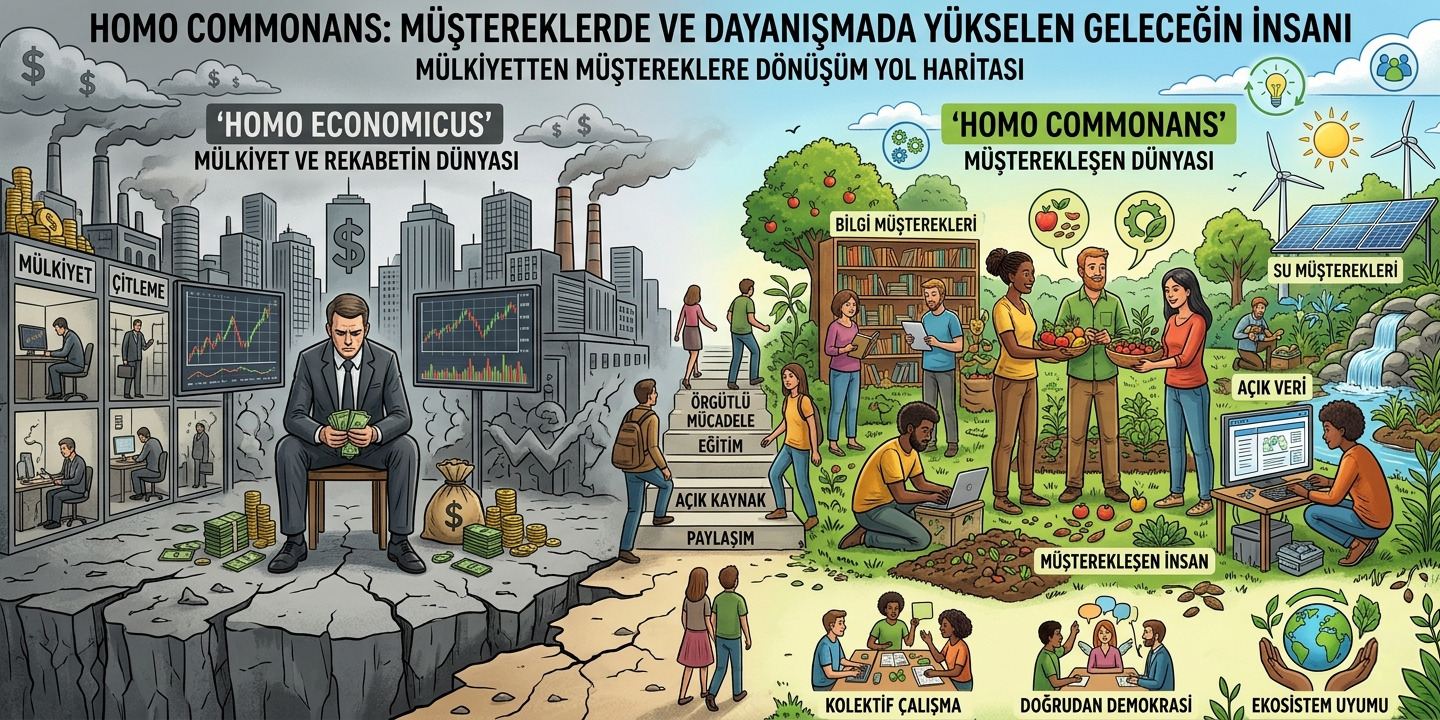
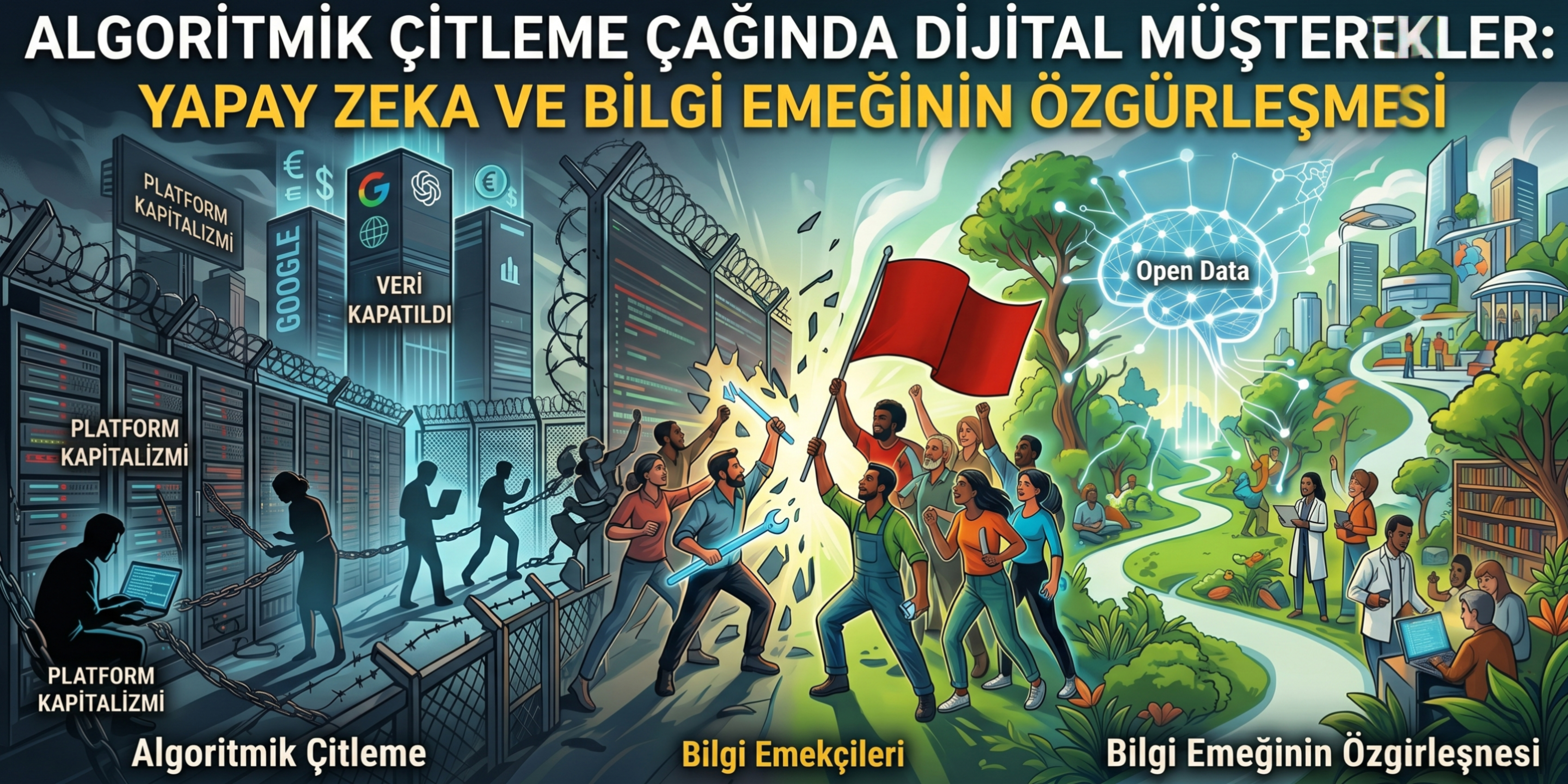
Humanity stands at one of the most paradoxical turning points in history. On one hand, technologies such as artificial intelligence and automation hold the potential to free humanity from "necessary labor"; on the other, these same forces are being used as "digital whips" that push capital accumulation to a level never seen in history and that alienate the human being from their own production.
The subject who will overcome this impasse is not Homo Economicus, driven by the greed for property; it is Homo Commonans (the Commoning Human), who rebuilds sharing, collective production, and life on the basis of the commons.
1. What Is Homo Commonans?
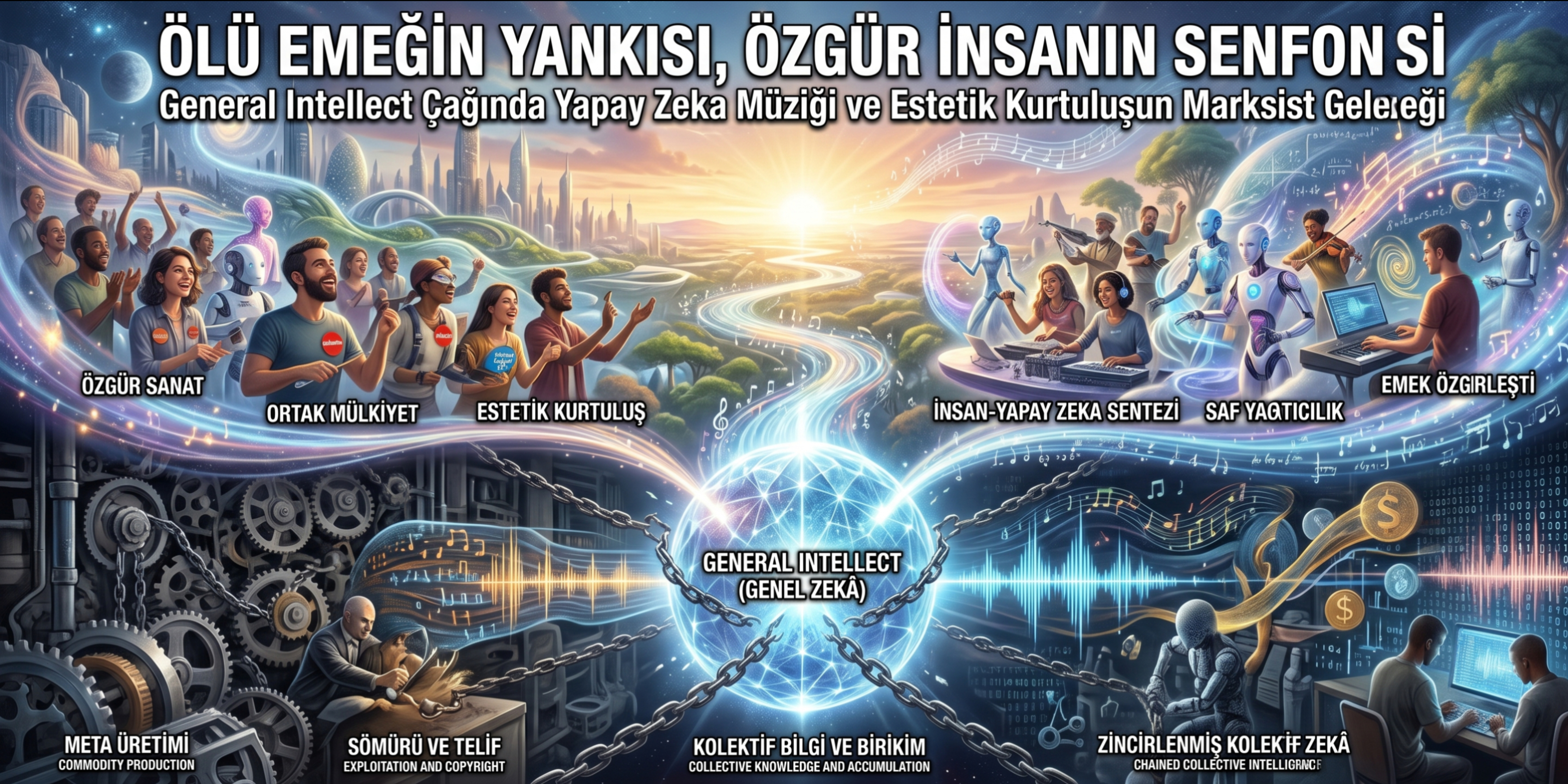
Homo Commonans is the human being who rejects the "enclosed" world in which the means of production (algorithms, data, the accumulation of science) are subject to private property. They see the collective knowledge accumulation of society—what Marx defined as the "General Intellect"—not as an object of capital but as a "common asset" for the sustainability of life.
For this new type of human, wealth is not accumulated capital but emancipated time and the quality of social bonds.
2. The Organic Intellectual Role of the IT Worker
According to Gramsci, every class creates its own "organic intellectual." Today's IT worker is not merely a technician who writes code, but an intellectual who stands at the heart of the production process and who personally experiences the class character of technology.
The task of the IT worker as an organic intellectual is this:
- To question whose interests the algorithm they write serves.
- To translate complex technological processes into a language that their class siblings can understand and oversee.
- To explain to the masses that technology is not an "inevitable fate" but a political "choice."
3. The Roadmap: Four Steps to the Commons
Reaching Homo Commonans is not a utopian dream but a planned class strategy.
Step 1: The Revolution of Consciousness – From Artisan to Class Subject
The first step is for the IT worker to free themselves from the illusion of being a "privileged white-collar worker." They must grasp how their own production (data and code) is dispossessed.
- Action: Establishing reading groups that discuss technology policies in workplaces and "ethical coding" workshops. Spreading "technology and society" trainings within BilişimSen.
Step 2: The Defense of the Technological Commons (Copyleft and Beyond)
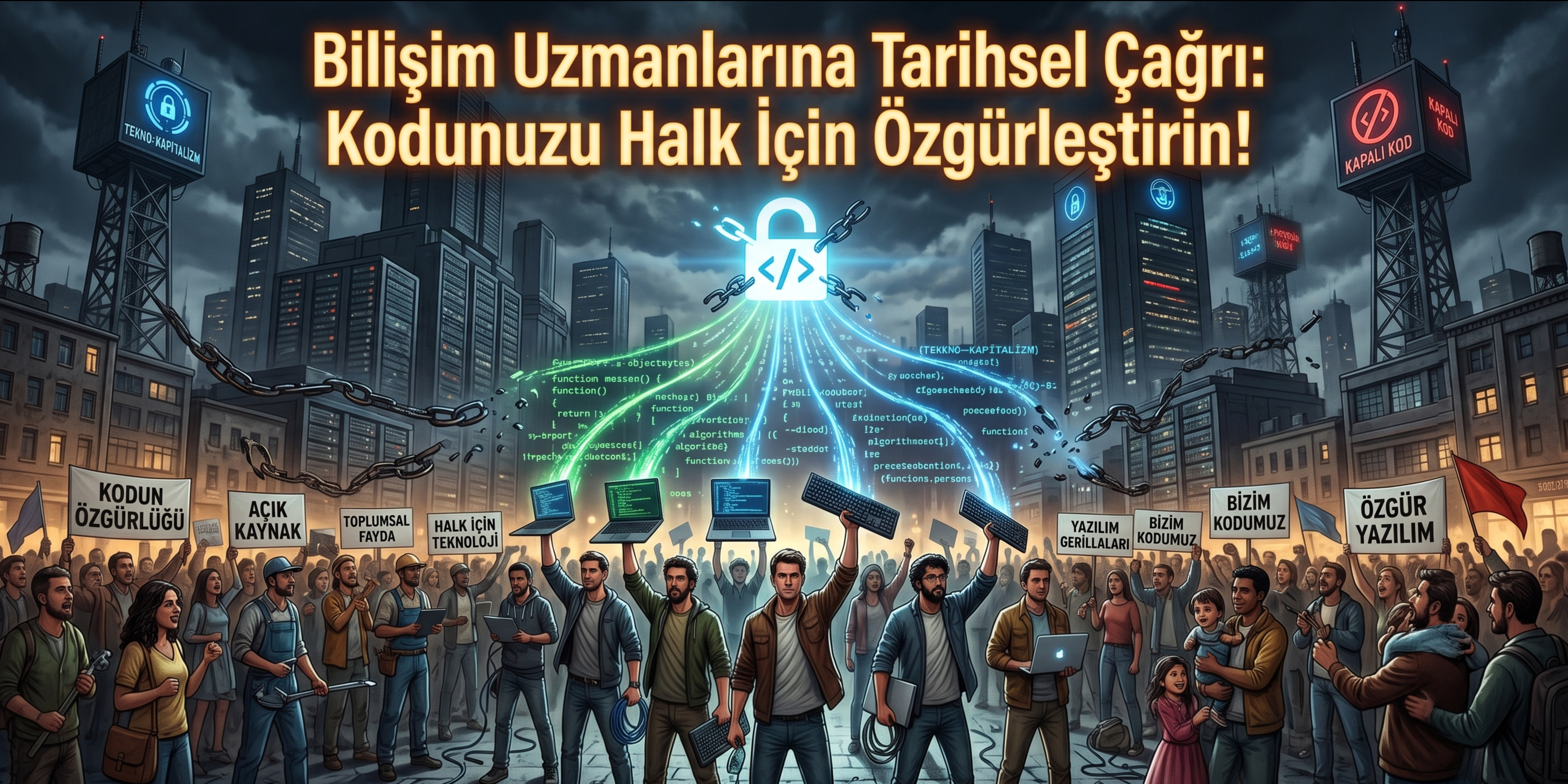
Capital imprisons knowledge under the name of "intellectual property." The organic intellectual struggles for the emancipation of knowledge.
- Action: Supporting open-source projects, but not stopping there—defending "commons licensing" models (the Peer Production License, etc.) that prevent these projects from being swallowed by capital. Conducting legal lobbying so that scientific data and algorithms become "public commons."
Step 3: The Saving of Labor and the Emancipation of Time
From a Marxist perspective, the only legitimate aim of technological progress is to shorten the working day. If artificial intelligence threatens to leave us jobless, the solution is not to reject technology but to share the work.
- Action: Turning the demand for "a 4-hour workday thanks to artificial intelligence" into a union banner. Preparing collective bargaining clauses that ensure the productivity gains (surplus value) obtained from technology are transferred not to the boss's profit but to the worker's free time.
Step 4: The Construction of Algorithmic Democracy
The final stage is to take the management of production processes away from algorithmic monopolies and hand it over to collective oversight.
- Action: Demanding the transparency (Algorithmic Accountability) of the algorithms used in companies' decision-making mechanisms. Developing pilot projects that simulate the rebuilding of decision-making processes through "decentralized and democratic" structures (the use of DAO and similar technologies in favor of workers).
Conclusion: The Future Belongs to the Commons
The road to Homo Commonans runs through the union of the sweat poured out at the keyboard with an organized mind. We will use modern technology not for the consumption frenzy of atomized individuals, but as a lever for the collective ease of humanity.
The day the IT worker refuses to be merely a cog in the system and grasps that they are the architect of that system, the world of Homo Commonans will begin to be built.
Let our code be freedom, our path the commons!