
The Robed Vice: The Alican Uludağ Case and an Order That Turns the Process Itself Into Punishment
To shatter, through unified public pressure, the lawlessness institutionalized in the persons of Alican Uludağ and the imprisoned journalists
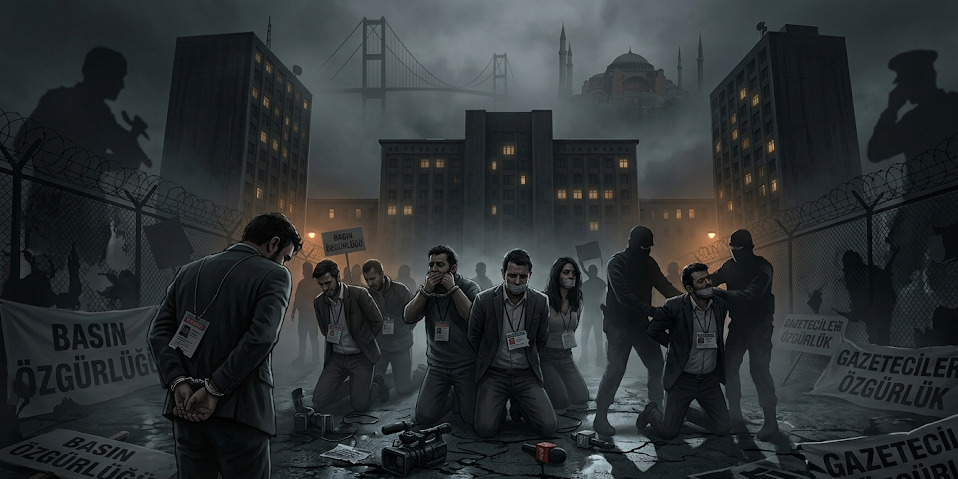
Today, everyone who steps through the doors of the courthouses sets foot where the much-praised "impartiality" fairy tale of bourgeois law ends. The process by which journalist Alican Uludağ is being systematically tried, dragged from investigation to investigation, is not a simple judicial case or a technical procedural error. The picture before us is an organized geographic and bureaucratic war of attrition waged by the state against the free press that reports its own institutional rot and the factionalism within the judiciary.
The order of capital and its political apparatus, where it cannot manufacture consent to silence the voice of truth, uses the law like an insidious whip. This article was written to expose the irrational geographic distortion in the Alican Uludağ case and the truth-workers who share the same fate, and to point to the only real way out of this blockade.
The Weaponization of Place on the Ankara-İstanbul Line: "Jurisdiction-less" Punishment
The process applied in the Alican Uludağ case is a laboratory-grade example of how even the most fundamental principles of procedural law are bent and twisted by the dominant political reason. The bureaucratic labyrinth in the case has, in itself, been turned into an absurd practice of punishment:
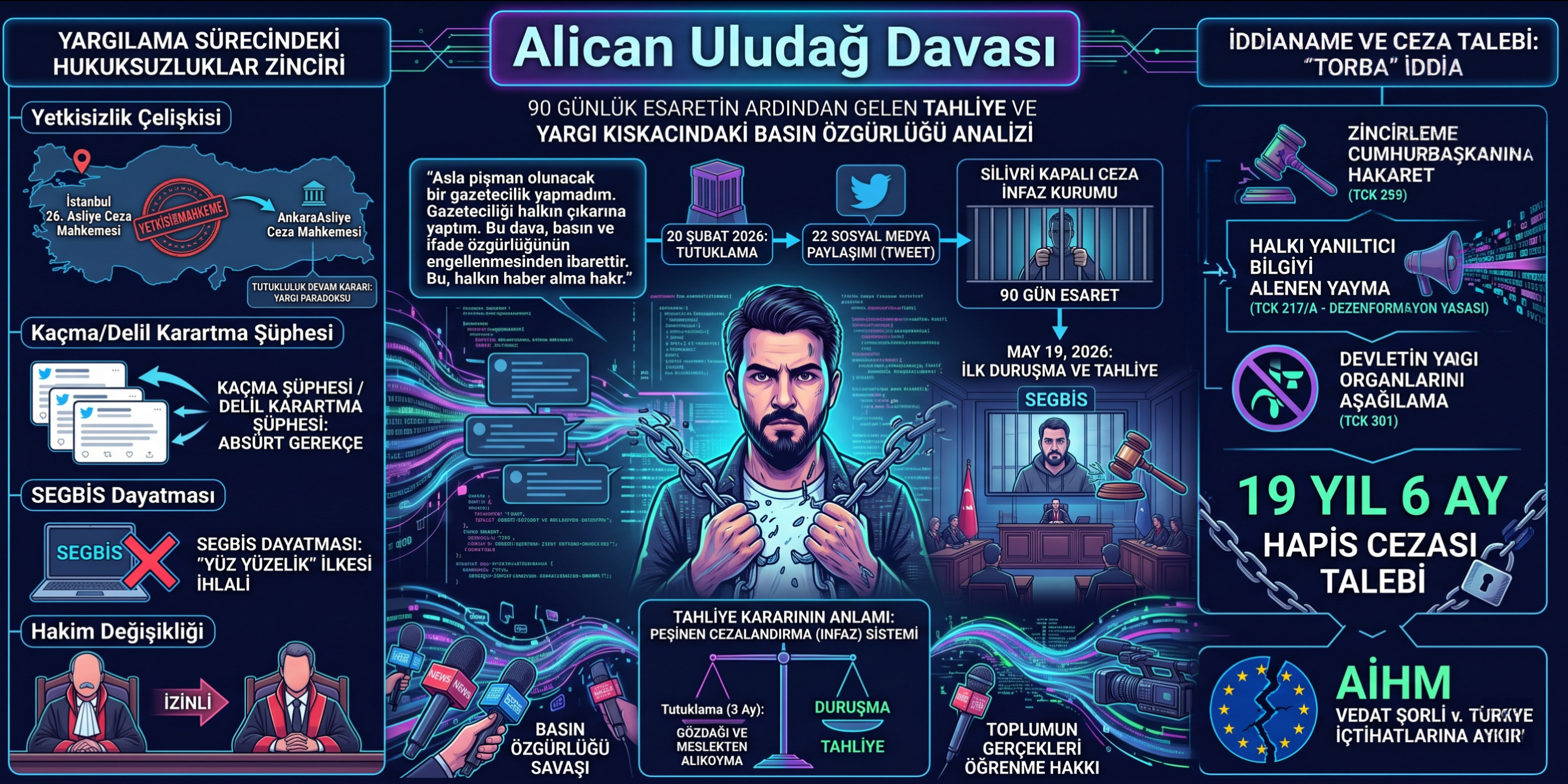
- The Contradiction of Place and the Manufacture of Crime: Journalist Alican Uludağ resides in Ankara and conducts his journalistic activities in this city. While the posts in question and the "location of the crime" being Ankara would require the investigation to be conducted there, the file was deliberately taken on by the İstanbul Chief Public Prosecutor's Office.
- The "Flight Risk" Cover for Being Detained at Home: Although Uludağ was detained at his home in Ankara, this situation was distorted in the court records as having been "apprehended by means of law enforcement." A person being present in their own home was, by an absurd logical leap, interpreted as "suspicion of flight and concealment" and made the justification for the continuation of detention.
- Two Contradictory Rulings on the Same Day: The İstanbul 26th Court of First Instance accepted the prepared indictment, and immediately afterward sent the file to Ankara, saying, "Since the defendant's address and posts are in Ankara, I lack jurisdiction."
Sarcastic Reality: A court both says, "I am not authorized to hear this case," and accepts the indictment of the very case over which it has no jurisdiction, ruling that the journalist's detention be continued! If you have no jurisdiction, from where do you derive the authority to deprive that person of their liberty? This very misery into which bourgeois law has fallen is proof that not justice but the sheer reflex of punishment is at work.
The Unbroken Chain: The Other Besieged Press Workers
In this geographic and legal ecosystem of attrition, Alican Uludağ is by no means alone. All the qualified press workers who poke a stick at the dominant class's power relations, the bribery networks in the judiciary, the structures turning into holding companies, and the religious-order–politics partnerships, are sought to be brought into line by a "legal harassment" template that came out of the same lathe:
- İsmail Arı (BirGün Newspaper): Having courageously gone after corruption, the Kızılay scandals, and how religious orders and communities exploit public resources, İsmail Arı is on the target board of the elites of capital and politics. The compensation and criminal cases filed against him one after another are the concrete proof of yet another IT and media worker sought to be ground down in the corridors of the courthouse. These systematic cases against İsmail Arı are a strategy to make every corruption story he writes be paid for in court.
- Furkan Karabay: Just like Uludağ, another young media worker who was arrested at jet speed for reporting allegations of factionalism in the judiciary, the records, and the names mentioned in hearings, and thrown into prison with an open-ended "targeting" sack.
- Barış Pehlivan and Barış Terkoğlu: The emblematic figures of investigative journalism, who, while the documented reports they wrote stand out in the open, were sent to prison time and again over leaked relationships and their books, and from whom even the most basic rights such as parole were taken away through manipulations of the execution regime.
As Marx noted; "Law is the form by which the dominant class protects its general interests." The judiciary, in order to protect the dirty laundry of the politics-commerce partnerships, codes the journalist who writes the truth as "an enemy who disturbs the order" (Enemy Criminal Law), bypassing universal law.
The Solution: The Power of Exposure and Unified Public Pressure
So, how will we get Uludağ—shuttled back and forth between Ankara and İstanbul and held in prison by the hand of courts without jurisdiction—Arı, who is sought to be imprisoned in the courthouse for writing about corruption, and the other truth-workers, out of this blockade? The answer is hidden neither in the mercy of bourgeois courts nor in the token condemnation messages of liberal institutions.
This siege can be broken only by a unified force and organized public pressure.
What Kind of Solution and Organization?
- Rejecting Fragmentation: The dominant class's greatest tactic is to isolate cases and split the press into factions. Defending Alican Uludağ's case cannot be separated from defending İsmail Arı, Furkan Karabay, and all the journalists held under unjust pressure. All unions, professional chambers, and democratic mass organizations must establish a common Truth and Solidarity Network.
- Turning Lawlessness Into a Rostrum: These distorted processes in which the courts violate their own procedural rules (the jurisdictional confusion between Ankara and İstanbul, the fabricated arrest records) must be explained to the people in the squares, in digital media, and in the streets. The naked exposure of lawlessness shatters the system's illusion of legitimacy.
- The Power of Public Pressure: History has proven that the voice raised by an organized people and the legitimate public pressure they create force even the most vicious punishment mechanisms to back down. Public pressure is the sole social lever that will nullify the courthouse corridors, the fabricated indictments, and the unjust detention rulings.
What Can We Do?
IT workers (the IT proletariat) are not merely technical personnel writing code to fill the coffers of companies. On the contrary, with the technical knowledge and algorithmic literacy in their hands, they are the most strategic subjects who can open breaches in the digital walls of capital and the state apparatus, carrying solidarity beyond mainstream censorship.
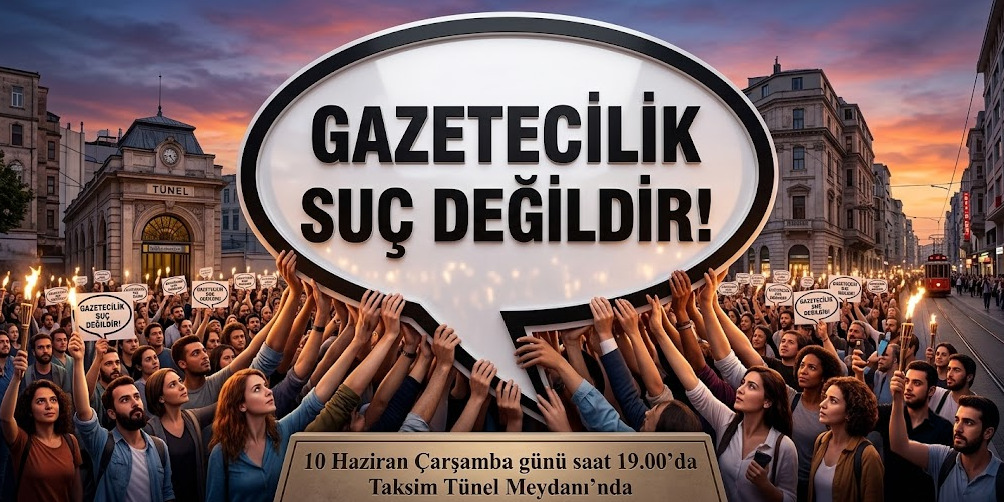
Before tomorrow's trial and on the day of the hearing, let us list the concrete, technical, and practical moves we can make to turn the virtual world and social media platforms into arenas of exposure:
Algorithmic Resistance and Social Media Optimization (Before Tomorrow)
The algorithms of capital's platforms (X/Twitter, Instagram, LinkedIn) work by certain mathematical rules. It is in our hands to bend these rules in favor of solidarity:
- Beating "Shadowban" and Bot Filters: Copy-pasting the same tweet, or writing only a single hashtag over and over, is perceived by the algorithm as "spam/bot" and lowers your visibility. Instead, we must grow engagement organically by taking excerpts from the article we created, adding original sentences to each post, and building tweet threads.
- The First 5 Minutes Rule (Fast Engagement): Algorithms look at the engagement (likes, retweets, especially quote-shares and comments) within the first 5–10 minutes after a post is made. When tomorrow's action hour is set, we, as IT workers, must build small "fast engagement networks" among ourselves, writing instant, meaningful comments on the shared solidarity tweets to carry them onto the trending topic (TT) list.
- Visual and Multimedia Support: Algorithms promote posts containing video and visuals over plain text. We must add the striking infographics and Instagram story visuals we produced above beneath the tweets, increasing dwelling time.
Cyber-Assurance and Digital Archiving (The Role of Technical Workers)
As IT workers, our greatest power is to prevent the destruction of information. While tomorrow's trial is underway and afterward, we can take these technical steps:
- Permanent Archiving (Anti-Censorship): There is always a risk that the news telling of Alican Uludağ's geographic exile and İsmail Arı's corruption files may one day be deleted from the internet (access block) by court orders. As IT workers, we must instantly back up these news pieces to systems like Wayback Machine (Archive.org) or Archive.ph, and even go further and make them permanent on decentralized file systems (on IPFS or Torrent networks).
- Building Secure Communication Infrastructure: We must provide digital security support to the journalist and activist communities who will livestream and tweet from in front of the courthouse tomorrow. Against the wiretapping or blocking of communication networks, we must set up open-source, end-to-end encrypted channels such as Signal or Matrix/Element for them, and provide fast technical support on the use of VPNs.
Data Visualization and Digital Agitation
It is our job to bring the case's complex, lawless procedural details to a simplicity the people can understand:
- Mapping the "Ankara-İstanbul" Contradiction: We must prepare a simple, interactive digital map or infographic diagram showing how a case shuttles jurisdiction-lessly between Ankara and İstanbul, and the absurd geographic contradiction between the place of the crime and the place of the court, and release it onto social media. People may not read long legal texts, but that striking flowchart we place before them will expose the lawlessness in seconds.
- Correlating Corruption and Cases: We can create a "timeline" graphic that overlaps the holding/religious-order corruption İsmail Arı wrote about with the calendar of the cases filed against him. This will be the graphical answer to the question, "How many days after which corruption was written was a case filed?" and will concretize the system's vengeful reflex.
Comrade, tomorrow our keyboards will turn into cyber-defense tools not only to keep companies' servers running, but for the freedom of the pens that write the truth.
Final Word: The Power of the Pen Is Greater Than Courts Without Jurisdiction
Alican Uludağ, İsmail Arı, and all the press workers sought to be silenced unlawfully are doing the very thing this system fears most: they are breaking the illusion, throwing it in their faces that the emperor is naked. When we stand together, we will see how fragile and fearful those imposing courthouses, those contradictory rulings of non-jurisdiction, and those robes actually are.
Let us not forget; truth will remain free in proportion to the courage and the unified will of those who defend it. To liberate the pens is the first and most vital step of social liberation and a just future! Come, let us weave this unified line of defense starting today!