
The Telekommunist Manifesto: The P2P Architecture of the Digital Class Struggle
A Guide to Venture Communism and the Transition from Passive Clienthood to Active Network Production, from Dmytri Kleiner and the Telekommunisten Collective
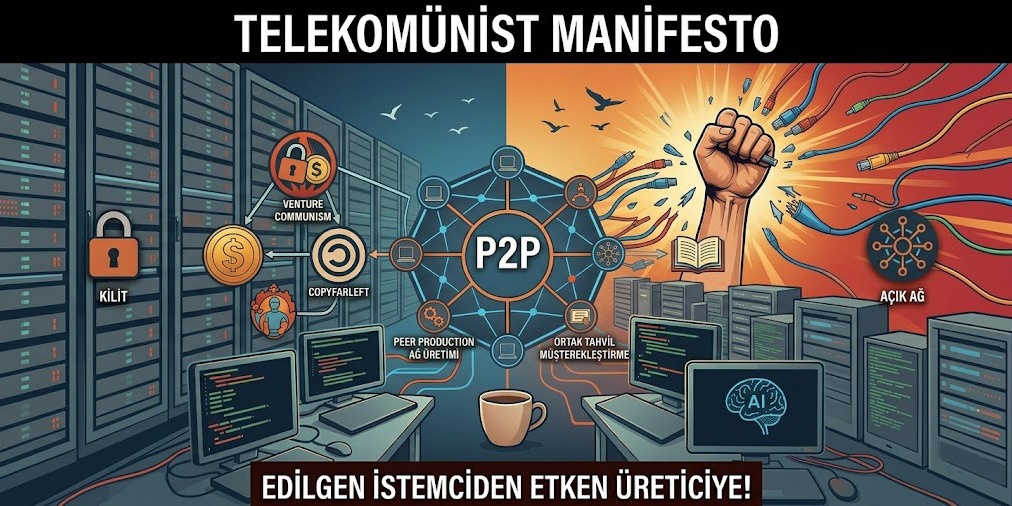
The Telekommunist Manifesto is a revolutionary text that, in an age when the internet and new communication technologies have seeped into every area of life, places at its center the self-organization of workers against capital's efforts to control the digital world. Prepared by Dmytri Kleiner and the Telekommunisten collective, this work adapts Marx and Engels's groundbreaking Communist Manifesto to the internet age and proposes the model of "venture communism."
The Telekommunist Group and Their Core Approach
Telekommunisten is a Berlin-based collective active in the fields of software development, activism, and cultural production. The group's founder, Dmytri Kleiner, is a software developer who investigates the political economy of the internet and the control of production by workers as a form of class struggle.
The group's fundamental argument is that merely producing free software or taking part in immaterial cultural work is not enough to end exploitation. For them, the real issue is the ownership and self-organization of the means of production (servers, networks, and physical resources) by workers.
The 10 Points of the Telekommunist Manifesto
The Manifesto summarizes the socialist program for networked societies as follows:
- Commonizing the Means of Production: Nationalizing all means of production and using the rent obtained for common purposes.
- Guaranteed Income: Distributing all the rent collected to members as a per-capita share of profit, equal for each person.
- Labor-Based Membership: Granting membership not through inheritance or purchase, but solely through the contribution of labor.
- Renouncing Private Property: Member ventures relinquishing the private ownership of their own productive assets and renting these from the common stock.
- A Common Bond Market: Establishing a common bond market for the purpose of building the common pool of productive assets.
- Control of Communication and Transport: Placing the means of communication and transport under the control of all members.
- Access to the Tools of Production: Providing all ventures the opportunity to acquire and develop the existing tools of production.
- Equal Opportunity in Participation: An equal obligation to work for everyone and equal opportunity in participating in production.
- Abolishing the Producer–Consumer Distinction: Transforming relations from market-based transactions into generalized distribution in which the production of social value takes priority.
- Knowledge- and Skill-Sharing Networks: Establishing support systems for members and integrating education with material production.
A Look at Developments in Artificial Intelligence
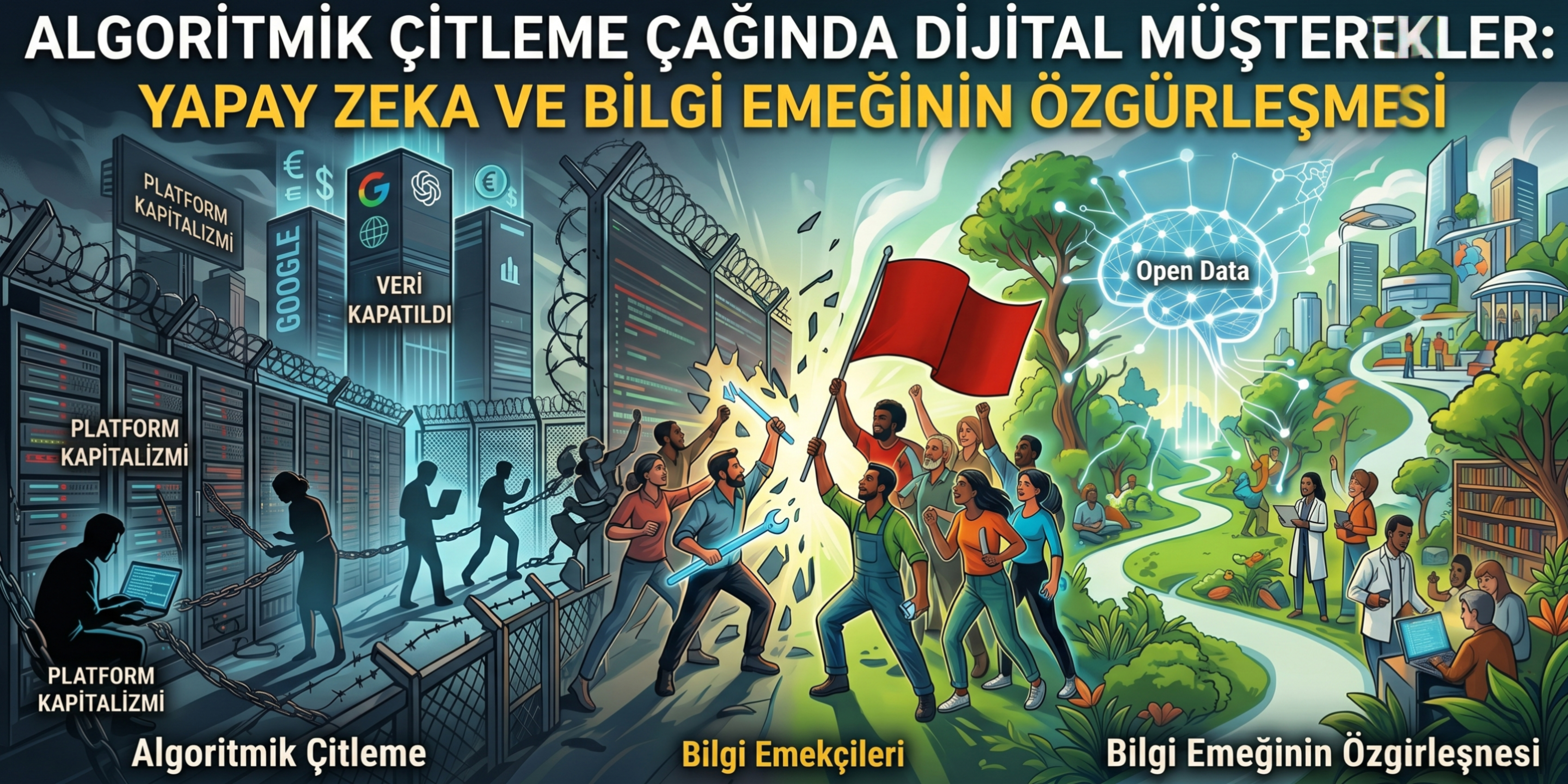
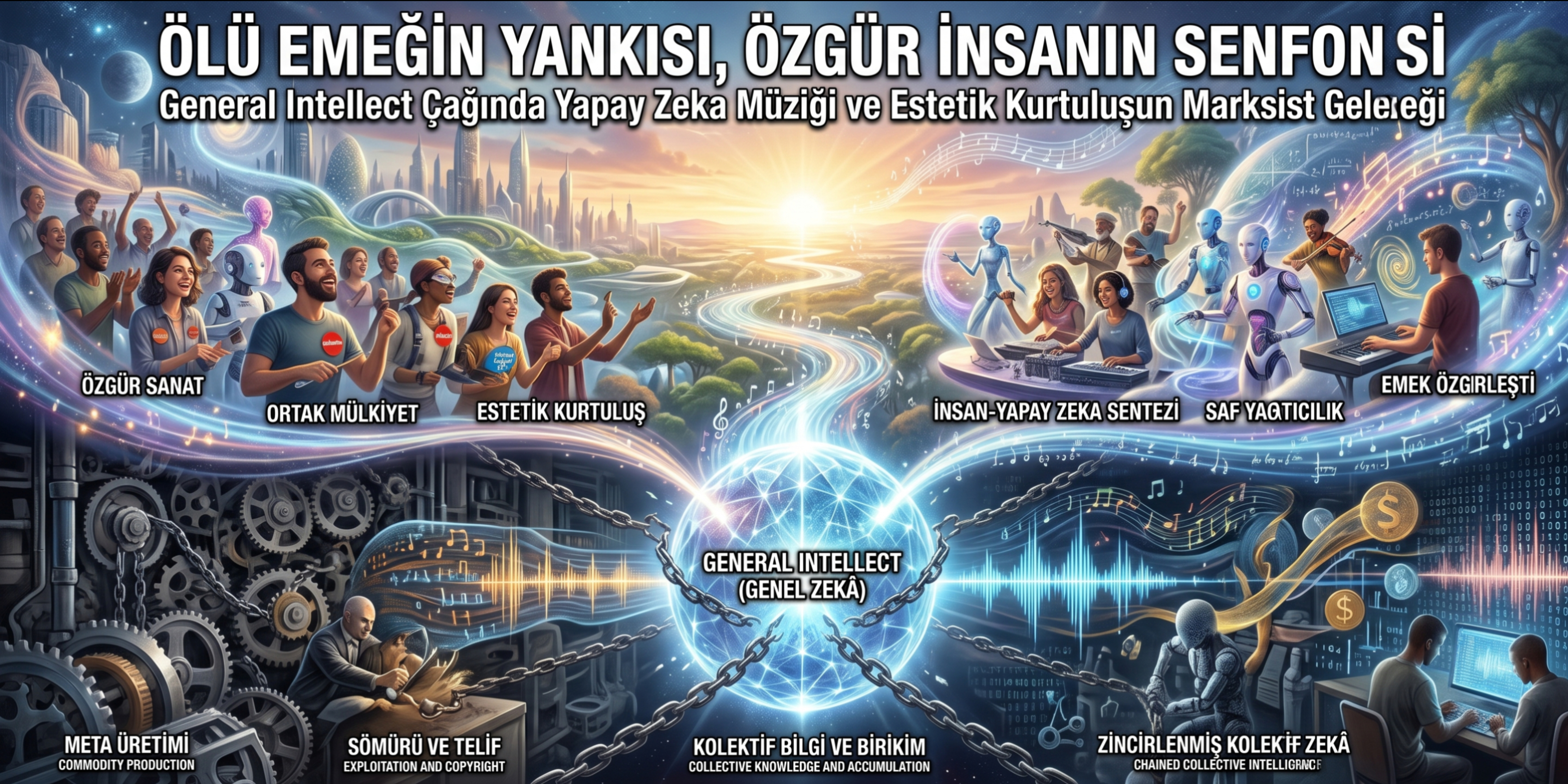
From a Telekommunist perspective, today's Generative AI and Large Language Models (LLMs) are a new wave of "enclosure" by capital of the "General Intellect," that accumulation of society.
- Private Appropriation of Value: According to the group, Web 2.0 is a model in which the value produced by the community is seized as private property. Training AI models by scraping all the data on the internet (humanity's collective labor) is the most extreme point of this exploitation.
- The Danger of Centralized Control: Because current AI developments require enormous processing power (GPUs) and data centers, they centralize the infrastructure even further, making users and independent developers more dependent on big tech companies (Microsoft, Google, OpenAI).
- Copyfarleft as a Solution: To protect AI's outputs, the Telekommunists advocate the Copyfarleft (Peer Production License) model instead of liberal licenses like "Creative Commons." This model allows sharing among workers themselves while prohibiting owners of private property from profiting from this data through the exploitation of wage labor.
The Importance of Responsibility and Being Active
Dmytri Kleiner and his team argue that IT workers must free themselves from the illusion of seeing themselves as a "privileged class." Although the internet's architecture holds the potential for a P2P (peer-to-peer producer) communism, this potential can only be realized when we cease to be passive "clients" and become active "network producers."
True freedom lies not merely in writing code, but in collectively reclaiming the ownership of the server and the infrastructure on which that code runs. In the digital spaces we feel are our own, we must exist not merely as consumers, but as owners who determine the relations of production and as an organized power.
We have nothing to lose but our chains, but we have a whole (digital) world to win.