The Invisible Shackles of Techno-Feudalism: Software-Driven Obsolescence and a Guide to Rebellion Against Digital Serfdom
We Expose iOS 27 and the "Planned Obsolescence" Trap of the Tech Giants
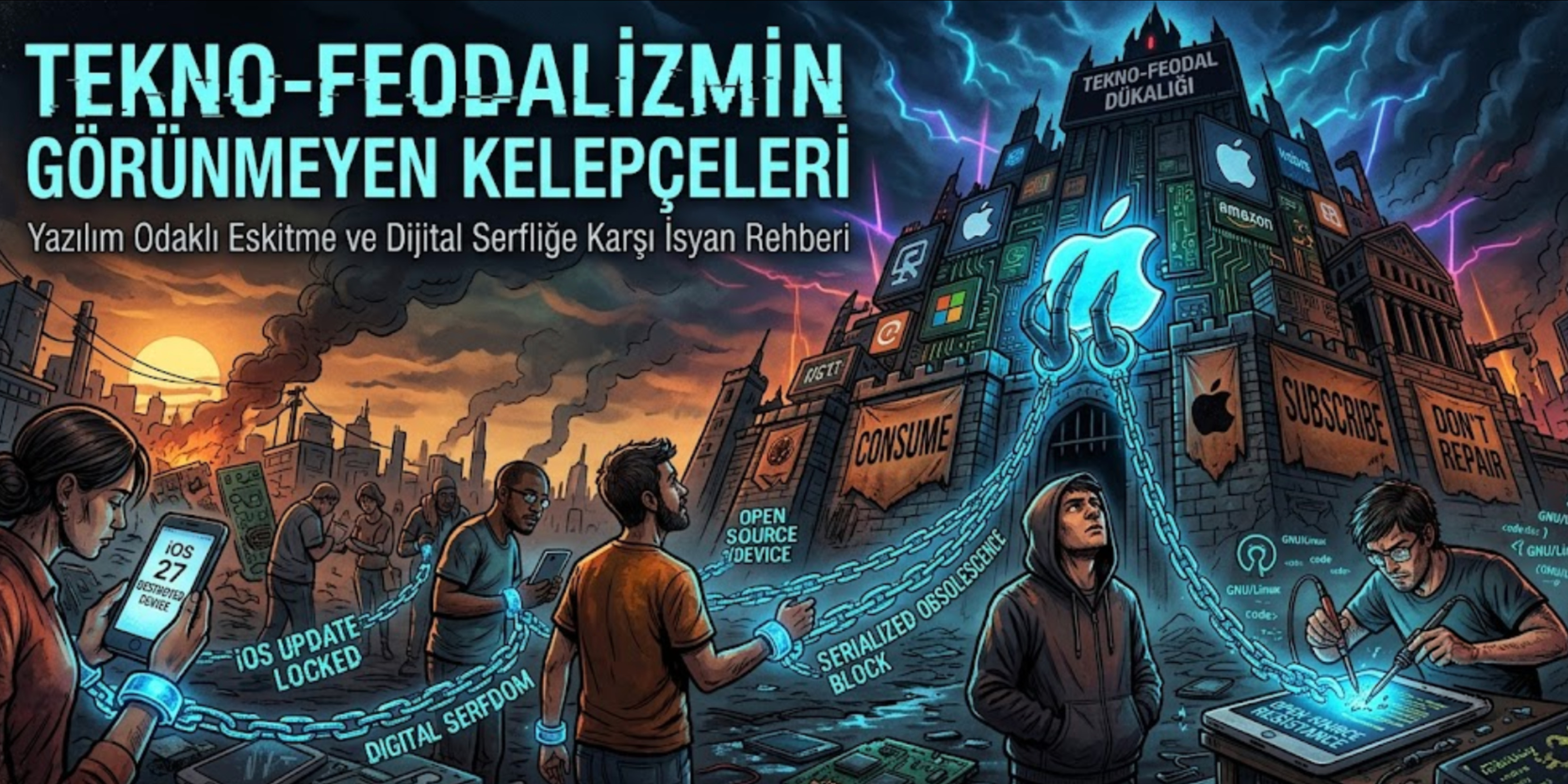
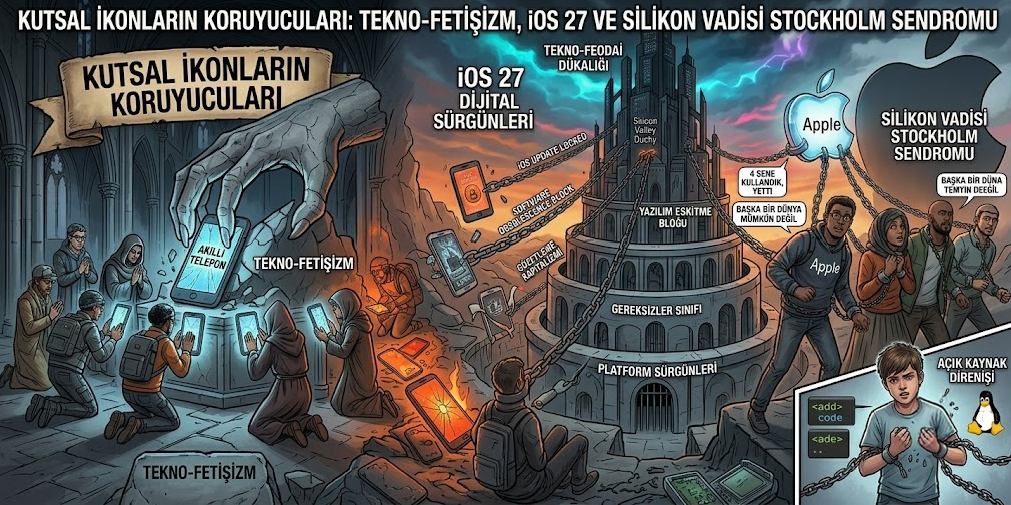
We live in an age when digital feudalism has peaked. The place of history's landlords has today been taken by techno-feudal duchies that fit into our pockets, track our every movement, and bind us to themselves with chains of subscription. The latest iOS 27 announcement from Apple, the largest of these duchies, has once again brought to the stage that old trick presented under the mask of "innovation" but harboring behind it a mechanism of pure capitalist exploitation: Planned Obsolescence.
This article has been written to expose how software updates turn into weapons of destruction, how hardware quality is deliberately lowered out of capitalist greed for profit, the official penalties the monopolies have received, and the ways to break this cycle of digital bondage.
The Anatomy of Software Shackles: iOS, watchOS, and macOS Exiles
Apple and similar tech firms run a flawless cycle to keep the consumer perpetually in debt and dependent. With iOS 27, the wholesale writing-off of models that, just a few years ago, were sold for thousands of dollars as "the world's most powerful smartphone" is not a technical necessity but an entirely financial manipulation strategy.
The Lie of the Artificial Intelligence and NPU Barrier
In the introduction of iOS 27, "inadequate Advanced Neural Processing Unit (NPU)" was given as the justification for removing some powerful models from the support list. It is claimed that processors with billions of transistors, competing with desktop computers, "cannot handle" software that fundamentally runs on the cloud or requires small optimizations. This is one of capitalism's greatest distortions. The hardware is more than sufficient; the only thing lacking is the company's greed for profit.
The Early Death of the Ultra-Luxury
Capital is merciless while manipulating your desire to acquire property. We saw the most concrete example of this in the case of the Apple Watch Ultra (1st Generation). This device, launched at astronomical prices with the image of "a lifelong titanium tank, resistant to harsh conditions," was turned into "technological scrap" overnight with the new wave of watchOS updates. The pure titanium case and sapphire-crystal screen are still rock solid; but the software heart inside it was stopped by the company.
A similar slaughter is taking place on the macOS front. Mac computers that can perform billions of operations per second, working like monsters for graphic designers and software developers, are being pushed outside the ecosystem simply because they get caught on the artificial limitations of the new macOS version.
The Real Truth: The issue here is not the hardware aging. Software support is being used as a tool of blackmail in order to sell new products. The company tells you: "Your device may be physically rock solid, but I'm killing its soul. If you want to stay safe, you have to pay me for a new device."
Giants Caught Red-Handed: Certified Sabotage and Million-Dollar Penalties
These criticisms are not anti-technology fantasies; that the global monopolies deceived the consumer has been legally certified time and again, through the lawsuits filed and the enormous penalties imposed.
Apple and the "Batterygate" Scandal
In 2017, it came to light that Apple had, without informing the user, slowed down old iPhone models (iPhone 6, 6S, and SE) through software, under the excuse of "preserving battery life." The company had done this sabotage secretly because it wanted users to think their phones were aging and switch to a new model. And what was the result?
- The French Competition Authority (DGCCRF): Fined Apple 25 Million Euros for the offense of "misleading commercial practice toward consumers."
- The Italian Competition Authority (AGCM): Gave Apple a 10 Million Euro penalty on the grounds that it knowingly slowed down devices.
- U.S. Courts: As a result of the class-action suits filed, Apple was forced to agree to pay a settlement amount of a full 500 Million Dollars to pay compensation to consumers.
A Collective Capitalist Crime: The Other Faces of the Tech Cartel
This barbarism is not peculiar to a single company. By the very nature of capitalism, all oligopoly-market actors feed from the same handbook.
- Samsung's Italy Penalty: The Italian Competition Authority (AGCM) caught not only Apple but, in the same period, Samsung red-handed too. Samsung was fined 5 Million Euros on the grounds that it deliberately slowed down phones by forcing Galaxy Note 4 users to install heavy operating-system updates written for the Galaxy Note 7.
- Microsoft and the Windows Impositions: Millions of perfectly working computers were deprived of Windows updates because of Microsoft's artificial "TPM 2.0" or processor-generation impositions. The aim was to revive the dying PC market and force people to buy new hardware.
- The Printer Cartels (Epson, HP, Canon): Upon the complaint of the HOP (Stop Planned Obsolescence) association founded in France, investigations were opened against giants like Epson. It was proven that printers stopped working by giving a "cartridge empty" warning when the ink cartridges had not actually run out completely, forcing the user to buy a new cartridge/printer.
The Deliberate Collapse of Quality: From "Lifelong" Technology to "Use-and-Throw" Misery
In the past, capitalism gained advantage through the competition to "produce the highest-quality and most durable product." The mechanical devices in our homes that wouldn't break down for decades were proof of this. Today, the technology sector has surrendered to a full "disposable" fetishism. The material quality and architecture of products are deliberately designed to be irreparable, unrecyclable, and non-durable.
Hostility to Repair and Greenwashing
- Glued Batteries: Batteries that you could once replace by undoing a screw are now fixed to the body with industrial adhesives. When the battery is rapidly aged by software, you are asked to throw the device away or to pay a repair fee as high as a new one.
- Soldered Components: RAM and storage units are soldered to the motherboard. When your computer's memory isn't enough, you can't add a part; you have to throw away the working computer and buy a new one.
- Hypocritical Environmentalism: The tech giants that speak of being carbon-neutral and of recycled aluminum at their launches condemn millions of working devices to becoming electronic waste (e-waste) when it comes to software support. We are watching a piece of theater masked as saving the world but whose true purpose is to maximize profit.
Liberation from Techno-Feudal Fetters: Open Source and Free Hardware
Our answer to capital's dispossession strategy is digital sovereignty, open source, and free hardware.
The Operating System of Digital Rebellion: GNU/Linux
Those billion-dollar computers that Apple or Microsoft, saying overnight "we no longer support this," have left in front of the dumpster can come back to life with Linux-based operating systems.
- Rejecting Artificial Limits: Linux distributions (Mint, Ubuntu, Debian) do not throw your hardware in the trash with artificial-intelligence barriers. Even a ten-year-old computer can regain its first-day speed with a lightweight Linux distribution.
- An End to Surveillance Capitalism: Open-source software does not harbor companies' data-mining agents behind it. The code can be audited by anyone at any time.
- Alternative Mobile Ecosystems: To break free from the grip of Android and iOS, open-source mobile operating systems such as LineageOS, GrapheneOS, or postmarketOS give aging phones a lifeline.
Modular and Free Hardware
The antidote to the use-and-throw model is hardware architectures in which the user has the right to repair, upgrade, and replace. Today, instead of RAM soldered to the motherboard, there are modular computers (Framework, etc.) and phones (Fairphone, etc.) whose every part can be unscrewed with a screwdriver and whose broken part can be replaced individually. Did your screen crack? You just order a screen and install it in 5 minutes. The company can't sell you a new phone.
To Those Who Say "What Will This Change Anyway?": The Political Power of Starting Somewhere
When we offer these solutions, the following defeatist objections usually rise from the masses, accustomed to the comfort of the capitalist system and to the feeling of helplessness: "Linux is too complicated", "What will change if I switch alone?", "The big companies have already taken over everywhere."
Against these ideas that accept defeat from the outset, we must understand why starting somewhere is vital:
- Don't Let the Perfect Be the Enemy of the Good: No one has to turn into a digital monk in a single day. Using open-source Firefox as a browser instead of Google Chrome, or switching to LibreOffice instead of paying an annual subscription fee for an office program, is already throwing a wrench into the system's data machine.
- Being a Citizen, Not a Consumer: Choosing open source is not just a technical computer preference, but a political boycott. When a company tries to force a new phone on you, and instead of buying that phone you use your old device for 3 more years with alternative software, you pull a brick out of that company's profit projection.
- Infrastructure for the Future: If everyone said "what will change with me," then Linux—which today forms the infrastructure of the internet and runs more than 90% of servers—could never have existed. Great changes begin not with billions of people waking up at the same moment, but with a group of people saying "I'm not playing by these rules."
Final Word: The Collapse of Techno-Feudalism and a New, Need-Oriented Future
The iOS 27 crisis, the Batterygate scandals, and the collective planned-obsolescence practices in the technology world have proven once again that the current order is designed not for the welfare of humanity, but to protect share values on the stock market. But this unsustainable order of plunder also prepares its own inevitable end. The lifespan of the artificial updates, hidden slowdowns, and dispossession policies imposed by the techno-feudal duchies will run out at the point where they collide with humanity's real needs.
The world of the future will not consist of "walled gardens" left to the mercy of three or five Silicon Valley giants. From the ashes of this decrepit structure will rise a dynamic, modular, and freely customizable smart ecosystem, entirely cleansed of the control of monopolies, responding in real time to humanity's real needs.
In this new ecosystem, the capitalist model built on "device sales and planned obsolescence" will become entirely dysfunctional. Phones, watches, or computers will cease to be heaps of metal thrown away as a single piece; each will turn into open-source "smart nodes" that take shape according to the user's physical and mental need at that moment, freely modifiable in terms of hardware and software. If all you need is a more powerful AI processor, you won't throw away the whole device; you'll just update that open-hardware module—and you'll do so not under a company's blackmail, but by drawing from humanity's common pool of knowledge.
Even more importantly, this technological transformation will tear out by the roots the perception management that feeds consumer culture and drowns the human in a constant feeling of "inadequacy." When the illusion that capitalism injects into the souls of the masses—"you must own the newest one" or "your social status is measured by the logo on the back of the device in your hand"—is destroyed, technology's true role at the center of life will be revealed.
Technological development and production processes will be governed not according to companies' artificial quarterly profit targets, but by a model of a rational economy planned according to the real development of humanity and the ecological limits of the planet. Technology will cease to be an illusion-mechanism that enslaves the human by putting them in debt; it will turn into an organic infrastructure right at the heart of life, supporting collective welfare, justice, and freedom.
Rejecting the artificial shackles, hidden sabotages, and update impositions of the companies is not just a technical preference; it is the first radical step taken toward this rational, free, and human-centered future. The devices, technology, and future are ours—not captives of the monopolies' greed for profit!