The Commons of Code and Art: Software and Content Licenses 101
The Compass of Homo Commonans: Our Code Is Free, Our Future Is Common!
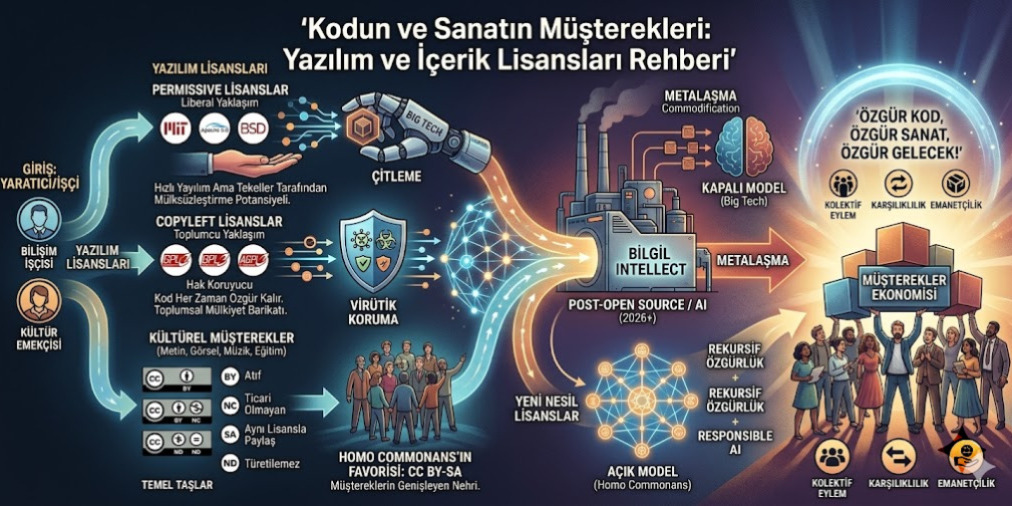
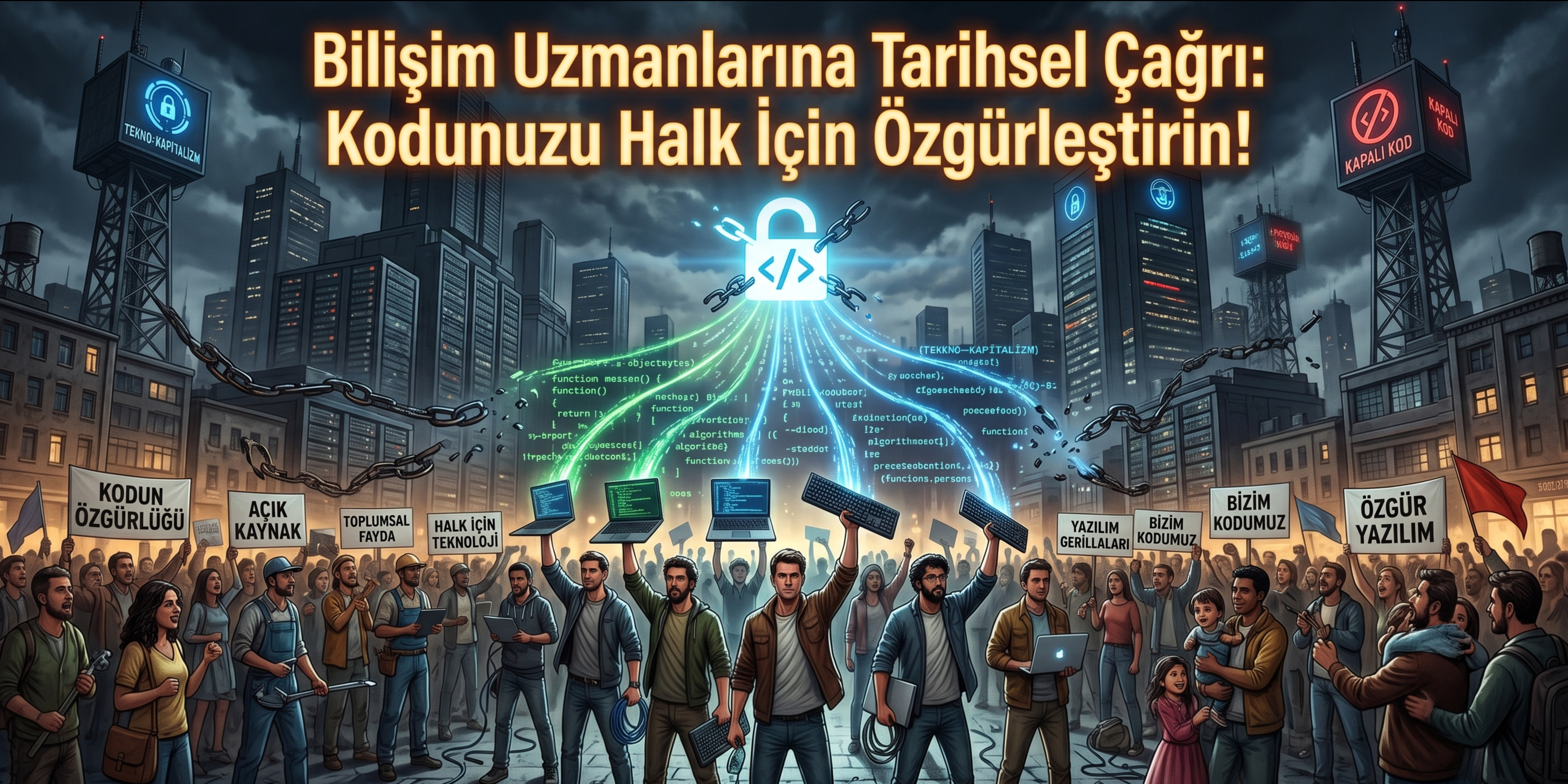
In the world of digital production, choosing a license is not merely a technical detail for lawyers; it is a political decision about whose hands the value you produce will remain in. This decision determines whether your labor will serve the "Knowledge Commons" or be "enclosed" by capital and turned into an object of profit.
This document serves as a compass that unites licensing models ranging from the world of software to cultural production, with the vision of Homo Commonans.
1. The World of Software: The Freedom of Code
Software licenses are divided into two according to how they limit capital's access to knowledge and its ability to turn knowledge into "private property."
A. Permissive Licenses (The Liberal Approach)
- Examples: MIT, Apache 2.0, BSD.
- Logic: "Take it, do what you want, just credit my name."
- Class Analysis: Although it appears to encourage the free circulation of knowledge, it allows big tech giants to take social labor and sell it under lock and key (proprietary). It is the capital-friendly face of the "Open Source" concept.
B. Copyleft Licenses (The Collectivist Approach)
- Examples: GPL v2/v3, AGPL.
- Logic: "You can use this code, but you must share the improvements you make with the same freedom."
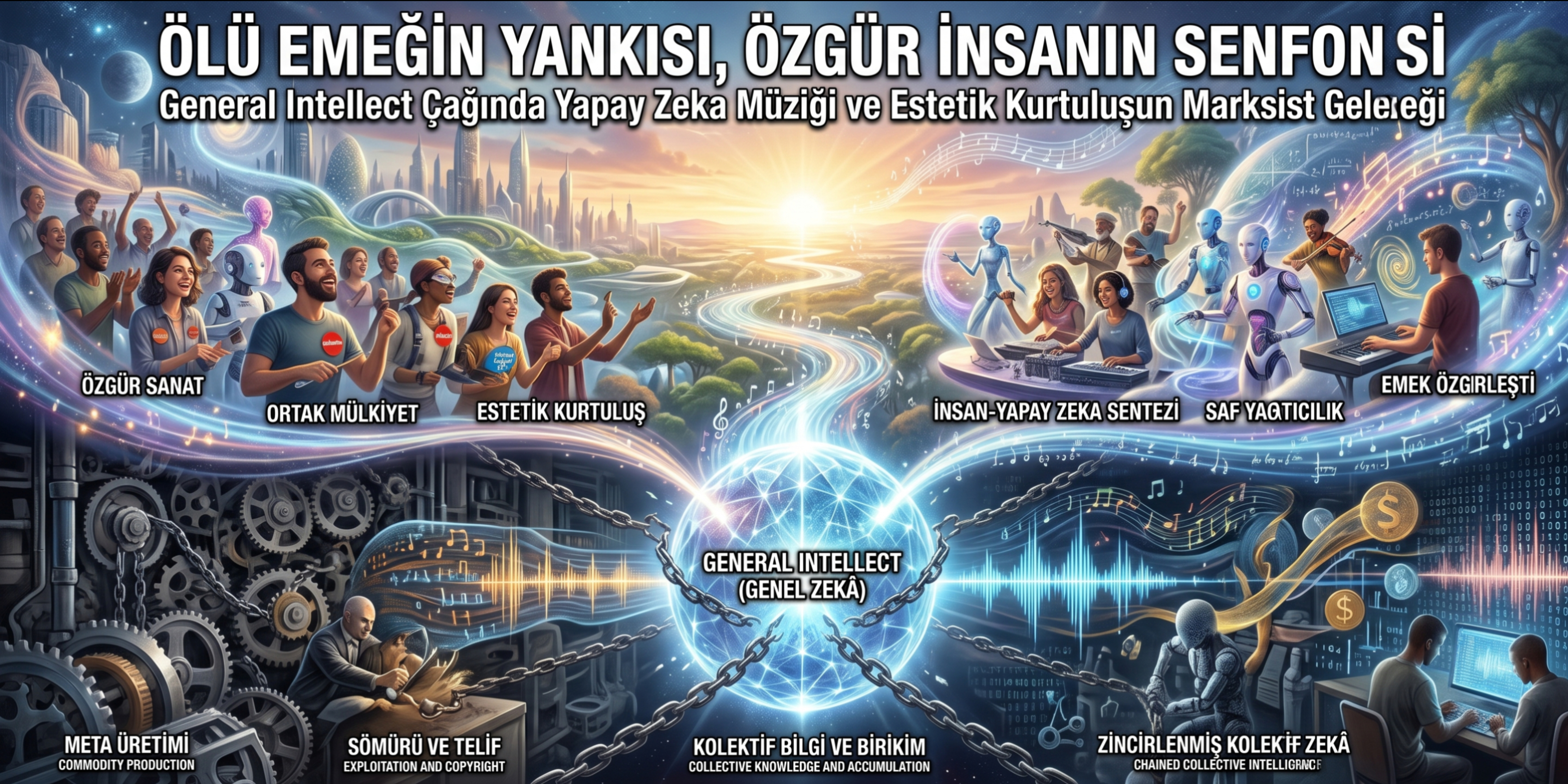
- Class Analysis: It is a "digital constitution" that prevents knowledge from being swallowed by private property. It is the strongest shield against the enclosure of the General Intellect by capital.
2. Cultural Commons: Creative Commons (CC)
For productions outside of software (texts, visuals, music, educational materials), Creative Commons offers a "Some Rights Reserved" model that shatters the "All Rights Reserved" paradigm.
The Building Blocks of CC (Through the Eyes of Homo Commonans):
- BY (Attribution): Identifies the owner of the labor. It is the honoring of the creator's labor.
- NC (NonCommercial): Prohibits the work from being used for profit. It prevents capital from reaping profit from the people's common production.
- SA (ShareAlike): It is the "Copyleft" logic in software. It guarantees the growth of the commons.
- ND (NoDerivatives): Prevents the work from being modified. It is generally chosen to preserve integrity in political manifestos or works of art.
The Favorite of Homo Commonans: CC BY-SA This model, which Wikipedia also uses, allows knowledge to flow freely like an ever-expanding river. Once knowledge is freed, no one can imprison it again.
3. The License Selection Matrix: When, Which One?
| Goal | Software License | Content License (CC) |
|---|---|---|
| Maximum Reach / Standardization | MIT | CC BY |
| Protecting and Growing the Commons | GPL v3 | CC BY-SA |
| Building a Barrier Against Capital | AGPL v3 | CC BY-NC-SA |
| Preserving Idea Integrity | - | CC BY-ND |
| Gifting to the Public | Unlicense / CC0 | CC0 (Public Domain) |
4. The Role of the Organic Intellectual in Free Software and Content Processes
The IT worker and digital producer is not merely a technician, but an Organic Intellectual who is the architect of social knowledge. In these processes, they must observe the following principles:
- Questioning Ownership: It is not enough for software or content to merely be "accessible"; the license under which it is protected and its ownership structure (on whose server, with whose license?) must be questioned.
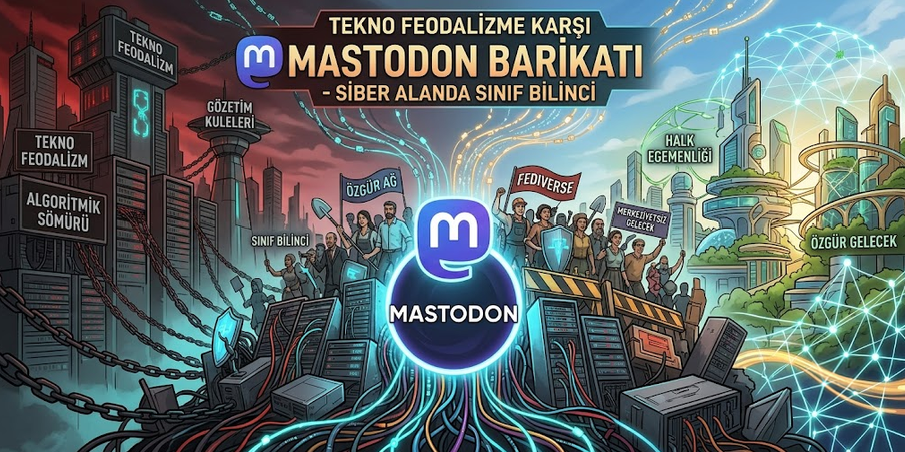
- Resistance to the Usurpation (Enclosure) of Labor: One must remain vigilant against big companies manipulating open source projects for their own profit (open-washing), and where possible, mount a defense with Copyleft or NC (NonCommercial) models.
- Reciprocity: Giving back to the community what is taken from the community is not only an ethical stance but also the foundation of a sustainable commons economy.
5. The 2026 Perspective: AI and the Future of Licenses
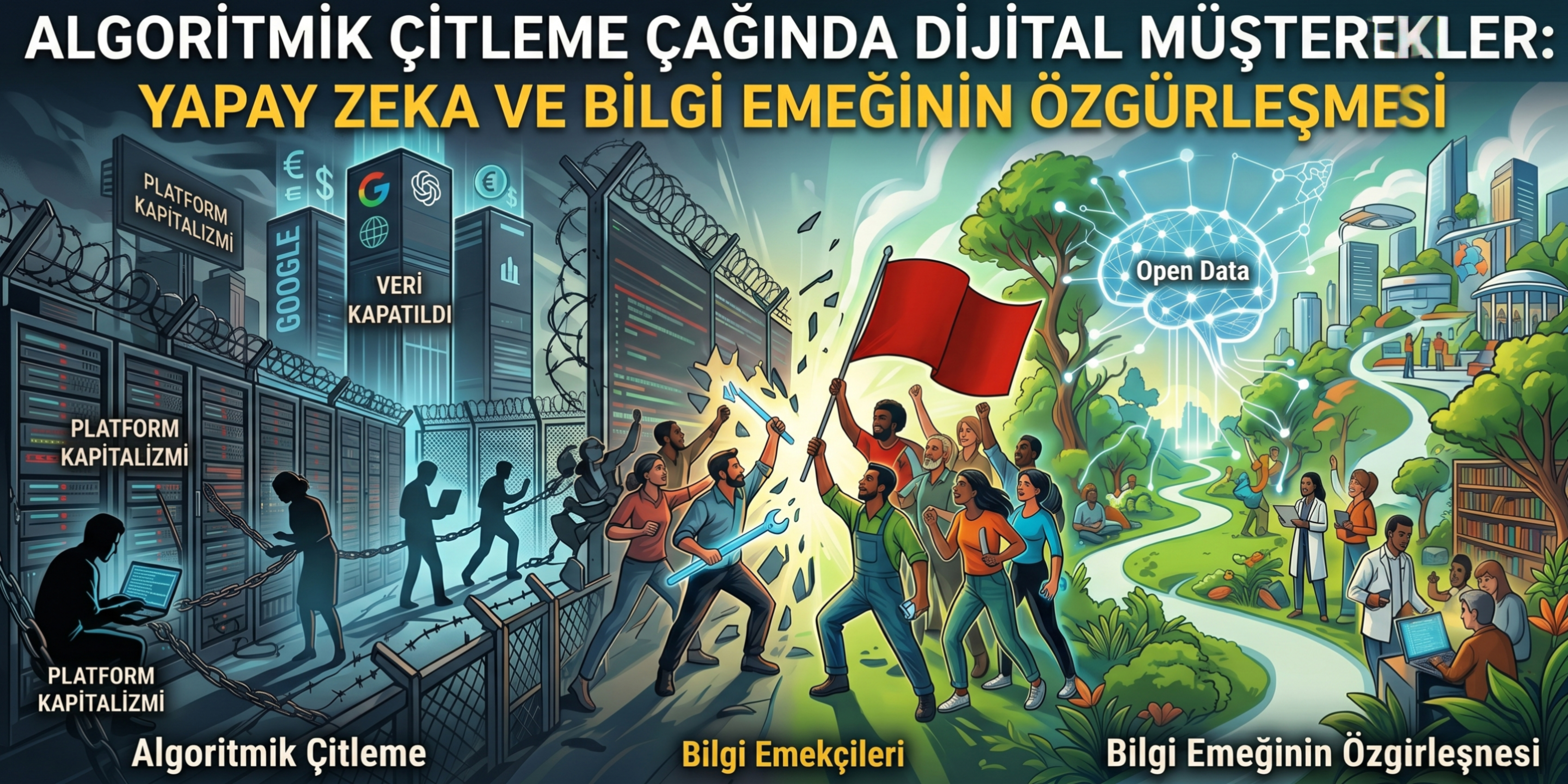
The training of Artificial Intelligence models has carried the licensing debate to a new dimension. Giant companies use billions of lines of open code and millions of CC-licensed images as "raw material," then turn the resulting intelligence (the AI model) into a black box.
The Future Approach Should Be as Follows:
- Model Freedom: If an AI model is trained with open source/common data, the model itself should also be offered under a free license.
- Data Sovereignty: Against our labor being swallowed and commodified by AI, new-generation licenses (such as Responsible AI Licenses) that impose "copyright for training use" or "a mandatory commons-sharing requirement" should be defended.
Conclusion: The Freedom of Code, the Dignity of Art
Every line of code you write and every piece of content you produce is a trace left in the digital universe. Will you leave this trace in the vault of a tech feudal lord, or in the common library of humanity?
- In Software: Build a barricade with GPL/AGPL.
- In Content: Grow the commons with CC BY-SA.
- In Action: Unite as Homo Commonans.
Free Knowledge, Free Future!